

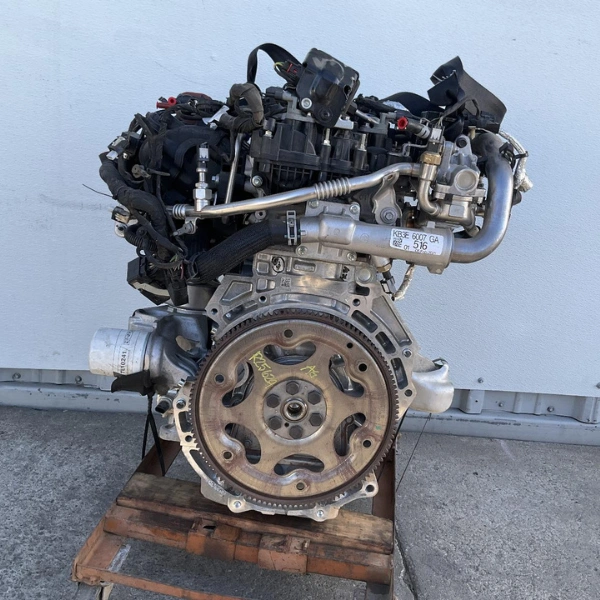
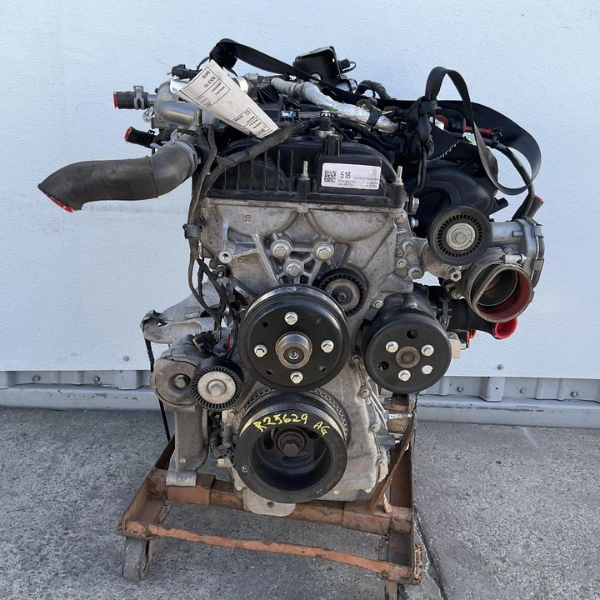
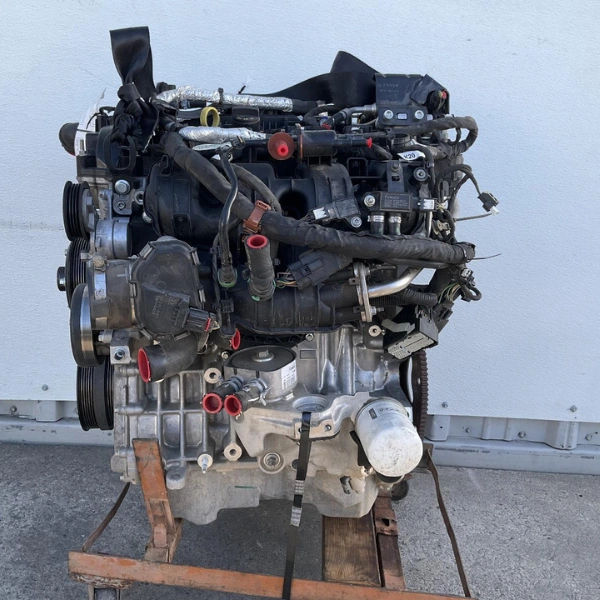
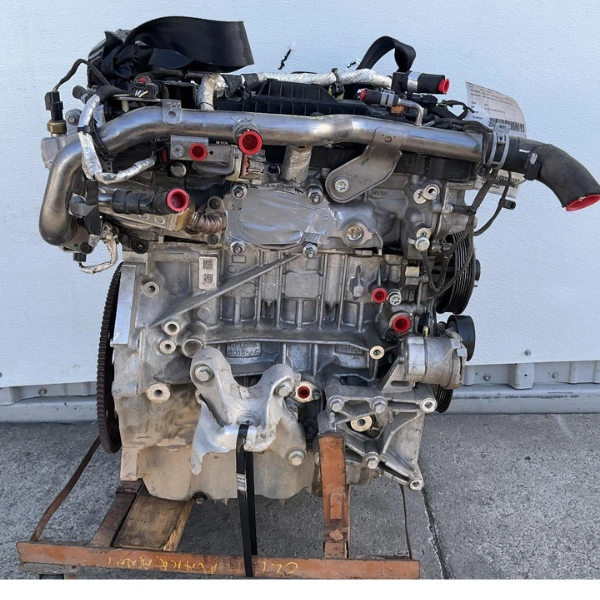
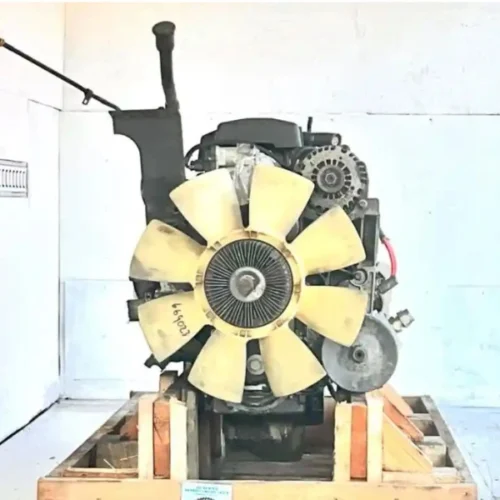
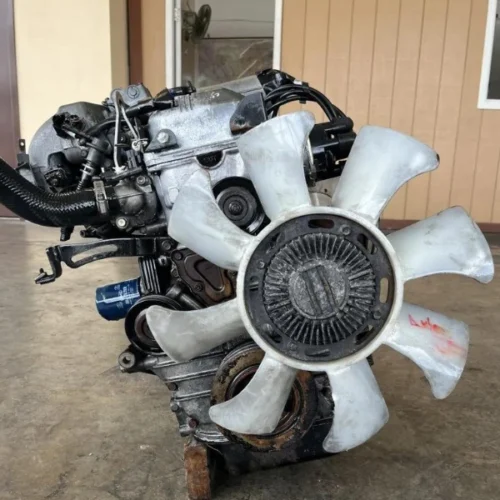
Ford Ranger 2.3 Engine for Sale | OEM Lima OHC Inline-4 (1983 to 1997)
$1,525.00
Product Overview
- Displacement: 2,301 cc (2.3L / 140.5 cu in)
- Engine Family: Ford Lima OHC (EAO / Pinto engine)
- Configuration: Inline-4, SOHC, 8 valves
- Horsepower: 82 to 105 hp, year and variant dependent
- Condition: OEM used, compression tested and inspected
- Availability: Multiple year ranges from 1983 to 1997 in stock
- Shipping: Free freight to all 50 states, 5 to 10 business days
- All 4 cylinders pressure-tested with results shared before payment
- DIS versus pre-DIS ignition system variant confirmed before every order ships
- Roller versus flat-tappet cam confirmed: 1988 cutoff point documented
- One-piece versus two-piece rear main seal confirmed: 1986 cutoff documented
- Zero core charge required, your existing engine stays with you
- Backed by a 15 day replacement warranty against internal defects
Did you like this product? Add to favorites now and follow the product.
(+800) 1234 5678 90 Start Live Chat
Description
Engine Background
The Ford Ranger 2.3 Lima OHC engine is one of the most long-lived four-cylinder engines in American truck history. Introduced in the Ranger for 1983, it traces its roots directly to the German-designed 2.0-liter EAO engine that powered European Ford Cortinas and US-market Mercury Capris in the early 1970s. Ford expanded it to 2.3 liters for the 1974 Pinto and carried the architecture into the compact truck lineup, where it remained the standard four-cylinder in the Ranger until 1997, a 14-year run in the Ranger alone.
The Lima 2.3 went through three significant evolution phases in the Ranger. The early carbureted versions from 1983 to 1988 used a flat-tappet camshaft, a two-piece rope rear main seal (pre-1986), and a Duraspark distributor. The 1988 model year introduced a hydraulic roller camshaft, a significant improvement in durability and reduced oil consumption, along with smaller-diameter crankshaft main journals. The 1989 model year introduced the most distinctive version: a distributorless ignition system with dual spark plugs (two plugs per cylinder, eight total), multi-point EFI, and a revised cylinder head. This DIS version produced 105 hp versus the early carbureted unit’s 82 hp.
The Lima 2.3 also powered the Bronco II, the Fox Body Mustang (both the turbocharged SVO version and the naturally aspirated base), and various Ford Mustang applications from 1979 through 1993. The Ranger application is specifically the naturally aspirated version; the turbocharged variants found in Mustang SVO and Thunderbird Turbo Coupe were never installed in the Ranger. Call (240) 306-7051 to confirm DIS vs pre-DIS variant availability.
When Replacement Becomes Necessary
- Oil burning on cold start, valve stem seal wear on high-mileage Lima OHC heads
- Rough idle on DIS engines that does not respond to basic tune, DIS module or crankshaft position sensor fault
- Rear main seal oil leak, pre-1986 two-piece rope seal is a known chronic seep on aged engines
- Timing belt noise or vibration, the Lima 2.3 uses a TIMING BELT, not a chain. The belt must be replaced every 60,000 miles. A failed timing belt causes catastrophic engine damage on this interference engine.
- Loss of compression on one or more cylinders, ring wear or valve seal failure on high-mileage units
- Spark plug fouling on DIS engines: dual plugs per cylinder means 8 plugs total. One fouled plug on a cylinder causes misfire that can be misdiagnosed.
Known Issues We Document Before Shipping
- Timing belt, the most important Ranger 2.3 service item: the Lima 2.3 uses a rubber timing belt (not a chain) driving the SOHC camshaft. It MUST be replaced every 60,000 miles. A broken timing belt causes complete valve-to-piston contact on this interference engine and destroys the head. We inspect the timing belt condition and note age indicators before shipping, but always replace it at installation regardless.
- DIS versus pre-DIS incompatibility: a 1989-and-newer DIS engine cannot simply replace a pre-DIS carbureted engine without converting the complete ignition and fuel system. The DIS engine uses 8 spark plugs and a completely different ECU, wiring harness, and EFI fuel system from the pre-1989 carbureted versions. We document the ignition system on every order.
- Roller versus flat-tappet cam: pre-1988 Lima engines used flat-tappet cams. 1988-and-newer engines use hydraulic roller lifters. Lifters and cam are different between the two; mixing components causes failure. The 1988 transition also reduced crankshaft main journal diameter, which affects bearing selection. We confirm cam type on every unit.
- Two-piece versus one-piece rear main seal: pre-1986 Lima engines use a two-piece rope rear main seal that seeps chronically on aged engines. 1986-and-newer engines use a one-piece neoprene rear main seal that is dramatically more reliable. If converting an older Ranger, this is one of the few good arguments for sourcing a 1986-or-newer unit.
- Head gasket on overheated engines: the Lima 2.3 aluminum head is sensitive to overheating. Any engine that has been run hot is at risk. We compression test all 4 cylinders and check coolant for cross-contamination before shipping.
Lima 2.3 Ranger Variants by Year
Critical buyer information across the 14-year Ranger production run:
| Generation | Years | HP | Ignition | Key Changes |
|---|---|---|---|---|
| Early Carb / Duraspark | 1983 to 1985 | 82 hp | Distributor | 2-barrel carb. Flat-tappet cam. Two-piece rope rear main seal. 9.0:1 compression. |
| Mid Carb / Updated | 1986 to 1988 | 88 hp | Distributor | One-piece lip rear main seal (1986). Roller cam (1988). Reduced main journal diameter (1988). 9.0:1 compression. |
| Late EFI / DIS | 1989 to 1997 | 105 hp | Dual-plug DIS | 2 spark plugs per cylinder (8 total). Multi-point EFI. Better head design. 9.2 to 9.4:1 compression. Most capable naturally aspirated Lima. |
| INCLUDED- Long Block | Block, crankshaft, pistons, connecting rods, SOHC camshaft, cylinder head, valve train, oil pan, front timing cover. Timing belt and tensioner NOT included- always replace at installation. |
|---|---|
| NOT INCLUDED | Timing belt and tensioner (replace at installation- MANDATORY), intake manifold, carburetor or EFI system, distributor (pre-DIS) or DIS module and coil pack (DIS), alternator, power steering pump, starter, flywheel, accessory brackets. |
| TIMING BELT WARNING | The Ford Lima 2.3 uses a rubber timing belt on an interference engine. ALWAYS replace the timing belt, tensioner, and idler at installation regardless of apparent condition. A broken belt destroys the head. |
| Core Note | No core charge. You are not required to return your old engine. |
What Ships and What Does Not
| Ford Ranger (2WD and 4WD) | 1983 to 1997- base 4-cylinder engine across all Ranger generations |
|---|---|
| Ford Bronco II | 1984 to 1990- naturally aspirated Lima 2.3 |
| Ford Mustang (Fox Body) | 1979 to 1993- naturally aspirated base 2.3 (not the turbocharged SVO version) |
| Ford Pinto and Mercury Bobcat | 1974 to 1980- original Lima 2.3 application |
| Ford Fairmont and Mercury Zephyr | 1978 to 1983 |
Direct-Fit Vehicle Applications
| Ford Ranger 2.3 | Most common buyer search |
|---|---|
| 2.3 Lima engine | Engine family designation- enthusiast buyer |
| Ford 2.3 OHC | SOHC architecture designation |
| Ranger 2.3 engine | Short form buyer search |
| Ford 2.3 four-cylinder | Configuration search |
| 2.3 Ford engine | Reversed phrasing buyer |
| Ford Ranger motor | Motor vs engine buyer |
| Lima 2.3 engine for sale | Family name buyer |
| Ford 2.3 EFI engine | EFI designation buyer |
| Ford 2.3 DIS engine | DIS dual-plug variant buyer |
Not sure which Lima 2.3 variant your truck needs? Call us at (240) 306-7051. We verify DIS versus pre-DIS, cam type, and rear main seal generation before every order ships.
Used OEM Versus Specialist Rebuild
For a Ranger replacement on a reasonable budget, a documented used Lima 2.3 with year and variant confirmed is the cost-effective path. The engine’s simplicity and parts availability make rebuilds easy if you choose that route. Specialist Lima 2.3 rebuilds typically run $2,500 to $4,000 from established Ford specialist shops, plus the supporting items (timing belt, water pump, harness if converting between generations). Used OEM is typically the right choice for this engine given the cost-to-benefit ratio.
Inspection Workflow
- Compression test logged across all 4 cylinders with uniformity reported
- DIS versus pre-DIS ignition system documented
- Cam type identified: roller (1988 onward) or flat-tappet (pre-1988)
- Rear main seal generation noted: one-piece (1986 onward) or two-piece (pre-1986)
- Fuel system identified: carburetor, TBI, or multi-port EFI
- Timing belt condition assessed with age indicators noted
- Head gasket condition assessed via coolant cross-contamination check
- External oil leak survey at front cam seal, valve cover, oil pan, rear main
Pre-Purchase Buyer Notes
- Replace the timing belt at installation regardless of donor service history: this is non-negotiable on the Lima 2.3. A failed belt destroys the head. Belts age in storage even unused. Always install fresh belt, water pump, and tensioner.
- Match ignition system to your chassis: a DIS engine in a pre-DIS chassis requires complete ignition and fuel system conversion (ECU, harness, fuel injection, 8-plug head, etc.). For pre-DIS chassis, source a pre-DIS engine. For DIS chassis, source a DIS engine.
- Match cam type to lifters: roller lifters do not work on flat-tappet cams (and vice versa). Mixing components causes immediate failure. We document cam type on every unit.
- Plan for rear main seal upgrade on pre-1986 engines: the two-piece rope seal is a chronic leak source. If sourcing a pre-1986 engine, plan a one-piece conversion at installation. Aftermarket conversion kits are available.
- Use ZDDP on flat-tappet cams: pre-1988 engines require high-zinc oil. Modern low-zinc oils accelerate cam lobe wear.
Why Buy From Part Nests
- Ignition system confirmed: DIS or pre-DIS documented before payment
- Cam type identified: roller (1988+) or flat-tappet (pre-1988)
- Rear main seal generation noted: one-piece (1986+) or two-piece (pre-1986)
- Fuel system documented: carburetor, TBI, or EFI
- Timing belt condition assessed with replacement strongly recommended at install
- All 4 cylinders compression-tested with uniformity reported
- No core return required
- Free freight delivery to every state
- 15 day replacement warranty against internal defects
- Call (240) 306-7051 to speak with someone who knows Lima 2.3 DIS versus pre-DIS differences, 1988 cam transition, and Ranger versus Bronco II versus Mustang application matching
Additional information
| displacement | 2, 301 cc (2.3L / 140.5 cu in) |
|---|---|
| engine-family | Ford Lima OHC (EAO / Pinto engine) |
| configuration | 8 valves, Inline-4, SOHC |
| bore-x-stroke | 96.0 mm x 79.5 mm |
| aspiration | Naturally Aspirated |
| timing-system | Rubber timing belt- interference engine- MUST replace at installation |
| cam-type | Flat-tappet (1983 to 1987) | Hydraulic roller (1988 onward) |
| ignition | Distributor (1983 to 1988) | Dual-plug DIS- 8 spark plugs total (1989 onward) |
| fuel-system | 2-barrel carb (1983 to 1988) | Multi-point EFI (1989 to 1997) |
| rear-main-seal | Two-piece rope (1983 to 1985) | One-piece lip (1986 onward) |
| block-material | Cast Iron |
| head-material | Cast iron |
| production-years-ranger | 1983 to 1997 (Lima OHC) |
| manufacturer | Ford Motor Company (Lima, Ohio plant) |
| horsepower | 82 to 105 hp- year and variant dependent |
| compatible-transmissions | A4LD 4-speed auto, C3 3-speed auto, Ford 5-speed manual |
| condition | compression tested and inspected, Used OEM |
Ignition system. Pre-1989 Lima 2.3 engines use a conventional Duraspark distributor with a single spark plug per cylinder (4 plugs total) and either carburetor or TBI fuel. The 1989-and-newer DIS (Distributorless Ignition System) Lima 2.3 uses dual spark plugs per cylinder (8 plugs total), a revised 8-plug cylinder head, multi-port EFI, and a coil pack instead of a distributor. The two systems are not interchangeable without complete conversion.
1988. Pre-1988 Lima 2.3 engines used flat-tappet camshafts. 1988-and-newer engines use hydraulic roller lifters. The 1988 transition also reduced crankshaft main journal diameter. Roller and flat-tappet components are not interchangeable. We document cam type on every unit.
The Lima 2.3 uses a rubber timing belt (not a chain) driving the SOHC camshaft. A broken or jumped belt causes valve-to-piston contact on this interference engine, destroying the cylinder head and valves. Ford specifies replacement every 60,000 miles. Belts age in storage even unused. Always install a fresh belt, water pump, and tensioner at engine installation regardless of donor service history.
The pre-1986 Lima 2.3 uses a two-piece rope rear main seal that seeps chronically on aged engines. The 1986-and-newer Lima 2.3 uses a one-piece neoprene rear main seal that is dramatically more reliable. Aftermarket conversion kits allow upgrading older engines to the one-piece seal. Strongly recommended on any pre-1986 engine being installed.
Dual spark plug ignition per cylinder. Ford engineered the 1989-and-newer Lima 2.3 with two plugs per cylinder for more complete combustion and reduced emissions. Each cylinder fires both plugs simultaneously. One fouled plug on a cylinder causes a misfire that can be difficult to diagnose if you forget the 8-plug arrangement. All 8 plugs should be replaced at every plug service.
Not directly. The Fox Body 2.3 (1979 to 1993 Mustang base) and Ranger 2.3 share architecture but use different engine mounts, accessory drive layouts, and bell housing patterns. Specific year cross-compatibility exists but requires research for your particular project. The turbocharged Mustang SVO and Thunderbird Turbo Coupe 2.3 versions are different engines from any Ranger application.
Lima refers to the Ford engine plant in Lima, Ohio, where the engine was built. OHC denotes the overhead cam configuration. The engine architecture originated as the German-designed EAO 2.0L (Pinto engine) and was expanded to 2.3 liters for North American production. "Lima 2.3" is the common North American name for the engine family.
No. There is no core return required.
15 Day Replacement Warranty
Every used Ford Ranger 2.3 Lima OHC engine purchased through Part Nests carries a 15 day replacement warranty starting on the delivery date.
What Is Covered
- Internal defects already present when the engine arrives
- Performance materially different from how the engine was described
- Incorrect part shipped due to an error on our end
What Is Not Covered
- Damage from failed timing belt (timing belt must be replaced at installation)
- Damage from mixing roller and flat-tappet components
- Damage caused during installation
- External components unless specifically itemized
- Labor expenses of any kind
To start a warranty claim, reach us within 15 days of delivery at (240) 306-7051.
- Ignition System Confirmed: DIS or pre-DIS documented before payment
- Cam Type Identified: Roller (1988+) or flat-tappet (pre-1988) noted on every order
- Rear Main Seal Generation Noted: One-piece (1986+) or two-piece rope (pre-1986)
- Fuel System Documented: Carburetor, TBI, or EFI verified
- Timing Belt Condition Assessed: Belt replacement at install strongly recommended
- 15 Day Replacement Cover: Internal defects protected from delivery onward
2 reviews for Ford Ranger 2.3 Engine for Sale | OEM Lima OHC Inline-4 (1983 to 1997)
Related products
Recently Viewed Products
About Us
At Part Nests, we specialize in high-quality used and OEM auto parts, with a wide selection of components ready to ship to customers.
© 2026 Part Nests. All rights reserved.

Greg M. –
Got a DIS-era Lima 2.3 for a 1992 Ranger. DIS ignition confirmed, roller cam verified, one-piece rear main seal noted. All four cylinders tested uniform on compression. Plan a timing belt service at install per their strong recommendation. Ranger is back to daily duty.
Russ T. –
Sourced a pre-1986 Lima 2.3 for a 1985 Ranger. Pre-DIS ignition correctly identified, flat-tappet cam confirmed, two-piece rope rear main disclosed (planning the one-piece conversion at install per their note). Honest about timing belt being a critical install item regardless of donor. Foundation for the project is solid.