

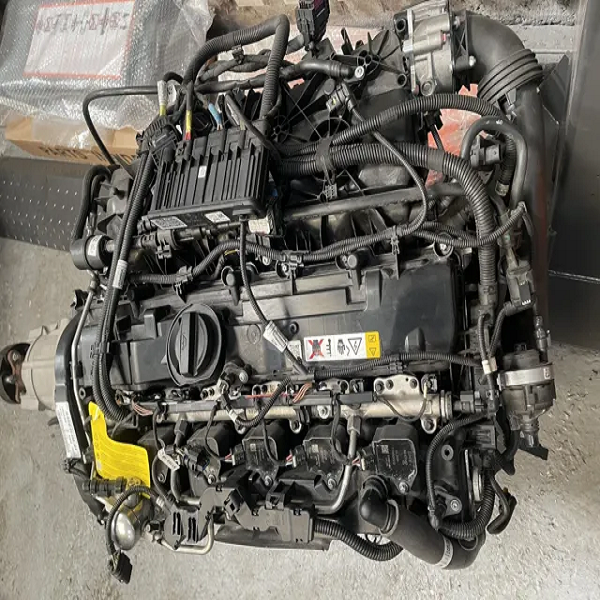
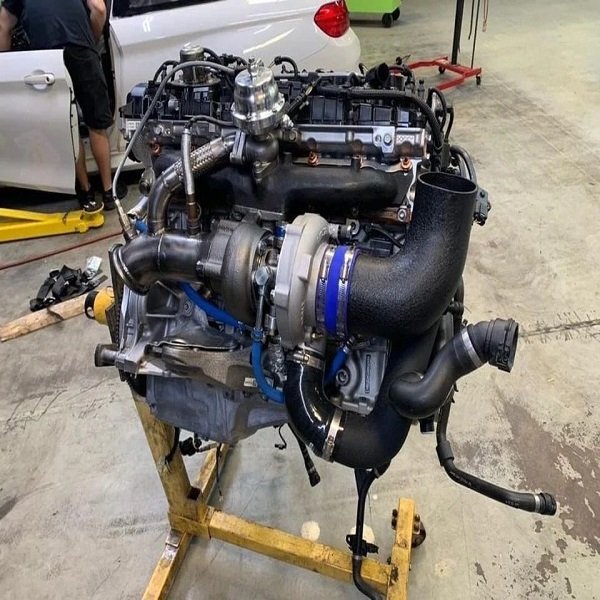
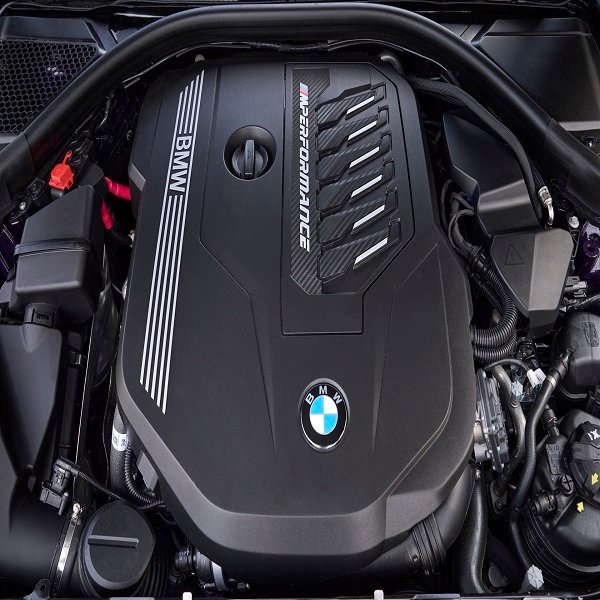
BMW B58 Engine for Sale | OEM 3.0L Turbocharged Inline-6 (340i, M340i, GR Supra)
$4,000.00
Product Overview
- Displacement: 2,998 cc (3.0L)
- Configuration: Inline-6, DOHC, 24 valves
- Horsepower: 322 to 382 hp, variant dependent, confirmed at order
- Torque: 332 to 369 lb-ft, variant dependent
- Condition: OEM used, inspected and documented
- Availability: Gen 1 and B58TU1 variants in stock, call to confirm
- Shipping: Free freight to all 50 states, 5 to 10 business days
- Fully inspected and documented before shipping
- B58 generation confirmed: B58B30M0 or B58TU1 ML/OL documented
- Valve cover gasket, VANOS, cooling system, and PCV condition assessed
- Zero core charge required, your existing engine stays with you
- Backed by a 15 day replacement warranty against internal defects
Did you like this product? Add to favorites now and follow the product.
(+800) 1234 5678 90 Start Live Chat
Description
Engine Background
The BMW B58 is widely regarded as BMW’s best modern turbocharged inline-six engine and one of the strongest turbocharged engines produced by any manufacturer in its displacement class. Introduced in 2015 as the replacement for the N55, it has been named to the Ward’s World 10 Best Engines list five times and has earned enthusiast praise as “the modern 2JZ” for its combination of factory reliability and extraordinary tuning potential on stock internals.
Two engineering decisions made the B58 fundamentally different from the N55 it replaced. First, a closed-deck block design. Unlike the N55’s open-deck construction where the cylinder walls have gaps in the water jacket, the B58 has solid material surrounding the cylinder walls throughout. This dramatically reduces cylinder bore distortion under boost and heat, improving both reliability and the engine’s ability to handle high boost pressure. Second, a forged steel crankshaft and drop-forged cracked connecting rods, components that are meaningfully stronger than the N55’s comparable hardware and have been documented to survive 600 to 700 horsepower on stock internals.
The B58TU1 technical update introduced in 2018 to 2019 added a larger turbocharger, revised cylinder head with improved combustion chambers, a higher-pressure fuel injection system (350 bar versus the Gen 1’s 200 bar), and split the B58 into ML (335 hp, middle output) and OL (382 hp, high output) variants. The OL variant powers the M340i, M240i, Z4 M40i, and Toyota GR Supra 3.0, the same engine architecture used in multiple brands simultaneously.
When Replacement Becomes Necessary
- Coolant loss without visible external leak, cracked plastic expansion tank (common on higher-mileage B58 units) or water pump failure
- Oil leaks at valve cover gasket or oil filter housing, the two most common B58 external oil leak points
- Rough idle or misfires, carbon buildup on intake valves from direct injection, particularly on high-mileage examples. Carbon buildup requires walnut blasting to clean.
- PCV system fault codes or oil mist in intake, PCV valve built into the valve cover can fail causing crankcase pressure buildup
- VANOS fault codes or rough running, VANOS solenoid wear on high-mileage units or those with extended oil change intervals
- Turbo wastegate rattle at idle, more common on tuned engines running higher boost, audible as a faint rattling at idle
Known Issues We Document Before Shipping
- Carbon buildup on intake valves, inherent to direct injection B58 engines: direct injection sprays fuel directly into the cylinders, bypassing the intake valves. This means the intake valves accumulate carbon deposits from the PCV system without fuel washing them clean (as port injection does). At 50,000 to 60,000 miles most B58 engines benefit from walnut blasting to clean the intake valves. Symptoms include rough idle, hesitation, and reduced response. This is a maintenance item, not a defect.
- Valve cover gasket leak: the valve cover gasket on the B58 seeps with age, typically becoming evident after 60,000 to 80,000 miles. The leak is rarely catastrophic but should be addressed at engine installation as good practice. The integrated PCV valve in the valve cover should be inspected and replaced if degraded.
- Cooling system known weak points: plastic expansion tank (cracks with age) and electric water pump (electronic failure mode on higher-mileage units). The cooling system is generally more durable than the M54 generation but still benefits from a complete refresh at installation.
- PCV system: the integrated PCV valve in the valve cover can fail, causing crankcase pressure buildup and oil mist in the intake. Symptoms include rough idle and oil consumption. PCV refresh at installation is good practice.
- Generation differences: Gen 1 B58B30M0 (2015 to 2018) and B58TU1 (2018 to 2019 onward) have different turbochargers, fuel injection pressure, and ECU calibrations. Cross-installing requires harness, ECU, and supporting hardware matching. We document generation on every order.
B58 Variants and Application Differences
Critical buyer information for matching the engine to your chassis:
| Generation | Years | HP | Torque | Key Applications and Notes |
|---|---|---|---|---|
| B58B30M0 (Gen 1) | 2015 to 2017 | 322 to 335 hp | 332 to 369 lb-ft | 340i, 440i, 240i, 740i, X3 M40i, X5 40i. Standard twin-scroll turbo. 200 bar fuel injection. |
| B58TU1 ML (Middle Output) | 2018 onward | 335 hp | 369 lb-ft | Updated 340i, 440i, 240i, 540i. Revised head and turbo. 350 bar fuel injection. Exhaust manifold integrated into head on some variants. |
| B58TU1 OL (High Output) | 2018 onward | 382 to 388 hp | 369 lb-ft | M340i, M440i, M240i, Z4 M40i, Toyota GR Supra 3.0. Larger turbo. Same block as ML but different calibration and turbocharger. |
| B58TU2 | 2022 onward | Variable | Variable | Second technical update. New cylinder head, revised Vanos, revised combustion chambers. Most recent variant- confirm compatibility carefully. |
| INCLUDED | Engine assembly as removed from donor vehicle. Specific accessories confirmed before shipping. |
|---|---|
| NOT INCLUDED | Turbocharger (confirm- may or may not be present), intercooler and charge pipes, ECU and wiring harness, alternator, power steering pump, cooling system components. |
| Critical Note | Service the complete cooling system at installation. Replace the expansion tank and water pump regardless of apparent condition- both are known failure points on aged B58 units. |
| Core Note | No core charge. |
What Ships and What Does Not
| BMW 340i / 440i / 240i (40i designation models) | 2016 onward- B58B30M0 Gen 1 or B58TU1 ML |
|---|---|
| BMW M340i / M440i / M240i (M Performance) | 2019 onward- B58TU1 OL high-output variant |
| BMW 540i / 740i / 840i | 2017 onward- B58 Gen 1 or TU1 depending on year |
| BMW X3 M40i / X4 M40i / X5 40i / X6 40i | 2018 onward |
| BMW Z4 M40i | 2019 onward- B58TU1 OL |
| Toyota GR Supra 3.0 | 2020 onward- B58TU1 OL (Toyota-tuned variant, 382 hp) |
Direct-Fit Vehicle Applications
| BMW B58 | Most common buyer search |
|---|---|
| B58B30 | Full engine code |
| BMW 3.0 turbo engine | Displacement and forced induction search |
| B58 engine | Short code buyer |
| 340i engine | Application-specific buyer |
| M340i engine | High-output variant buyer |
| GR Supra engine | Toyota Supra buyer- cross-brand application |
| BMW inline-6 turbo | Architecture designation |
| B58TU engine | Technical update version buyer |
| B58 vs N55 | Comparison research buyer |
Used OEM Versus Specialist Rebuild
For a 340i, M340i, M240i, Z4 M40i, GR Supra 3.0, or other B58-equipped vehicle with engine failure, used OEM is the most accessible path given the B58’s factory reliability and the cost of specialist rebuilds. For tuners targeting 500-plus horsepower from a B58 platform, the stock internals are widely reported to survive 600 to 700 hp, so the focus is typically on bolt-on supporting hardware (intercooler, downpipe, fueling, tune) rather than internal engine work. Specialist B58 rebuilds for high-power applications typically run $8,500 to $14,000-plus from established BMW tuning shops.
Inspection Workflow
- External condition assessed at all accessible areas
- Generation confirmed: B58B30M0 (Gen 1) or B58TU1 (ML or OL)
- Donor application identified: BMW 340i, M340i, M240i, Z4 M40i, or Toyota GR Supra
- Valve cover gasket area inspected for seepage
- Oil filter housing gasket area inspected for seepage
- Cooling system components externally inspected: expansion tank, water pump area
- VANOS solenoid connector condition externally assessed
- PCV valve area externally inspected
- Turbocharger external condition assessed
Pre-Purchase Buyer Notes
- Plan a complete cooling system refresh at installation: expansion tank, water pump, thermostat, coolant flush. The B58 cooling system is more durable than older BMW engines but still benefits from preventive refresh at install.
- Refresh valve cover gasket and PCV at installation: integrated components in the valve cover. Refreshing while the engine is out is cheap insurance against post-install rough idle and oil consumption.
- Plan walnut blasting for high-mileage units: direct injection engines accumulate carbon on intake valves over time. At 50,000-plus miles, walnut blasting is good practice. Specialist BMW shops offer this service.
- Use BMW-specification oil at 5,000-mile intervals maximum: 5W-30 LL-01 specification. The factory 10,000-mile interval is widely considered too long for the B58’s direct injection and turbocharger.
- For tuning, plan supporting modifications: a tuned B58 producing 500-plus hp benefits from upgraded intercooler, downpipe, fueling, and a custom tune. Stock internals handle the power but supporting hardware needs upgrade for sustained reliability.
Why Buy From Part Nests
- Generation confirmed: B58B30M0 (Gen 1) or B58TU1 (ML or OL) documented before payment
- Donor application identified: BMW or Toyota GR Supra source disclosed
- Valve cover gasket and PCV valve condition externally assessed
- Cooling system condition externally inspected
- VANOS solenoid condition externally assessed
- Turbocharger external condition noted
- No core return required
- Free freight delivery to every state
- 15 day replacement warranty against internal defects
- Call (240) 306-7051 to speak with someone who knows B58 Gen 1 versus B58TU1 differences, BMW versus Toyota GR Supra donor variations, and direct injection carbon buildup service planning
Additional information
| displacement | 2, 998 cc (3.0L) |
|---|---|
| engine-code | B58B30M0 (Gen 1) | B58TU1 ML (335 hp) | B58TU1 OL (382 hp) |
| configuration | 24 valves, DOHC, Inline-6 |
| bore-x-stroke | 82 mm x 94.6 mm |
| compression-ratio | 11.0:1 |
| aspiration | Single twin-scroll turbocharger |
| horsepower | 322 to 382 hp- variant dependent, confirmed at order |
| torque | 332 to 369 lb-ft- variant dependent |
| redline | 000 rpm, 7 |
| vanos | Double VANOS- intake and exhaust |
| valve-lift | Valvetronic variable valve lift |
| block-design | Closed-deck- significantly stronger than N55 open-deck |
| crankshaft | Forged steel |
| connecting-rods | Drop-forged cracked (fractured) |
| fuel-system | High-pressure direct injection- up to 350 bar (B58TU1) |
| block-material | Aluminum alloy with plasma arc wire spray coating |
| production-years | 2015 to present |
| awards | 2017, 2019, 2020, 2024, Ward's 10 Best Engines: 2016 |
| applications | 540i, BMW 340i, M340i, Toyota GR Supra 3.0 and more, X3/X4/X5/X6 M40i, Z4 M40i |
Technical update introduced in 2018 to 2019. The B58TU1 has a larger turbocharger, revised cylinder head with improved combustion chambers, and a higher-pressure fuel injection system (350 bar versus the Gen 1's 200 bar). The TU1 splits into ML (335 hp, middle output) and OL (382 hp, high output) variants. The Gen 1 is the B58B30M0 (322 hp). All three variants share the same closed-deck block and forged crankshaft.
Combination of factory reliability and extraordinary tuning potential on stock internals. The forged steel crankshaft, drop-forged cracked connecting rods, and closed-deck block have been documented to survive 600 to 700 hp on stock internals across multiple tuning shops worldwide. The Toyota 2JZ-GTE earned similar reputation in the 1990s for the same reason. The B58 is the closest modern equivalent.
Joint development partnership. BMW and Toyota collaborated on the Z4/GR Supra platform sharing chassis, engine, and many supporting components. The same B58TU1 OL variant powers both the Z4 M40i and the GR Supra 3.0. The Toyota-branded GR Supra B58 has minor ECU calibration and exhaust differences from BMW versions but is fundamentally the same engine.
Direct injection engines spray fuel directly into the cylinders, bypassing the intake valves. This means intake valves accumulate carbon deposits from PCV oil mist without fuel washing them clean (as port injection does). At 50,000 to 60,000 miles most direct injection engines benefit from walnut blasting to clean the intake valves. Symptoms include rough idle, hesitation, and reduced response. This is a maintenance item inherent to direct injection, not a defect.
Mechanically possible with significant supporting work. The B58 has different mounting, harness, ECU, exhaust, and cooling system requirements than the N55 it replaced. A B58 swap into an N55 chassis (335i, F22 M235i, etc.) is documented in the BMW tuning community but requires significant integration effort. For a stock-style replacement, source an engine matching your chassis.
5,000 miles maximum, regardless of BMW's factory 10,000-mile recommendation. The factory interval is widely considered too long for the B58's direct injection and turbocharger. Use BMW LL-01 specification 5W-30 oil. The 5,000-mile interval is consensus practice among BMW specialists.
Multiple tuning shops have documented B58 builds surviving 600 to 700 horsepower on stock internals (no rod, piston, or crank modifications). The closed-deck block, forged crankshaft, and drop-forged cracked connecting rods are dramatically stronger than the N55's comparable hardware. For builds beyond 700 hp, internal upgrades become necessary; below that level, the focus is supporting hardware (intercooler, downpipe, fueling, tune).
No. There is no core return required.
15 Day Replacement Warranty
Every used BMW B58 engine purchased through Part Nests carries a 15 day replacement warranty starting on the delivery date.
What Is Covered
- Internal defects already present when the engine arrives
- Performance materially different from how the engine was described
- Incorrect part shipped due to an error on our end
What Is Not Covered
- Damage caused during installation
- Damage from extended oil change intervals or non-BMW-specification fluids
- External components unless specifically itemized
- Labor expenses of any kind
To start a warranty claim, reach us within 15 days of delivery at (240) 306-7051.
- Generation Confirmed: B58B30M0 (Gen 1) or B58TU1 (ML/OL) documented before payment
- Donor Application Identified: BMW or Toyota GR Supra source disclosed
- Valve Cover and PCV Assessed: Common B58 leak and idle issue inspected
- Cooling System Inspected: Expansion tank and water pump condition flagged
- Turbocharger External Condition Noted: Wastegate area assessed
- 15 Day Replacement Cover: Internal defects protected from delivery onward
2 reviews for BMW B58 Engine for Sale | OEM 3.0L Turbocharged Inline-6 (340i, M340i, GR Supra)
Related products

About Us
At Part Nests, we specialize in high-quality used and OEM auto parts, with a wide selection of components ready to ship to customers.
© 2026 Part Nests. All rights reserved.

Alex C. –
Got a B58TU1 OL for an M340i replacement. Generation confirmed as B58TU1 OL variant (matching the chassis), donor application identified as M340i source. Valve cover gasket and PCV condition externally assessed, cooling system components inspected. Plan a complete cooling system refresh at install per their recommendation.
Jamie R. –
Sourced a B58 Gen 1 for a 340i project. B58B30M0 variant confirmed, donor application identified. Honest about a higher-mileage donor with valve cover gasket seepage disclosed (replacing at install). Plan walnut blasting for the direct injection carbon buildup at install per their note. Foundation for the project is solid.