
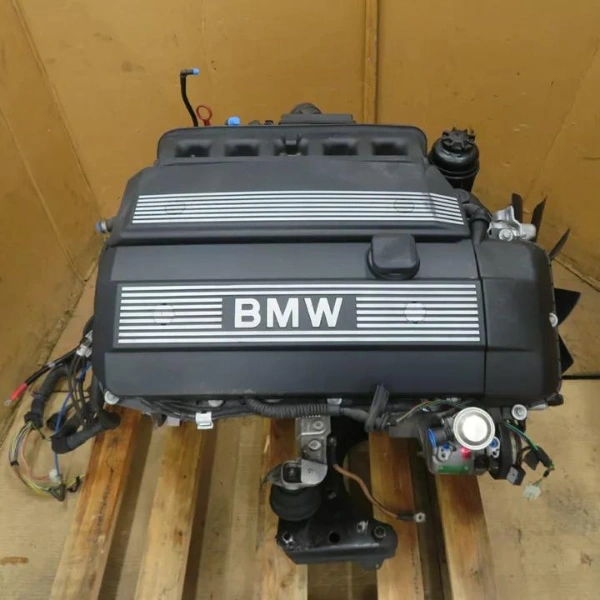
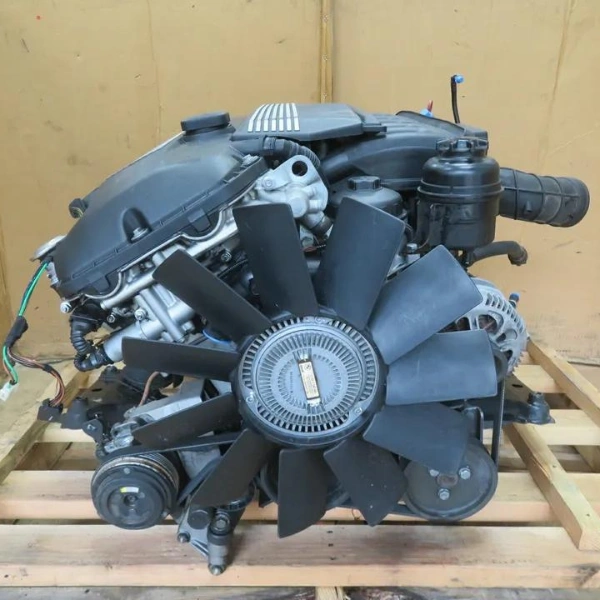
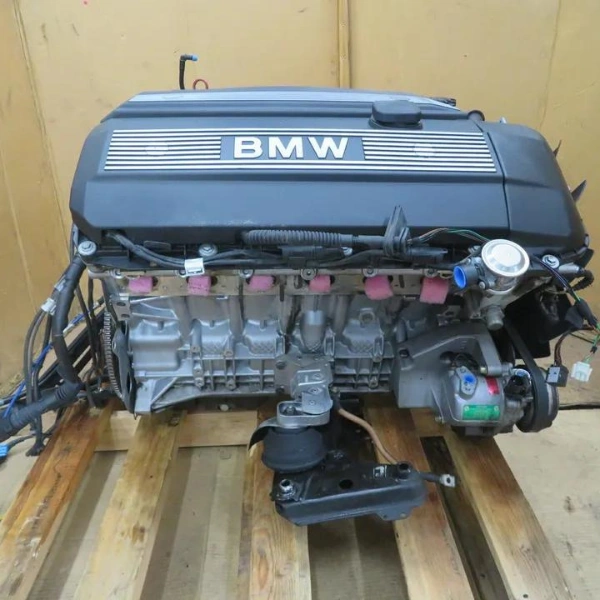
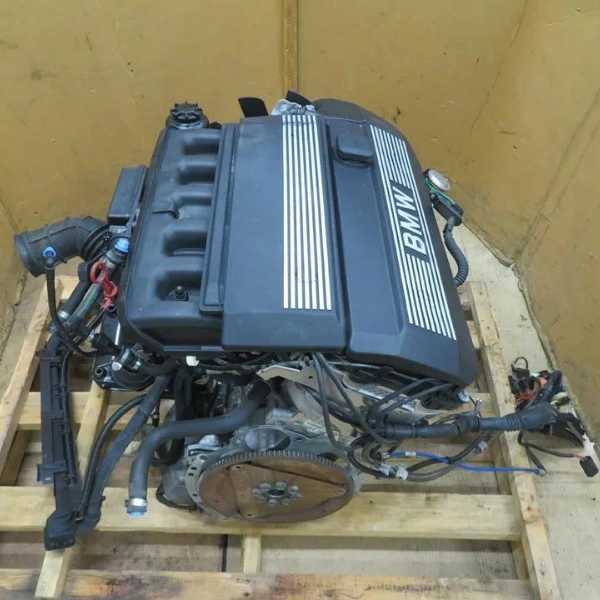
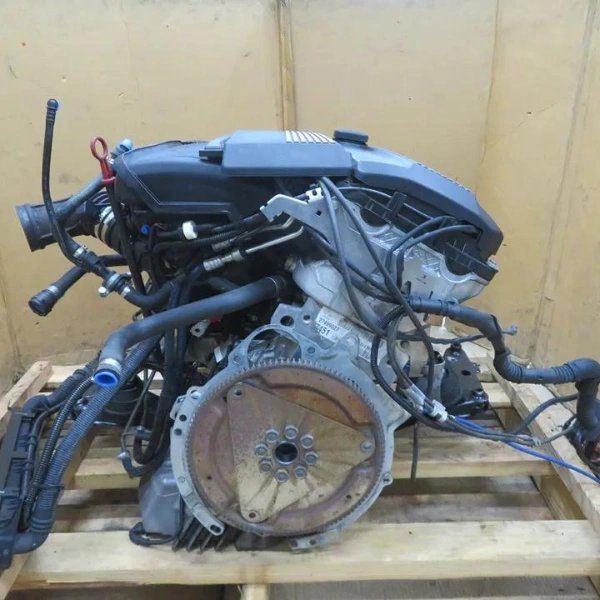
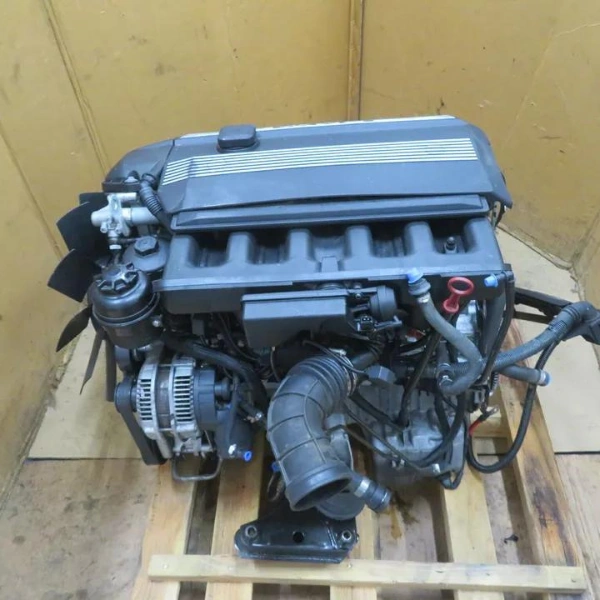
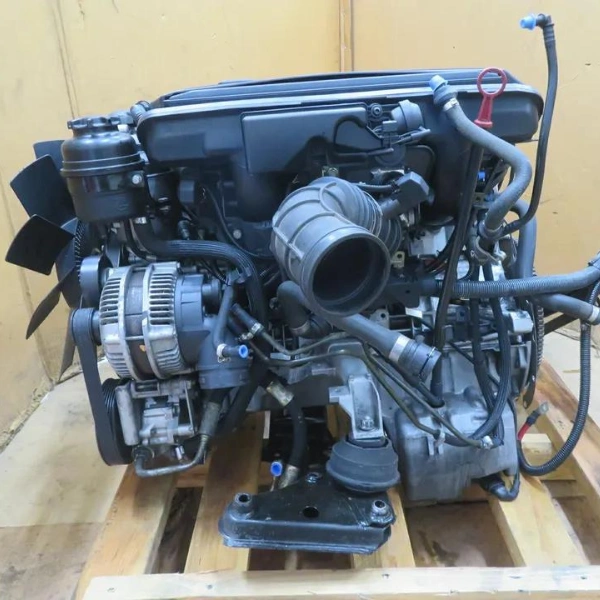
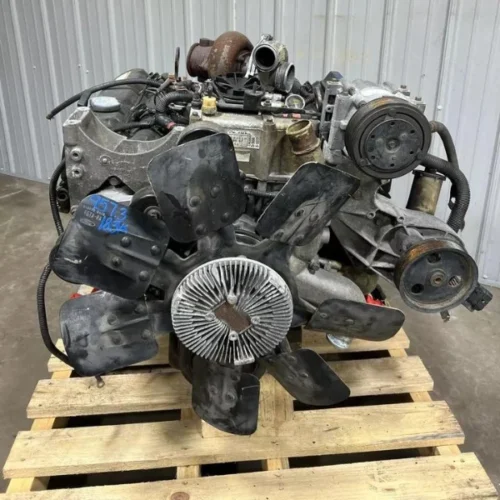
BMW M52 Engine for Sale | OEM Inline-6 DOHC E36 E39 (1994 to 2000)
$4,449.00
Product Overview
- Engine Family: BMW M52, inline-6 DOHC naturally aspirated
- Production Years: M52: 1994 to 1998 | M52TU: 1998 to 2001
- Condition: OEM used, compression tested and inspected
- Availability: M52B20, M52B25, and M52B28 variants, call to confirm
- Shipping: Free freight to all 50 states, 5 to 10 business days
- All 6 cylinders pressure-tested with results shared before payment
- Nikasil vs iron block confirmed before every order ships
- M52 vs M52TU generation confirmed, single vs double VANOS documented
- Cooling system component condition assessed
- Zero core charge required, your existing engine stays with you
- Backed by a 15 day replacement warranty against internal defects
Did you like this product? Add to favorites now and follow the product.
(+800) 1234 5678 90 Start Live Chat
Description
Engine Background
The BMW M52 is the inline-six DOHC engine that powered BMW’s core lineup from 1994 through 2000, covering the E36 3-series, E39 5-series, E38 7-series, and E36/7 Z3 roadster. It succeeded the acclaimed M50 by adding variable valve timing (single VANOS on intake), increasing displacement to 2.8 liters in its largest form, and transitioning to aluminum block construction in most markets. The M52 and its high-performance derivative (the S52, used in the US-market E36 M3) appeared on Ward’s 10 Best Engines list from 1997 through 2000.
The M52’s most important characteristic for buyers in the used engine market is the block material distinction. In most international markets, the M52 used an aluminum block with Nikasil cylinder bore coating, a nickel-silicon-carbide surface coating that provided excellent thermal properties but was vulnerable to sulfur corrosion in fuels with high sulfur content. Countries including the United States, Canada, and several others received cast iron cylinder blocks in most M52 applications to avoid this problem. The exception was the BMW Z3 in North America, which received the aluminum block M52B28.
From 1998, BMW introduced the M52TU (Technical Update) which added double VANOS (variable timing on both camshafts rather than just the intake), replaced Nikasil with Alusil bore coating in the aluminum block versions, and revised the head and block design to be nearly identical to the later M54 that replaced it in 2000. The M52TU head and block parts are largely interchangeable with the M54, making the M52TU one of the most easily updated and best-supported of the M52 variants.
When Replacement Becomes Necessary
- Cold-start VANOS rattle lasting more than 3 to 4 seconds, single VANOS (M52) or double VANOS (M52TU) solenoid screen clogging. Normal VANOS engagement is a brief rattle that clears quickly.
- Loss of power or rough idle, VANOS seal degradation reducing cam timing authority, or Nikasil bore wear on early aluminum-block units (compression test will reveal bore wear)
- Coolant loss or overheating, plastic cooling system components including thermostat housing, expansion tank, and water pump impeller are known failure points on all M52 engines
- Oil leaks at valve cover gasket and oil filter housing, the two most common external oil leak points on aged M52 engines
- Hard starting or rough running, VANOS solenoid screen clogged with sludge from infrequent oil changes
- Compression loss across multiple cylinders on aluminum-block M52, Nikasil bore wear on early units exposed to high-sulfur fuel
Known Issues We Document Before Shipping
- Nikasil bore wear, the early aluminum-block M52’s critical weakness: the Nikasil cylinder bore coating is vulnerable to sulfur in fuel. Where fuel quality was poor, sulfur corroded the Nikasil, causing premature cylinder wall wear and compression loss. This appears as low, declining compression across multiple cylinders. US-market M52s (except Z3) have iron blocks that avoid this entirely. We confirm block type before every order. Any aluminum-block unit with suspected Nikasil wear is rejected.
- Cooling system plastic components: like all BMW inline-sixes of this era, the M52 uses plastic thermostat housing, water pump impeller, and expansion tank components that degrade over time. Replacing these at installation is mandatory. Overheating risks head gasket failure on the aluminum head.
- VANOS seal and solenoid degradation: M52 (single VANOS) and M52TU (double VANOS) both rely on oil pressure and solenoid-directed oil flow. Internal O-rings and seals dry out with age. Solenoid screens clog with oil sludge from infrequent oil changes. We inspect VANOS solenoid connectors and check for related fault codes on every unit.
- Oil filter housing gasket: a common high-mileage M52 oil leak source. The gasket between the oil filter housing and the block deteriorates with age and heat. We note any seepage during external inspection.
- CCV (Crankcase Ventilation) system on M52TU: the plastic CCV components can crack with age, allowing unmetered air into the intake (rough idle), oil consumption, and pressurized crankcase (gasket damage). CCV refresh at installation is good practice.
M52 Variants by Displacement and Generation
Critical buyer information across the 1994 to 2000 production run:
| Variant | Applications | Displacement | HP | Notes |
|---|---|---|---|---|
| M52B20 | E36 320i (European) | E39 520i (European) | 1,991 cc | 150 hp at 5,900 rpm | Smallest M52. Less common in US market. Aluminum or iron block depending on market. |
| M52B20TU | E46 320i (early) | 1,991 cc | 150 hp | Double VANOS. Nearly identical to M54B22 in head/block design. |
| M52B25 | E36 323i/325i | E39 523i | 2,494 cc | 170 hp at 5,500 rpm | Mid-range. Oversquare bore/stroke. Most common outside the US. |
| M52B28 | E36 328i | E39 528i | E38 728i | Z3 2.8 | 2,793 cc | 193 hp at 5,300 rpm | Most desirable. Square bore/stroke (84x84mm). Iron block in US E36/E39. Aluminum block in Z3. |
| M52TUB28 | E46 328i (early) | E39 528i (late) | 2,793 cc | 193 hp at 5,500 rpm | Double VANOS. Alusil block. Nearly identical to M54 head/block. Most reliable M52. |
| INCLUDED- Long Block | Inline-6 block, crankshaft, pistons, connecting rods, dual camshafts, aluminum DOHC cylinder head, VANOS unit (single or double depending on variant), valve train, oil pan, front timing cover. |
|---|---|
| NOT INCLUDED | Intake manifold, throttle body, fuel injectors, alternator, power steering pump, A/C compressor, ECU and wiring harness, cooling system components (water pump, thermostat, expansion tank). |
| Critical Note | Replace water pump, thermostat, and expansion tank at installation. Non-negotiable. Plastic cooling system failure causes head warping. |
| Core Note | No core charge. |
What Ships and What Does Not
| BMW E36 3-Series 320i, 323i/325i, 328i | 1994 to 1999- primary application |
|---|---|
| BMW E39 5-Series 520i, 523i, 528i | 1995 to 2000 |
| BMW E38 7-Series 728i | 1995 to 1998 |
| BMW E36/7 Z3 2.0, 2.3/2.5, 2.8 | 1995 to 2002 |
| BMW E46 3-Series (early)- M52TU only | 1998 to 1999 |
| Swap Applications | The M52 fits E30 and earlier E36 chassis with appropriate mounts. Popular step-up from M50 in E30 builds. |
Direct-Fit Vehicle Applications
| BMW M52 | Most common buyer search code |
|---|---|
| M52B28 | Largest displacement variant- most searched |
| BMW E36 328i engine | Application search |
| BMW E39 528i engine | 5-series application buyer |
| BMW M52 2.8L | Displacement-format buyer |
| M52TU engine | Technical update version buyer |
| BMW inline-6 M52 | Configuration designation |
| M52 iron block | Block material buyer- Nikasil-aware buyer |
| M52 VANOS engine | Feature designation buyer |
| BMW 328i engine replacement | Replacement buyer intent |
Used OEM Versus Specialist Rebuild
For an E36 3-series, E39 5-series, E38 7-series, or Z3 roadster with engine failure, a documented used M52 with block type verified and VANOS condition disclosed is the cost-effective replacement path. For a high-mileage donor or for a Z3 build, a specialist refresh with fresh VANOS seals, refreshed cooling components, CCV refresh, and supporting hardware is the better long-term investment. Specialist M52 rebuilds typically run $3,500 to $6,000 from established BMW shops.
Inspection Workflow
- Compression test logged across all 6 cylinders with uniformity reported
- Block type confirmed: Nikasil aluminum, Alusil aluminum (M52TU), or iron (most US-market M52)
- Generation confirmed: M52 (single VANOS) or M52TU (double VANOS)
- Variant identified: M52B20, M52B25, or M52B28
- VANOS solenoid condition externally assessed
- Cooling system components externally inspected (water pump, expansion tank, thermostat)
- Oil filter housing gasket area inspected for seepage
- Valve cover gasket area inspected for seepage
Pre-Purchase Buyer Notes
- Verify block type before ordering: US-market M52s mostly use iron blocks (except Z3 with aluminum), avoiding the Nikasil concern. International-market units may have aluminum-Nikasil blocks. We confirm block type on every order.
- Plan a complete cooling system refresh at installation: water pump, expansion tank, thermostat, hoses, and coolant flush. The BMW straight-six cooling system has multiple known weak points. Refresh at install prevents post-install overheating.
- Refresh VANOS at installation: VANOS rebuild kits (Beisan Systems or equivalent) with fresh O-rings and seals are inexpensive. Installing while the engine is out is dramatically cheaper than later.
- For M52TU, refresh the CCV system at install: the plastic CCV valve and lines on the M52TU degrade over time. Inexpensive insurance.
- Use BMW-specification oil at 5,000-mile intervals: 5W-30 LL-01 specification (Mobil 1 0W-40 or equivalent is acceptable). The factory 15,000-mile interval is widely considered too long for VANOS longevity.
Why Buy From Part Nests
- Block type confirmed: Nikasil aluminum, Alusil aluminum, or iron documented before payment
- Generation confirmed: M52 (single VANOS) or M52TU (double VANOS)
- Variant identified: M52B20, M52B25, or M52B28
- VANOS solenoid condition externally assessed
- Cooling system components externally inspected
- All 6 cylinders compression-tested with uniformity reported
- No core return required
- Free freight delivery to every state
- 15 day replacement warranty against internal defects
- Call (240) 306-7051 to speak with someone who knows M52 Nikasil versus iron block identification, M52 versus M52TU VANOS differences, and Z3 versus E36/E39 application matching
Additional information
| engine-family | BMW M52- inline-6 DOHC naturally aspirated |
|---|---|
| variants | M52B20 (2.0L) | M52B25 (2.5L) | M52B28 (2.8L) | M52TU versions of each |
| m52b28-bore-x-stroke | 84 mm x 84 mm (square engine) |
| m52b28-hp | 193 hp at 5, 300 rpm (standard) | 193 hp at 5, 500 rpm (M52TU) |
| m52b28-torque | 207 lb-ft at 3, 950 rpm |
| compression | 10.2:1 (M52B28) |
| redline | 500 rpm across all variants, 6 |
| vanos | Single- intake only (M52) | Double- intake and exhaust (M52TU) |
| block-us-market-e36-e39 | Cast iron- avoids Nikasil sulfur corrosion problem |
| block-z3-and-european | Aluminum with Nikasil (pre-1998) or Alusil (M52TU from 1998) |
| production-years | M52: 1994 to 1998 | M52TU: 1998 to 2001 |
| awards | 1998, 1999, 2000, Ward's 10 Best Engines 1997 |
| replaced-by | BMW M54 (2000) |
| manufacturer | BMW (Munich, Germany) |
| condition | compression tested and inspected, Used OEM |
Variable valve timing system and bore coating. The original M52 (1994 to 1998) uses single VANOS (variable timing on intake camshaft only) and may have Nikasil bore coating on aluminum-block versions. The M52TU (Technical Update, 1998 to 2001) adds double VANOS (variable timing on both camshafts), replaces Nikasil with Alusil bore coating on aluminum blocks, and revises the head and block design to be nearly identical to the later M54. The M52TU is generally considered the more refined and serviceable variant.
Nikasil is a nickel-silicon-carbide cylinder bore coating used on aluminum-block M52 engines in many international markets. Nikasil provides excellent thermal properties but is vulnerable to sulfur corrosion from high-sulfur fuel. In markets where fuel quality was poor, the Nikasil coating wore prematurely, causing compression loss. BMW addressed this by using iron blocks in most US-market M52 applications (except Z3) and by switching to Alusil coating in the M52TU. We confirm block type on every order.
Most do not. BMW used iron blocks for most US-market M52 applications (E36 328i, E39 528i, E38 728i, etc.) to avoid the Nikasil concern entirely. The exception is the North American BMW Z3, which received aluminum-block M52B28 engines with Nikasil coating. For Z3 buyers, the Nikasil concern is real and we specifically assess for bore wear indicators.
Displacement and tuning. The M52B20 is 2.0L producing 150 hp (used in 320i and 520i). The M52B25 is 2.5L producing 170 hp (used in 323i, 523i, 528i in some markets, Z3 2.3 in some markets). The M52B28 is 2.8L producing 193 hp (used in 328i, 528i, 728i, and Z3 2.8). All three share the same basic architecture but use different bore, stroke, and tuning combinations.
BMW E36 3-series (323i, 328i from 1996), E39 5-series (523i, 528i), E38 7-series (728i), and Z3 roadster (2.3, 2.8). Production ran 1994 to 1998 for the original M52 and 1998 to 2001 for the M52TU. The M52 was succeeded by the M54 in 2000 in most applications, though M52TU continued in some Z3 applications through 2001.
BMW's continuous variable valve timing system applied to both the intake AND exhaust camshafts (versus single VANOS, which applies only to the intake camshaft). The M52TU was BMW's first widely-deployed double VANOS engine. The result is a flatter torque curve from low rpm through redline. Symptoms of VANOS wear include rough idle, lost low-rpm torque, and cold-start rattle exceeding 3 to 4 seconds.
Yes. Timing chain failure causes valve-to-piston contact and head damage. The M52 uses a timing chain (not a belt), so service intervals are longer than belt-driven engines, but chain guide wear is a known issue on high-mileage M52s. Cold-start chain rattle is the primary wear indicator.
No. There is no core return required.
15 Day Replacement Warranty
Every used BMW M52 engine purchased through Part Nests carries a 15 day replacement warranty starting on the delivery date.
What Is Covered
- Internal defects already present when the engine arrives
- Performance materially different from how the engine was described
- Incorrect part shipped due to an error on our end
What Is Not Covered
- Damage caused during installation
- Damage from skipped cooling system service at installation
- Damage from non-BMW-specification fluids
- External components unless specifically itemized
- Labor expenses of any kind
To start a warranty claim, reach us within 15 days of delivery at (240) 306-7051.
- Block Type Confirmed: Nikasil, Alusil, or iron documented before payment
- Generation Verified: M52 (single VANOS) or M52TU (double VANOS)
- Variant Identified: M52B20, M52B25, or M52B28 disclosed on every order
- VANOS Condition Noted: Solenoid wear indicator externally assessed
- Cooling System Inspected: Plastic component condition flagged
- 15 Day Replacement Cover: Internal defects protected from delivery onward
2 reviews for BMW M52 Engine for Sale | OEM Inline-6 DOHC E36 E39 (1994 to 2000)
Related products
About Us
At Part Nests, we specialize in high-quality used and OEM auto parts, with a wide selection of components ready to ship to customers.
© 2026 Part Nests. All rights reserved.

Wayne H. –
Got an M52B28 (iron block) for a 1998 528i replacement. Block type confirmed as iron (US-market specification, no Nikasil concern), generation confirmed as M52 (single VANOS) matching the chassis year. All six cylinders tested uniform on compression. Plan a complete cooling system refresh at install per their strong recommendation.
Patrick L. –
Sourced an M52B28 for a Z3 project. Block type correctly identified as aluminum-Nikasil (the Z3 exception in US market), specific bore wear inspection performed and disclosed as acceptable for the donor mileage. Plan a VANOS rebuild kit at install per their advice. Foundation for the Z3 is solid with proper service planned.