

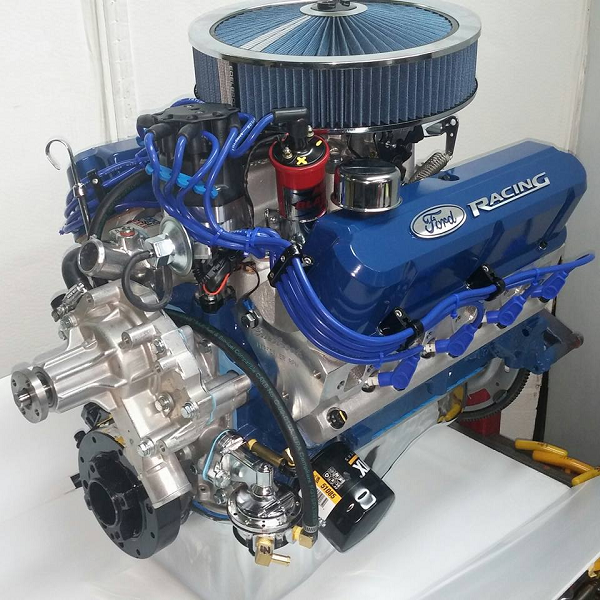
Ford 302 Engine for Sale | OEM Used 5.0L Windsor Small Block V8
$1,599.00
Product Overview
- Displacement: 302 cu in (5.0L, technically 4.942L)
- Engine Family: Ford Windsor Small Block
- Configuration: V8, OHV, 16 valves
- Horsepower: 130 to 290 hp, confirmed at order
- Condition: OEM used, compression tested and inspected
- Availability: Multiple year ranges including 5.0 HO variants in stock
- Shipping: Free freight to all 50 states, 5 to 10 business days
- All 8 cylinders pressure-tested with results shared before payment
- Year, cam type, and fuel system documented before shipping
- Fitment verified before every order ships
- Zero core charge required, your existing engine stays with you
- Backed by a 15 day replacement warranty against internal defects
Did you like this product? Add to favorites now and follow the product.
(+800) 1234 5678 90 Start Live Chat
Description
Engine Background
The Ford 302 is one of the most important small block V8 engines Ford ever produced. Born in 1968 by stroking the proven 289 to a 3.00 inch stroke, the 302 was created specifically to meet the FIA 5.0-liter displacement limit for endurance racing, the same limit that allowed the GT40 to compete at Le Mans. In its debut year the 302 powered the GT40 to victory at Le Mans and was simultaneously made available in the Mustang, establishing a dual racing-and-street identity it never lost.
In 1969 and 1970 the Boss 302 Mustang used a unique high-revving version of the engine with Cleveland-style canted valve heads, solid lifters, and 4-bolt main caps, rated conservatively at 290 hp but producing significantly more in Trans-Am racing trim. The Boss 302 secured the 1970 SCCA Trans-Am Manufacturers Championship for Ford.
In its later life as the 5.0 HO in Fox Body and SN95 Mustangs from 1982 to 1995, the 302 became the foundation of an entire generation of American performance car culture. The factory roller camshaft from 1985 and sequential EFI from 1986 transformed it into a modern performance engine that remains one of the most modifiable V8s ever built. Call (240) 306-7051 to confirm which variant matches your project.
When Replacement Becomes Necessary
- Oil burning on startup, valve stem seal wear on older flat-tappet engines
- Timing chain noise at cold start, worn chain on pre-1982 engines
- Knocking under load, rod or main bearing wear on high-mileage units
- Loss of compression on one or more cylinders, ring wear or scored walls
- Oil leaks at the rear main seal, the two-piece pre-1982 seal is a known seep point
- EFI hesitation or rough idle not resolved by basic tune, mass airflow sensor or injector wear on 5.0 HO units
Known Issues We Document Before Shipping
- Nylon cam gear failure on pre-1985 flat-tappet engines: early 302 engines used a nylon timing gear that degrades with age and heat and can fail suddenly. We check timing gear condition during inspection.
- Flat-tappet cam wear: pre-1985 302 engines need ZDDP zinc additive in the oil. Many were run for years with modern low-zinc oil. We inspect and report on valvetrain condition indicators.
- E7TE head flow limitation: the 1987 to 1995 5.0 HO used E7TE cast iron heads, adequate in stock form but a restriction in performance builds. We note head casting for every unit.
- TBI versus SEFI fuel system: some 1980 to 1985 302 engines used throttle body injection. 1986 onward used superior sequential multi-port EFI. We confirm the fuel system type before shipping.
- Boss 302 identification: both Cleveland-style canted valve heads and 4-bolt main caps are required to confirm a genuine Boss 302 unit. We document this thoroughly.
Ford 302 Variants by Year and Application
The 302 went through several significant evolutions across its 33-year production run:
| Variant | Years | HP | Compression | Notes |
|---|---|---|---|---|
| Standard 302 (2V) | 1968 to 1976 | 130 to 210 hp | 8.0 to 9.5:1 | Base engine. Hydraulic flat-tappet cam. 2-barrel carb. Common in Mustang, Maverick, Granada. |
| 4V 302 | 1968 to 1973 | 230 hp | 9.0 to 9.5:1 | 4-barrel carb option. Flat-tappet cam. |
| Boss 302 | 1969 to 1970 | 290 hp (underrated) | 10.5:1 | Cleveland canted valve heads. Solid lifters. 4-bolt mains. Trans-Am racing development. |
| 5.0 HO Early | 1982 to 1984 | 157 hp (net) | 8.3:1 | H.O. tag returns on Mustang GT. Flat-tappet cam. 4V carb. |
| 5.0 HO Roller | 1985 | 210 hp | 8.3:1 | First roller cam year. Significant durability improvement. |
| 5.0 HO EFI | 1986 to 1995 | 225 hp | 9.0:1 | Sequential multi-port EFI from 1986. The definitive Fox Body Mustang GT engine. |
| 5.0 HO Cobra | 1993 | 235 hp | 9.0:1 | GT40-style head and intake. SVT Cobra-specific variant. |
| 5.0 Truck and SUV | 1982 to 2001 | 150 to 205 hp | 8.4 to 9.0:1 | F-150, Bronco, Explorer. Roller cam from 1985. Continued after Mustang 5.0 retired. |
| C8OE-6015 / C9OE-6015 | 1968 to 1969 common blocks |
|---|---|
| D0OE to D4OE | 1970 to 1974 standard blocks |
| E0AE to E9AE | 1980 to 1989 era blocks- roller provisions from 1985 |
| F1AE to F7AE (E7TE heads) | 1991 to 1997- most common late 5.0 HO era |
What Ships and What Does Not
| INCLUDED- Long Block | Block, crankshaft, pistons, connecting rods, camshaft, cylinder heads, valve train, oil pan, front timing cover, water pump where present. |
|---|---|
| NOT INCLUDED | Intake manifold, carburetor or EFI system, exhaust manifolds, distributor or coil packs, alternator, power steering pump, starter, flywheel or flexplate, accessory brackets. |
| Short Block Option | Call (240) 306-7051 if you need a short block only. |
| Core Note | No core charge. |
Direct-Fit Vehicle Applications
| Ford Mustang (all body styles) | 1968 to 1995 (Fox Body and SN95) |
|---|---|
| Ford Maverick | 1970 to 1977 |
| Ford Granada | 1975 to 1980 |
| Ford Fairlane and Torino | 1968 to 1971 |
| Ford F-150 and F-250 | 1969 to 1996 |
| Ford Bronco (Full Size) | 1978 to 1996 |
| Ford Explorer | Some 1991 to 2001 applications |
| Mercury Cougar | 1968 to 1974 |
| Lincoln Continental | Some 1979 to 1985 applications |
Search Terms Buyers Use
| Ford 302 | Most common buyer search |
|---|---|
| Ford 5.0L engine | 5.0 liter designation- Mustang and truck buyers |
| 5.0 HO engine | High Output Mustang GT engine buyer |
| Boss 302 | Classic performance variant collector |
| Ford 302 Windsor | Family designation |
| 302 small block Ford | SBF designation |
| Fox body 302 engine | Fox Body Mustang specific |
| Ford 302 motor | Motor vs engine buyer |
| 5.0 Ford crate engine | Crate and builder buyer |
| 1969 Boss 302 engine | Classic collector year-specific buyer |
Not sure if this fits? Call us at (240) 306-7051. We verify year, cam type, and fuel system before every order ships.
Used OEM Versus Specialist Rebuild
For a classic Mustang, Fox Body, F-150, Bronco, or full-size Ford restoration on a reasonable budget, a documented used 302 with year and fuel system verified is the cost-effective path. For a performance build targeting 400-plus horsepower from a 302 platform, a specialist rebuild with aluminum heads (AFR, TFS, Edelbrock), a hydraulic roller cam, and supporting hardware is the better foundation. Built 302s with aluminum heads and a roller cam typically run $5,500 to $8,500 from established Ford specialist shops.
Inspection Workflow
- Compression test logged across all 8 cylinders with uniformity reported
- Year and cam type documented: flat-tappet (pre-1985) or roller (1985 onward)
- Fuel system identified: carbureted, TBI, or SEFI
- Nylon cam gear status checked on pre-1985 units
- Head casting documented (E7TE on 1987 to 1995 5.0 HO, others on earlier units)
- Main cap configuration noted (2-bolt standard, 4-bolt on Boss 302)
- External oil leak survey at valve covers, front and rear seals (especially the two-piece pre-1982 rear main), oil pan
Pre-Purchase Buyer Notes
- Match firing order at installation: the 302 fires 1-5-4-2-6-3-7-8. The 351 Windsor fires 1-3-7-2-6-5-4-8. These are different. Using 351W plug wire routing on a 302 (or vice versa) causes severe misfiring.
- Use ZDDP additive on flat-tappet cams: pre-1985 302s require high-zinc oil. Modern low-zinc oils accelerate cam lobe wear.
- Plan a nylon timing gear refresh on pre-1985 units: the factory nylon timing gear is a known failure point. Replacing it with a steel gear at installation is inexpensive insurance.
- Match fuel system to your application: a carbureted 302 in an EFI chassis requires fuel system conversion. A SEFI 302 in a carbureted chassis is simpler but requires fuel pump and tank changes.
- Plan rear main seal service on pre-1982 units: the two-piece rear main seal is a known seep point. Upgrade to a one-piece seal kit at installation.
Why Buy From Part Nests
- Year and cam type documented before payment
- Fuel system identified: carbureted, TBI, or SEFI
- Head casting recorded (E7TE on 1987 to 1995 5.0 HO)
- Main cap configuration noted (4-bolt on Boss 302 specifically)
- Nylon cam gear status checked on pre-1985 units
- All 8 cylinders compression-tested with uniformity reported
- No core return required
- Free freight delivery to every state
- 15 day replacement warranty against internal defects
- Call (240) 306-7051 to speak with someone who knows 302 versus 351W firing order differences, 5.0 HO Fox Body variants, and Boss 302 identification
Additional information
| displacement | 302 cu in (5.0L- technically 4.942L) |
|---|---|
| engine-family | Ford Windsor Small Block |
| configuration | 16 valves, OHV, V8 |
| bore-x-stroke | 4.000 in x 3.000 in |
| firing-order | 1-5-4-2-6-3-7-8- DIFFERENT from 351 Windsor |
| aspiration | Naturally Aspirated |
| fuel-system | 2V or 4V carb (1968 to 1985) | SEFI from 1986 |
| block-material | Cast Iron |
| head-material | Cast iron (Cleveland heads on Boss 302 only) |
| main-bearing-caps | 2-bolt standard | 4-bolt Boss 302 only |
| production-years | 1968 to 2001 |
| manufacturer | Ford Motor Company |
| horsepower | 130 to 290 hp- confirmed at order |
| torque | 235 to 310 lb-ft- confirmed at order |
| compression-ratio | 8.0:1 to 10.5:1- variant dependent |
| compatible-transmissions | AOD automatic | T5, C4, C6, Top Loader 4-speed manual |
| oil-capacity | Approximately 4 quarts with filter |
| weight-long-block | Approximately 460 to 500 lbs |
| condition | compression tested and inspected, Used OEM |
Stroke and firing order. The 302 has a 3.00 inch stroke; the 351 Windsor has a 3.50 inch stroke. Both share the same 4.00 inch bore. Critically, the firing orders differ: 302 fires 1-5-4-2-6-3-7-8 while 351W fires 1-3-7-2-6-5-4-8. Using the wrong firing order causes severe misfiring. This is the most common 302/351W installation error.
The High Output 5.0 (sequential multi-port EFI 302) used in 1986 to 1995 Fox Body and SN95 Mustang, plus some F-150 and Bronco applications. Output rose from approximately 225 hp on early 1986 units to 215 to 225 hp on later Mustangs (varying by year). It features a roller cam (from 1985), sequential EFI (from 1986), and the E7TE cast iron heads (1987 onward).
A one-year-only (1969 and 1970) high-performance variant with Cleveland-style canted valve heads, solid lifters, 4-bolt main caps, and a high-performance camshaft. Rated at 290 hp but widely considered underrated, the Boss 302 powered Ford to the 1970 SCCA Trans-Am Manufacturers Championship. Genuine Boss 302 units require both canted-valve heads and 4-bolt main caps for verification.
Pre-1985 302s used a nylon timing gear that degrades with age and heat. Failed nylon gears can cause sudden timing chain failure. Replacement with a steel gear is the standard service at installation on any pre-1985 302. Inexpensive insurance against a potentially catastrophic failure.
The cast iron cylinder head used on 1987 to 1995 5.0 HO Mustang and F-150 applications. E7TE is the casting number on the head. The head is adequate in stock form but a restriction in performance builds. Aftermarket aluminum heads (TFS Twisted Wedge, AFR, Edelbrock) flow significantly better and are the standard upgrade for serious 5.0 HO performance work.
Mechanically yes, with consideration. The 5.0 HO is a SEFI engine with a roller cam, requiring an EFI fuel system, ECU, harness, and roller-compatible valvetrain. A 1968 Mustang originally had a carbureted setup. Either convert the chassis to EFI or use a 1969 to 1985 carbureted 302 with the original fuel system. Both paths work.
Naming convention only. 302 refers to displacement in cubic inches (4.942L actually). 5.0L is the marketing name introduced for the 1982 Mustang Fox Body. The displacement is effectively the same. A 302 and a 5.0L Ford small block are the same engine family.
No. There is no core return required.
15 Day Replacement Warranty
Every used Ford 302 engine purchased through Part Nests carries a 15 day replacement warranty starting on the delivery date.
What Is Covered
- Internal defects already present when the engine arrives
- Performance materially different from how the engine was described
- Incorrect part shipped due to an error on our end
What Is Not Covered
- Damage caused during installation
- Damage from incompatible components or wrong oil type (modern low-zinc on flat-tappet cams)
- External components unless specifically itemized
- Labor expenses of any kind
To start a warranty claim, reach us within 15 days of delivery at (240) 306-7051.
- Year and Cam Type Documented: Flat-tappet or roller confirmed before payment
- Fuel System Identified: Carbureted, TBI, or SEFI noted on every order
- Head Casting Recorded: E7TE on 5.0 HO units specifically flagged
- Main Cap Configuration Noted: 2-bolt or 4-bolt (Boss 302) verified
- All 8 Cylinders Tested: Compression results shared before payment
- 15 Day Replacement Cover: Internal defects protected from delivery onward
6 reviews for Ford 302 Engine for Sale | OEM Used 5.0L Windsor Small Block V8
Related products
About Us
At Part Nests, we specialize in high-quality used and OEM auto parts, with a wide selection of components ready to ship to customers.
© 2026 Part Nests. All rights reserved.

Bryan T. –
Got a 1990 5.0 HO for a Fox Body Mustang build. Year and cam type confirmed (roller), SEFI fuel system documented, E7TE heads identified. All eight cylinders tested uniform on compression. Bolted in cleanly with the original SEFI harness. Foundation for a clean street build.
Mark L. –
Sourced a pre-1985 carbureted 302 for a 1971 Mustang restoration. Honest about the nylon cam gear (replacing with steel at install per their recommendation). Flat-tappet cam noted with ZDDP additive plan. Solid restoration foundation at a reasonable price.
Bryan T. –
Got a 1990 5.0 HO for a Fox Body Mustang build. Year and cam type confirmed (roller), SEFI fuel system documented, E7TE heads identified. All eight cylinders tested uniform on compression. Bolted in cleanly with the original SEFI harness. Foundation for a clean street build.
Mark L. –
Sourced a pre-1985 carbureted 302 for a 1971 Mustang restoration. Honest about the nylon cam gear (replacing with steel at install per their recommendation). Flat-tappet cam noted with ZDDP additive plan. Solid restoration foundation at a reasonable price.
Bryan T. –
Got a 1990 5.0 HO for a Fox Body Mustang build. Year and cam type confirmed (roller), SEFI fuel system documented, E7TE heads identified. All eight cylinders tested uniform on compression. Bolted in cleanly with the original SEFI harness. Foundation for a clean street build.
Mark L. –
Sourced a pre-1985 carbureted 302 for a 1971 Mustang restoration. Honest about the nylon cam gear (replacing with steel at install per their recommendation). Flat-tappet cam noted with ZDDP additive plan. Solid restoration foundation at a reasonable price.