
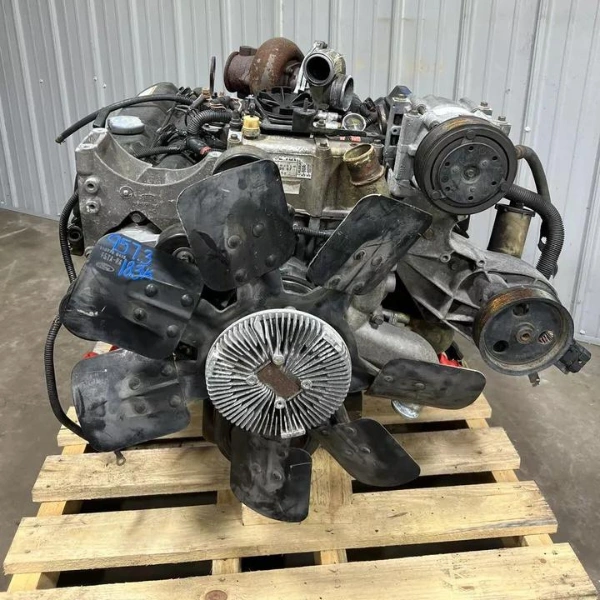
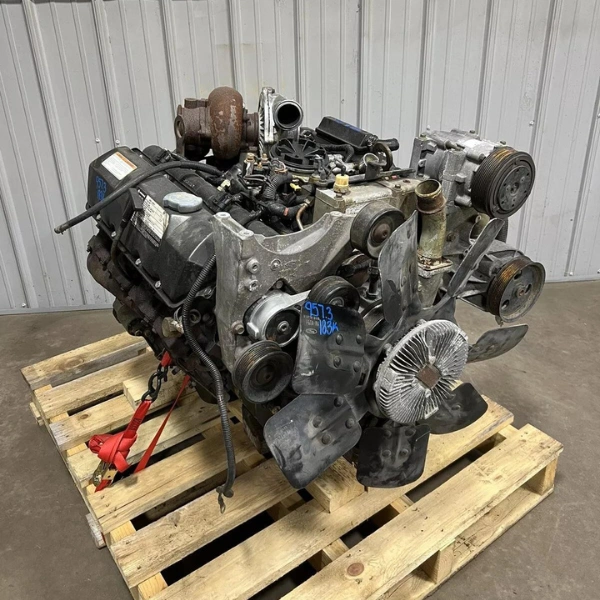
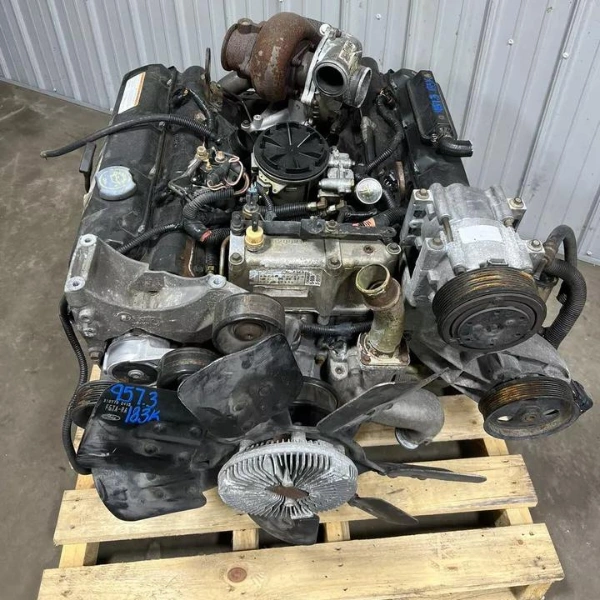
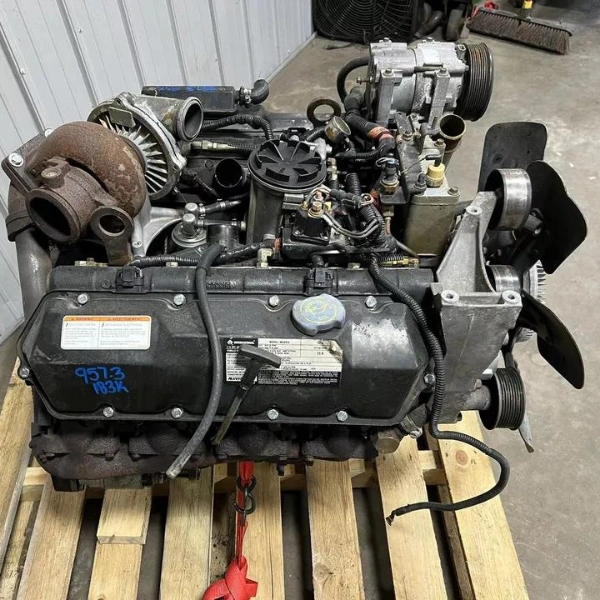
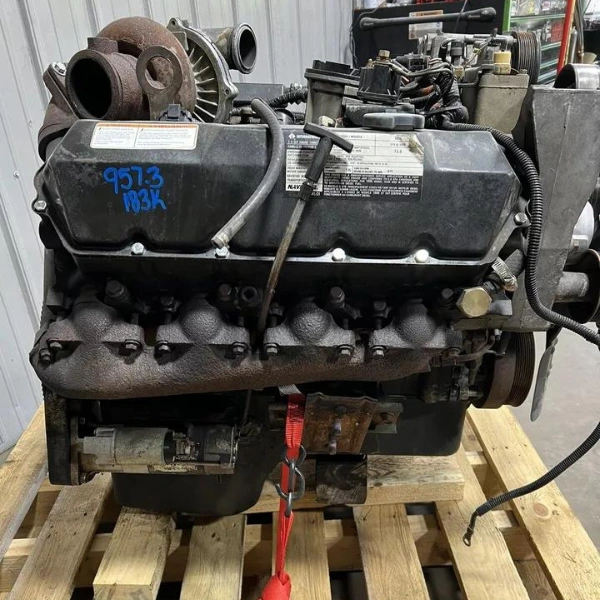
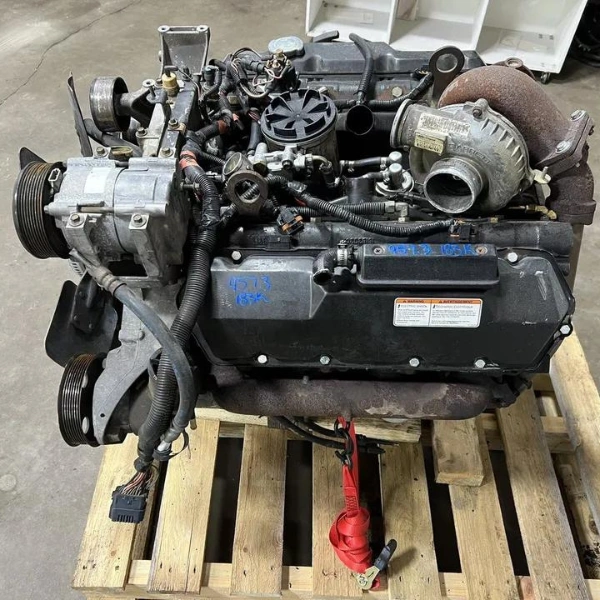
Used 7.3 Powerstroke Engine for Sale | OEM Ford 7.3L V8 Turbo Diesel (444 cu in)
$2,799.00
Product Overview
- Displacement: 7.3L (444 cu in)
- Engine Family: Ford / Navistar T444E
- Configuration: V8 OHV, 2 valves per cylinder
- Horsepower: 210 to 275 hp by year and calibration
- Condition: OEM used, compression tested and inspected
- Availability: Multiple year ranges 1994 to 2003 in stock
- Shipping: Free crated freight to all 50 states, 5 to 10 business days
- All 8 cylinders pressure-tested with results shared before payment
- Year, turbo type, and injector generation documented before shipping
- Oil pressure and HPOP condition inspected and reported
- Fitment verified before every order ships
- Zero core charge required, your existing engine stays with you
- Backed by a 15 day replacement warranty against internal defects
Did you like this product? Add to favorites now and follow the product.
(+800) 1234 5678 90 Start Live Chat
Description
Engine Background
The 7.3 Powerstroke is the V8 turbo diesel that built Ford’s modern Super Duty reputation. Manufactured by Navistar International and badged for Ford from 1994 through 2003, it was the engine of choice for serious truck owners who needed real towing capacity, real durability, and real working life. Stock output ranges from 210 hp on early 1994 production to 275 hp on 2002 to 2003 final-year units, with torque between 425 and 550 lb-ft. With routine maintenance, these engines regularly clear 400,000 to 500,000 miles on the original bottom end.
Internally the engine uses a cast iron block, cast iron heads, a two-valve-per-cylinder OHV layout, and HEUI fuel injection (Hydraulic Electronic Unit Injector). HEUI uses high-pressure oil from the High Pressure Oil Pump (HPOP) to actuate the injectors, removing the high-pressure mechanical fuel pump from the system entirely. This is a key reason 7.3 owners prize the engine: fewer high-pressure fuel parts means fewer expensive failures over the long haul.
Why Ford Truck Owners Pick the 7.3 Over the Replacement Engines That Followed
The 6.0 and 6.4 Powerstroke that followed used much higher injection pressures and emissions hardware that introduced known reliability issues. The 7.3 has none of that complexity. It runs cooler, simpler, and longer. For F-250, F-350, F-450, and Excursion owners doing engine replacements or pre-emission diesel restorations, a clean used 7.3 is by far the best path back on the road.
When Replacement Becomes Necessary
- White smoke at startup that does not clear, head gasket failure or cup failure
- Low oil pressure on a warm engine, HPOP wear or main bearing wear
- Hard starting with cam position sensor codes, CPS failure or wear
- Loss of power and high EGT, turbocharger wear or wastegate stuck
- Knock or rattle under load, rod or main bearing wear on high-mileage units
- Coolant in oil or oil in coolant, oil cooler failure or head gasket
- Strong fuel smell from oil dipstick, leaking injector O-rings
Known Issues We Document Before Shipping
- Glow plug relay condition and harness wear, common across all year ranges
- HPOP output pressure under load, critical for HEUI injector firing
- Turbocharger shaft play, especially on heavily towed units
- Cam Position Sensor (CPS), a high-failure-rate part we document
- Oil leak from valve cover gaskets and rear main, disclosed if present
- Injector O-ring condition, leaks here cause fuel in oil
What Ships and What Does Not
| INCLUDED | Long block: block, crankshaft, rods, pistons, camshaft, heads, valve train, oil pan, valve covers. Turbocharger when present on donor unit. HPOP when present on donor unit. |
|---|---|
| NOT INCLUDED | Injectors, glow plugs, fuel rails, intake manifold, exhaust manifolds, ECU, harness, alternator, starter, A/C compressor, power steering pump, fan clutch, flexplate. |
| Fluids | Drained before shipping. Refill with diesel-rated 15W-40 motor oil meeting Ford spec. Fill HPOP reservoir before first crank. |
| Core Note | No core charge. You are not required to return your old engine. |
Direct-Fit Vehicle Applications
| Ford F-250 Super Duty | 1994 to 2003 |
|---|---|
| Ford F-350 Super Duty | 1994 to 2003 |
| Ford F-450 Super Duty | 1999 to 2003 |
| Ford F-550 Super Duty | 1999 to 2003 |
| Ford Excursion | 2000 to 2003 |
| Ford E-250 Econoline Van | 1995 to 2003 |
| Ford E-350 Econoline Van | 1995 to 2003 |
| Ford E-450 Econoline Cutaway | 1999 to 2003 |
| Ford F-Series Chassis Cab | 1994 to 2003 |
Not sure if this fits? Call us. We verify year, turbo type, and injector generation before every order ships.
Used OEM Versus Specialist Rebuild
For an F-250, F-350, F-450, or Excursion 7.3 Powerstroke replacement on a reasonable budget, a documented used engine with HPOP pressure verified and compression results uniform is the cost-effective path. For a build targeting modified output or a high-mileage commercial truck, a specialist rebuild with a fresh HPOP, updated injectors (Stage 1, Stage 2, or hybrid), refreshed turbo, and bearing service is the better long-term investment. Rebuilt 7.3 Powerstrokes typically run $9,500 to $14,500 from established Ford diesel specialist shops.
Inspection Workflow
- Compression test logged across all 8 cylinders with uniformity reported
- Year, turbo type, and injector generation documented for parts compatibility
- HPOP output pressure under load verified, critical for HEUI injection
- Turbocharger shaft play and wastegate function checked
- Cam Position Sensor function tested (known high-failure-rate part)
- Glow plug relay condition assessed
- External oil leak survey at valve covers, front and rear seals, oil pan
- Coolant condition checked for oil contamination, the oil cooler failure indicator
Pre-Purchase Buyer Notes
- Year matters for injector generation: 1994 to 1998.5 used early HEUI injectors. 1999 to 2003 used revised HEUI with different oil pressure requirements. Match injector generation to your truck or plan a complete injector replacement at installation.
- Plan a fresh HPOP at install on high-mileage units: HPOP wear is the most common 7.3 driveability failure, and labor is already invested while the engine is out. Aftermarket HPOPs from BD Diesel, Strictly Diesel, and others are widely available.
- Address the CPS preemptively: the Cam Position Sensor is a known wear part. Replace it at installation regardless of donor service records to prevent roadside no-start.
- Service the cooling system fully: replace the thermostat (or both, on dual-thermostat 7.3s), inspect the oil cooler, replace coolant per Ford spec. Oil cooler failure is the most common 7.3 catastrophic failure mode.
- Match the truck application: F-250 and F-350 7.3s typically saw heavy towing duty. Excursion units saw mixed passenger and towing duty. Donor history influences expected life remaining.
Why Buy From Part Nests
- Year, turbo type, and injector generation documented before payment
- HPOP output pressure verified, the 7.3’s primary driveability concern addressed
- Turbocharger condition checked for shaft play and wastegate function
- Cam Position Sensor tested, the known high-failure-rate part flagged
- All 8 cylinders compression-tested with uniformity reported
- Coolant cross-contamination checked, the oil cooler failure indicator
- No core return required
- Free crated freight delivery to every state
- 15 day replacement warranty against internal defects
- Call us to speak with someone who knows 7.3 Powerstroke injector generations, HPOP service requirements, and Super Duty application matching
Additional information
| engine-family | Ford / Navistar T444E |
|---|---|
| configuration | 2 valves per cylinder, V8 OHV |
| displacement | 7.3L (444 cu in) |
| bore-x-stroke | 4.11 in x 4.18 in |
| compression-ratio | 17.5:1 |
| aspiration | Turbocharged (1994.5 onward) |
| fuel-system | HEUI Direct Injection |
| fuel-type | Diesel |
| cooling-system | Liquid cooled |
| electrical-system | 12 volt |
| production-years | 1994 to 2003 |
| horsepower | 210 to 275 hp by year and calibration |
| torque | 425 to 550 lb-ft by year and calibration |
| engine-weight | Approximately 920 lbs dry |
| condition | compression tested and inspected, Used OEM |
Several reasons. HEUI injection eliminates a high-pressure mechanical fuel pump (a primary failure point on later 6.0 and 6.4 Powerstrokes). The cast iron block and heads handle towing duty without the head bolt issues that plagued the 6.0L. Emissions hardware that would later complicate the 6.0 and 6.4 is absent. With routine maintenance, the 7.3 regularly exceeds 400,000 to 500,000 miles.
HEUI is Hydraulic Electronic Unit Injector. The 7.3 uses high-pressure engine oil from the HPOP (High Pressure Oil Pump) to actuate each injector mechanically. The injector itself has an electronic solenoid that controls timing, but the actual injection pressure comes from oil, not from a high-pressure fuel pump. This is what gives the 7.3 its reliability advantage over later diesel injection systems.
Early (1994 to 1998.5) versus late (1999 to 2003). Early 7.3s use one HEUI injector generation; late 7.3s use a revised version with different oil pressure characteristics. Output also climbed across the production run from 210 hp on early 1994 units to 275 hp on 2002 to 2003 trucks. We document year and injector generation on every order.
On high-mileage 7.3s, the engine oil cooler is prone to internal failure that allows coolant and oil to mix. The catastrophic version of this failure can destroy the engine. We check coolant condition for oil contamination on every unit, and recommend oil cooler replacement at installation regardless of donor service records on any 7.3 past 200,000 miles.
Yes. The Excursion (2000 to 2005, with 7.3 available 2000 to 2003) used the same 7.3 Powerstroke as the Super Duty F-250 and F-350 of the same era. We confirm year and application on every order to ensure correct turbo and injector matching.
The Cam Position Sensor on the 7.3 Powerstroke is a known wear part that fails periodically across the production run. Failure causes hard starting or no-start condition. Replacement is inexpensive and accessible. Most owners replace the CPS preventively. We test CPS function on every order.
With proper maintenance (regular oil changes, cooling system service, addressing the CPS and HPOP preventively), the 7.3 Powerstroke regularly exceeds 400,000 to 500,000 miles on the original bottom end. Commercial trucks have documented over 700,000 miles. The engine's reputation for longevity is well-earned.
No. There is no core return required.
15 Day Replacement Warranty
Every used 7.3 Powerstroke engine purchased through Part Nests carries a 15 day replacement warranty starting on the delivery date.
What Is Covered
- Internal defects already present when the engine arrives
- Performance materially different from how the engine was described
- Incorrect part shipped due to an error on our end
What Is Not Covered
- Damage caused during installation
- Damage from incompatible components
- External components unless specifically itemized
- Labor expenses of any kind
To start a warranty claim, reach us within 15 days of delivery.
- Year and Generation Documented: Injector and turbo configuration confirmed before payment
- HPOP Pressure Verified: Critical HEUI system component checked under load
- CPS Tested: Known high-failure-rate part flagged on every order
- All 8 Cylinders Tested: Compression results shared before payment
- Coolant Cross-Contamination Checked: Oil cooler failure indicator inspected
- 15 Day Replacement Cover: Internal defects protected from delivery onward
6 reviews for Used 7.3 Powerstroke Engine for Sale | OEM Ford 7.3L V8 Turbo Diesel (444 cu in)
Related products
About Us
At Part Nests, we specialize in high-quality used and OEM auto parts, with a wide selection of components ready to ship to customers.
© 2026 Part Nests. All rights reserved.

Wesley M. –
Sourced a 2001 7.3 for a Super Duty F-250 with a failed oil cooler. Year and injector generation documented, HPOP pressure verified under load, CPS function tested. Coolant came back clean on inspection. Truck is back to towing duty after install.
Tony G. –
Got a late 7.3 for an Excursion build. Honest about it being a higher-mileage donor (around 220k), with HPOP pressure noted as borderline but acceptable. Plan a fresh HPOP at install per their recommendation. Compression results uniform across all eight.
Wesley M. –
Sourced a 2001 7.3 for a Super Duty F-250 with a failed oil cooler. Year and injector generation documented, HPOP pressure verified under load, CPS function tested. Coolant came back clean on inspection. Truck is back to towing duty after install.
Tony G. –
Got a late 7.3 for an Excursion build. Honest about it being a higher-mileage donor (around 220k), with HPOP pressure noted as borderline but acceptable. Plan a fresh HPOP at install per their recommendation. Compression results uniform across all eight.
Wesley M. –
Sourced a 2001 7.3 for a Super Duty F-250 with a failed oil cooler. Year and injector generation documented, HPOP pressure verified under load, CPS function tested. Coolant came back clean on inspection. Truck is back to towing duty after install.
Tony G. –
Got a late 7.3 for an Excursion build. Honest about it being a higher-mileage donor (around 220k), with HPOP pressure noted as borderline but acceptable. Plan a fresh HPOP at install per their recommendation. Compression results uniform across all eight.