
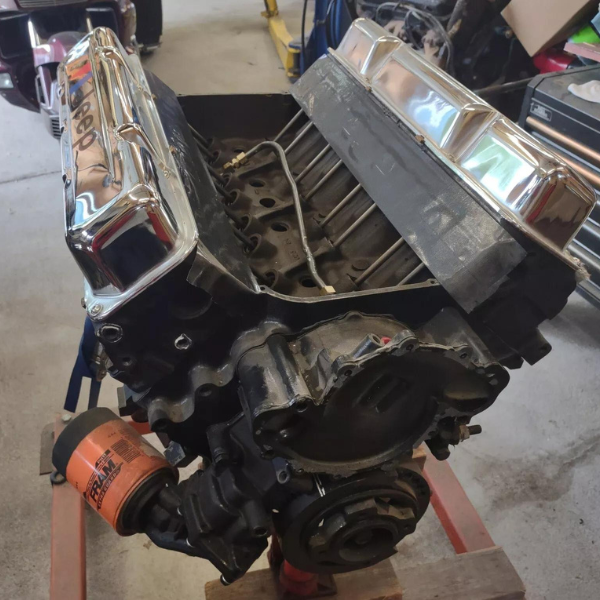
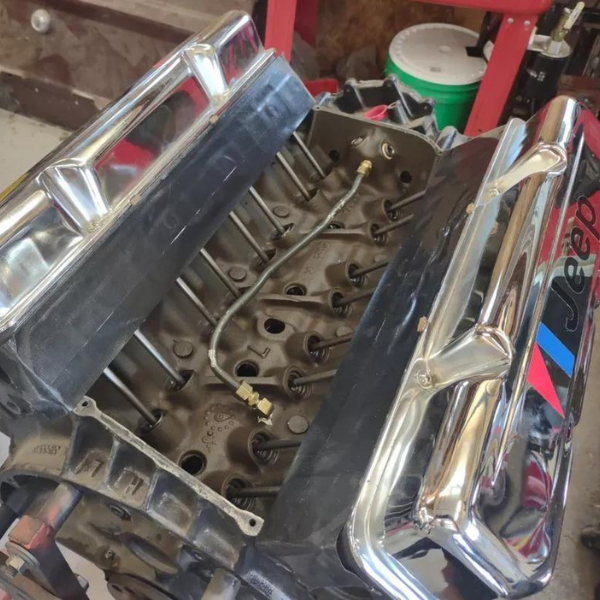
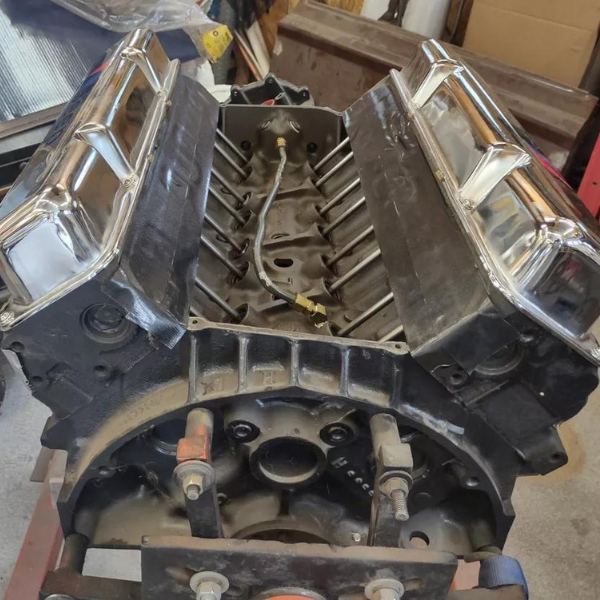
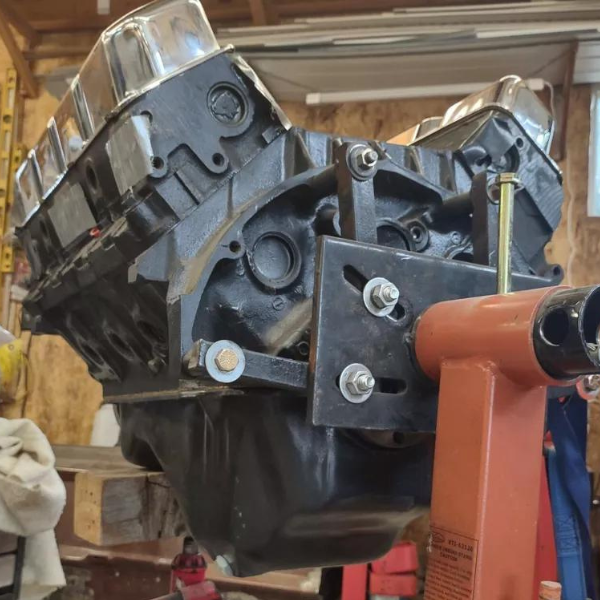
AMC 360 Engine for Sale | OEM Jeep V8 5.9L (1970 to 1991)
$6,800.00
Product Overview
- Displacement: 360 cu in (5.9L)
- Engine Family: AMC Generation III V8
- Configuration: V8, OHV, 16 valves
- Bore x Stroke: 4.08 in x 3.44 in
- Condition: OEM used, compression tested and inspected
- Availability: Multiple year ranges from 1970 to 1991 in stock
- Shipping: Free freight to all 50 states, 5 to 10 business days
- All 8 cylinders pressure-tested with results shared before payment
- Rear main seal condition assessed, most common AMC 360 issue noted before shipping
- Year and application documented, Jeep vs AMC car variant noted
- Casting number documented where available
- Zero core charge required, your existing engine stays with you
- Backed by a 15 day replacement warranty against internal defects
Description
Engine Background
The AMC 360 is the longest-lived V8 engine American Motors Corporation ever built, produced continuously from 1970 through 1991, ending its automotive life as the standard engine in the last Jeep Grand Wagoneer that rolled off the line in 1991. AMC introduced the 360 in 1970 as a direct development of the 343 cubic inch engine from the 1966 to 1969 era, increasing deck height and stroke to achieve the larger displacement. Its defining characteristic was straightforward American V8 engineering executed well: high-nickel cast iron block, non-siamesed cylinder bores with water between all cylinders, 2.025-inch intake valves with dog-leg exhaust ports, and 2-bolt main caps that provided more than adequate strength for the engine’s intended operating range.
In AMC car applications (the AMX, Javelin, Hornet, and Matador) the 360 produced up to 290 hp (SAE gross) in 1970. The compression and output fell through the 1970s as emissions regulations arrived. By the late 1970s, the detuned 360 was producing as little as 125 hp. When Chrysler acquired AMC in 1987 and retuned the engine for the final Grand Wagoneer applications, output settled at 144 hp, honest and adequate for a 5,000-pound luxury SUV.
The Jeep Grand Wagoneer with the AMC 360 is the dominant application in today’s used engine market. Grand Wagoneers are having a cultural moment, original examples in good condition regularly sell for $30,000 to $80,000 or more, and the 360 is integral to the vehicle’s identity and value. A compression-tested, rear-main-checked AMC 360 with documented casting numbers is a meaningful find for any Grand Wagoneer restoration.
When Replacement Becomes Necessary
- Oil leak at the rear main seal, the AMC 360’s most common and most chronic issue. The rope-style rear main seal is a known seep point on aged engines. We specifically inspect and report on rear main seal condition before shipping.
- Knock under load, rod or main bearing wear on high-mileage examples
- Low oil pressure at idle after warmup, main bearing wear or oil pump wear
- Oil leaks at the intake manifold and timing cover, common on aged AMC V8 engines
- Loss of compression on one or more cylinders, ring wear or scored cylinder walls
- Rough idle that varies with engine temperature, worn cam lobes on engines run on low-zinc modern oil
Known Issues We Document Before Shipping
- Rear main seal, the AMC 360’s most notorious issue: the rope-type rear main seal used by the AMC 360 is a chronic seep point on aged engines. It is not a catastrophic leak in most cases but is persistent and cosmetically objectionable. We specifically assess and report on rear main seal condition before every unit ships. Aftermarket one-piece rear main seal conversion kits exist and are strongly recommended at installation.
- Oiling system valley line concern on high-performance builds: at sustained high rpm (not relevant for stock Jeep operation), the AMC 360’s oil supply to the front of the valley can be insufficient. This is addressed with the “valley oil line” modification, routing an additional oil line under the intake manifold. This is not needed for normal street and trail driving but is relevant for anyone building a higher-output 360.
- 2-bolt main caps, stock only: AMC never built a factory 4-bolt main block. Stock 2-bolt mains are entirely adequate for street and trail use at stock output levels. For a built engine producing sustained high power, aftermarket main bearing girdles are available.
- Flat-tappet cam ZDDP requirement: all AMC 360 engines use flat-tappet camshafts. Modern low-zinc oils accelerate cam lobe wear. ZDDP additive is essential for sustained operation, particularly on the late-production Grand Wagoneer engines that have already seen modern oil for decades.
- Year and application variation: the 1970 to 1971 360 (high compression, AMC car applications) is significantly different from the 1980s Jeep CJ/Grand Wagoneer 360 (low compression, EFI on final years). Casting numbers and date codes matter for restoration buyers.
AMC 360 Variants by Year and Application
Critical buyer information across the 21-year production run:
| Years | Application | HP (SAE) | Compression | Notes |
|---|---|---|---|---|
| 1970 | AMC cars (AMX, Javelin, etc.) | 290 hp gross | 10.0:1 | First year. 4-barrel carb high-output version. Individual rocker pedestals. Highest compression 360. |
| 1971 to 1972 | AMC cars and Jeep (first Jeep year) | 195 hp gross, 175 hp net | 8.5:1 | Compression dropped for emissions. Rating method changed to net in 1972- appears lower but similar real-world output. |
| 1972 to 1978 | Jeep Wagoneer, Cherokee, J-series, AMC cars | 145 to 175 hp net | 8.25:1 | Bridged aluminum rocker arms from 1974. Emissions equipment. Steady detuning through decade. |
| 1979 to 1983 | Jeep Grand Wagoneer, Cherokee, J-truck | 125 to 140 hp net | 8.25:1 | Lowest output era. Emissions at peak restrictions. |
| 1984 to 1991 | Jeep Grand Wagoneer (final years) | 144 hp net | 8.25:1 | Slight output improvement. Chrysler continued production after 1987 AMC acquisition. Block casting reads '5.9L' from 1987 onward. |
| 3205490 | 1970 to 1971 AMC 360 block |
|---|---|
| 3205893 | 1972 to 1973 360 block |
| 3210454 / 3214693 | 1974 to 1979 360 block- most common restoration era |
| 3239832 | 1980 to 1991 Jeep 360/5.9L block- final generation |
What Ships and What Does Not
| INCLUDED- Long Block | Block, crankshaft, pistons, connecting rods, camshaft, cylinder heads, valve train, oil pan, front timing cover, and water pump where present. |
|---|---|
| NOT INCLUDED | Intake manifold, carburetor, exhaust manifolds, distributor and ignition system, alternator, power steering pump, starter, flexplate or flywheel, accessory brackets. |
| Core Note | No core charge. You are not required to return your old engine. |
Direct-Fit Vehicle Applications
| Jeep Grand Wagoneer (SJ) | 1972 to 1991- primary Jeep application and largest used engine market today |
|---|---|
| Jeep Cherokee (SJ) | 1974 to 1983- full-size Cherokee, not the XJ Cherokee that came later |
| Jeep J-Series Trucks (J10 and J20) | 1972 to 1987 |
| AMC AMX | 1971 to 1974 |
| AMC Javelin | 1971 to 1974 |
| AMC Hornet S/C 360 | 1971- 285 hp 4-barrel version |
| AMC Matador | 1971 to 1977 |
| Bricklin SV-1 | 1974- Canadian sports car using AMC 360 |
Search Terms Buyers Use
| AMC 360 | Most common buyer search |
|---|---|
| Jeep 360 | Application designation |
| AMC 360 V8 | Configuration search |
| 5.9L AMC engine | Liter-format buyer |
| Grand Wagoneer engine | Premium application buyer |
| AMC 5.9 | Short liter designation |
| Jeep 360 5.9 | Combined designation buyer |
| AMC V8 360 | Full designation |
| 360 AMC Jeep | Reversed search |
| AMC 360 replacement | Replacement buyer intent |
Used OEM Versus Specialist Rebuild
For a Jeep Grand Wagoneer restoration, Jeep CJ-7 or Cherokee SJ rebuild, or AMC car restoration on a reasonable budget, a documented used 360 with rear main seal condition assessed and casting verified is the cost-effective path. For a show-quality Grand Wagoneer restoration with collector-grade authenticity, a specialist rebuild with hardened valve seats (for unleaded fuel), one-piece rear main conversion, refreshed bearings, and supporting hardware is the better long-term investment. Specialist AMC 360 rebuilds typically run $4,500 to $7,500 from established AMC/Jeep specialty shops.
Inspection Workflow
- Compression test logged across all 8 cylinders with uniformity reported
- Year and donor application documented: Jeep Grand Wagoneer, Cherokee SJ, CJ-7, or AMC car
- Block casting number documented where available
- Rear main seal condition specifically assessed (AMC 360 signature issue)
- Intake manifold and timing cover seep condition noted
- Valvetrain condition assessed for flat-tappet cam wear indicators
- External oil leak survey at all gasket interfaces
Pre-Purchase Buyer Notes
- Plan a rear main seal conversion at installation: aftermarket one-piece rear main seal conversion kits are available and dramatically improve the chronic seep issue. Inexpensive insurance for a Grand Wagoneer restoration.
- Use ZDDP additive: all AMC 360 engines use flat-tappet cams requiring high-zinc oil. Modern low-zinc oils accelerate cam lobe wear. ZDDP additive is essential.
- Match year and casting to your restoration goals: a 1970 high-compression 360 produces dramatically different output than a 1985 emissions-era 360. Match to your authenticity and performance needs.
- Confirm hardened valve seats for sustained unleaded fuel operation: pre-emissions-era AMC 360s were designed for leaded fuel. Modern unleaded operation requires hardened seat conversion for extended highway use.
- Source intake manifold gaskets in advance: AMC 360 intake gaskets are available but may have longer lead times than mainstream GM or Ford parts. Plan accordingly.
Why Buy From Part Nests
- Year and donor application documented before payment
- Block casting number documented where available
- Rear main seal condition specifically assessed (the AMC 360 signature issue)
- Intake manifold and timing cover seep condition noted
- All 8 cylinders compression-tested with uniformity reported
- Valvetrain condition assessed for flat-tappet cam wear
- No core return required
- Free freight delivery to every state
- 15 day replacement warranty against internal defects
- Call (240) 306-7051 to speak with someone who knows AMC 360 rear main seal conversion options, Grand Wagoneer restoration authenticity requirements, and Jeep CJ versus AMC car variant identification
Additional information
| displacement | 360 cu in (5.9L) |
|---|---|
| engine-family | AMC Generation III V8 |
| configuration | 16 valves, OHV, V8 |
| bore-x-stroke | 4.08 in x 3.44 in |
| bore-spacing | 4.75 in center-to-center (non-siamesed- water between all cylinders) |
| firing-order | 1-8-4-3-6-5-7-2 |
| valve-sizes | 2.025 in intake | 1.687 in exhaust |
| compression-ratio | 10.0:1 (1970) | 8.5:1 (1971 to 1972) | 8.25:1 (1973 to 1991) |
| main-bearing-caps | 2-bolt (factory- no factory 4-bolt main version was ever built) |
| aspiration | Naturally Aspirated |
| block-material | Cast iron with high nickel content |
| head-material | Cast iron (58cc chambers, dog-leg exhaust ports) |
| production-years | 1970 to 1991 |
| manufacturer | American Motors Corporation (AMC) | Chrysler after 1987 acquisition |
| applications | Jeep Grand Wagoneer | Jeep Cherokee (SJ) | Jeep J-series truck | AMC AMX Javelin Hornet Matador |
| cam-type | Flat-tappet hydraulic- ZDDP oil additive required |
| condition | compression tested and inspected, Used OEM |
Jeep Grand Wagoneer (1974 to 1991), Jeep Cherokee SJ (1974 to 1983), Jeep CJ-7 and CJ-8 (limited production), and AMC passenger cars including the AMX, Javelin, Hornet, and Matador (1970 to 1979). The Grand Wagoneer is the dominant application in today's used market.
The AMC 360 uses a rope-type rear main seal that was standard practice when the engine was designed in the late 1960s. Rope seals seep on aged engines as the material compresses and ages. The leak is rarely catastrophic but is persistent and cosmetically objectionable. Aftermarket one-piece neoprene rear main seal conversion kits are available and dramatically improve the situation. We strongly recommend this conversion at engine installation.
AMC engineering philosophy. The AMC 360 has non-siamesed cylinder bores (water between every cylinder pair), which improves cooling but slightly reduces structural rigidity compared to siamesed designs. The 4.08-inch bore is unusually large for a 360-class engine. The block uses high-nickel cast iron for durability. AMC's engine philosophy emphasized longevity over peak output, contributing to the 360's reputation for handling neglect and high mileage.
Year and tuning. The 1970 to 1971 AMC 360 produces up to 290 hp (SAE gross) with 10.0:1 compression. Through the 1970s, compression dropped to 8.25:1 for emissions and unleaded fuel compatibility, and output fell to as low as 125 hp by late production. The 1980s Jeep Grand Wagoneer 360 is a low-compression emissions-era engine producing 144 hp. Match year to your output expectations.
Yes. The Grand Wagoneer used the AMC 360 from 1974 through 1991. Earlier Wagoneers (1965 to 1973) used various engines including the AMC 327, Buick-sourced 350, and AMC 343. The AMC 360 retrofits to earlier Wagoneers with adjustment to mounts and supporting hardware. For period-correct restoration, match year to chassis.
Generally yes, though from specialist suppliers rather than mainstream auto parts chains. AMC/Jeep specialty vendors, Grand Wagoneer specialists, and the AMC enthusiast community stock comprehensive parts inventories. Lead times can be longer than mainstream GM or Ford parts. Source supporting items (gaskets, valve seals, bearings) in advance of any rebuild or installation.
Yes, with appropriate supporting work. AMC 360 performance builds in the 350 to 450 hp range are well-documented in the AMC community. Stock 2-bolt main caps are the limiting factor at sustained high power; aftermarket main bearing girdles address this. The valley oil line modification addresses high-rpm oiling. Aftermarket aluminum heads (Edelbrock, Kessler) significantly improve breathing. Built AMC 360 strokers (to 401 cubic inches) are popular.
No. There is no core return required.
15 Day Replacement Warranty
Every used AMC 360 engine purchased through Part Nests carries a 15 day replacement warranty starting on the delivery date.
What Is Covered
- Internal defects already present when the engine arrives
- Performance materially different from how the engine was described
- Incorrect part shipped due to an error on our end
What Is Not Covered
- Damage caused during installation
- Damage from modern low-zinc oil on flat-tappet cams
- External components unless specifically itemized
- Labor expenses of any kind
To start a warranty claim, reach us within 15 days of delivery at (240) 306-7051.
- Rear Main Seal Assessed: AMC 360 signature failure mode specifically inspected
- Year and Application Documented: Jeep, AMC car, or Grand Wagoneer source confirmed
- Casting Number Recorded: Documented where available for restoration buyers
- Flat-Tappet Cam Wear Assessed: Modern low-zinc oil risk indicator inspected
- All 8 Cylinders Tested: Compression results shared before payment
- 15 Day Replacement Cover: Internal defects protected from delivery onward
2 reviews for AMC 360 Engine for Sale | OEM Jeep V8 5.9L (1970 to 1991)
Related products
Recently Viewed Products
About Us
At Part Nests, we specialize in high-quality used and OEM auto parts, with a wide selection of components ready to ship to customers.
© 2026 Part Nests. All rights reserved.

Roy P. –
Got a 1988 AMC 360 for a Grand Wagoneer restoration. Donor application documented as Grand Wagoneer source, casting number recorded for the restoration. Rear main seal condition specifically assessed and disclosed as showing the typical seep (planning the one-piece conversion at install per their recommendation). All eight cylinders tested uniform on compression.
Bob H. –
Sourced an early AMC 360 for a 1972 AMX restoration. Year confirmed, donor application identified as AMC car (not Jeep), casting number documented. Honest about flat-tappet cam wear indicators on the higher-mileage donor (plan a cam refresh at rebuild). Foundation for the project is solid with ZDDP planned going forward.