
Audi Q7 Water Pump for Sale | OEM Used Belt-Driven Mechanical Coolant Pump for the First-Generation 4L and Second-Generation 4M Q7 Chassis
$99.00
At a Glance
- Condition: OEM used, function tested before shipping
- Availability: In stock, Audi Q7 water pump available for multiple engine variants
- Shipping: Free shipping to all 50 states, 5 to 10 business days
- Engine variant verified (3.6L FSI VR6, 3.0L TFSI Supercharged V6, 4.2L FSI V8, 4.2L TDI V8, 3.0L TDI V6, 2.0L TFSI Inline-4, or other generation-specific variant)
- Chassis generation confirmed (4L 2006-2015, 4M 2016-current, or 4M facelift 2020 plus)
- Belt-driven configuration noted (timing-chain driven on some variants)
- Impeller condition documented
- Bearing condition assessed (no audible roughness, no shaft play)
- Weep hole condition checked (no coolant residue indicating prior leak)
- Gasket / O-ring surface inspected
- Electric coolant pump function tested (where applicable on later variants)
- Backed by a 15 day replacement warranty against internal defects
- Description
- Warranty
- Why Buy From Us
- Additional information
- FAQ
- Warranty
- Why Buy From Us
- Reviews (2)
Description
About the Audi Q7 Water Pump
Looking for a reliable cooling solution for your Audi Q7? Part Nests stocks OEM used Audi Q7 water pumps covering the first-generation 4L (2006-2015) and second-generation 4M (2016-current) chassis across multiple engine variants. The water pump is the heart of the engine cooling system, circulating coolant between the engine block, cylinder head, radiator, and heater core. Whether you are replacing a leaking pump on a 2010 Q7 4L with the 3.6L FSI VR6, addressing bearing noise on a 2014 Q7 with the 3.0L TFSI Supercharged V6, completing a coolant system refresh on a 2018 Q7 4M with the 2.0L TFSI or 3.0L TFSI, or sourcing for a 4.2L FSI V8 or 4.2L / 3.0L TDI diesel application, our inspected used Audi Q7 water pumps offer factory fitment and substantial savings over OEM Audi pricing.
Water Pump Overview: Audi Q7 Engine Variants
The Audi Q7 has used a wide range of engines across its two generations, and the water pump varies significantly by engine variant. Critical for ordering: specify your engine variant precisely, as Audi V6 / V8 / Inline-4 / Diesel engines all use different water pumps.
First-Generation Q7 4L (2006-2015):
- 3.6L FSI VR6 (BHK / BHL engine codes), the base US-market V6 in 2007-2010
- 3.0L TFSI Supercharged V6 (CJTC / CJWC engine codes), 2011-2015 supercharged base V6
- 4.2L FSI V8 (BAR / CDRA engine codes), 2007-2010 V8 variant
- 4.2L TDI V8 Diesel (BTR / CCFA engine codes), 2009-2012 diesel V8
- 3.0L TDI V6 Diesel (BUG / CASA / CJGA engine codes), 2009-2015 diesel V6 (subject to the diesel emissions scandal recall)
Second-Generation Q7 4M (2016-Current):
- 2.0L TFSI Inline-4 (CYMC / DKNA engine codes), 2017 plus base engine in some markets
- 3.0L TFSI V6 (CRECA / DCBA engine codes), 2017 plus primary US-market gasoline engine
- 3.0L TDI V6 Diesel (CRTC / DDXA engine codes), 2017 plus diesel V6 (limited US availability post-scandal)
- SQ7 variants, with the 4.0L TDI V8 (CZAC / DGVA engine codes) electric-compressor V8 diesel or the 4.0L TFSI V8 (CTGA / DGVF engine codes) twin-turbo V8 gasoline
Belt-Driven Mechanical vs Electric Coolant Pump
An important distinction across Q7 variants: most Q7 water pumps are belt-driven mechanical pumps driven off the accessory belt or timing chain. However, some later variants (particularly later 4M-generation engines with cooling system electrification) use auxiliary electric coolant pumps in addition to or in place of the main mechanical pump. When you order, specify:
- Your engine variant (the primary determinant of water pump architecture)
- Whether you need the main mechanical water pump or an auxiliary electric coolant pump
Our team will match your needs and ship the correct pump.
Audi / European Cooling System Drivetrain Pairing
The Audi Q7 water pump (this listing) is the belt-driven mechanical coolant pump for the Audi Q7 chassis (or auxiliary electric coolant pump for some later variants). For complete cooling system context across our catalog: the cooling system requires correct water pump (this listing) plus matching radiator plus matching thermostat housing plus correct coolant specification. The Lexus LS460 radiator (our vaz632 listing, aluminum-core radiator with plastic end tanks for the 2007-2017 LS460 with 4.6L 1UR-FSE V8) is the cross-application Lexus radiator listing. The Lexus SC 400 water pump (our vaz678 listing, the cast iron impeller / cast aluminum housing OEM water pump for the 1991-2000 Lexus SC 400 with the legendary 1UZ-FE 4.0L V8 32-valve DOHC engine that defined Lexus first-generation V8 architecture) is the related Japanese-market water pump for the legendary Toyota / Lexus V8 platform. The Mazda 3 water pump (our vaz643 listing, engine-matched coolant pump for the Mazda3 lineup across BK / BL / BM / BN chassis generations with critical belt-driven MZR vs timing-chain-driven SkyActiv-G distinction) is the within-batch related water pump listing for a Japanese economy car platform. For thermostat housing context, the Genesis GV60 thermostat housing (our vaz440 listing, with critical electric vehicle disambiguation since the GV60 is a BEV battery electric vehicle that uses a battery thermal management system NOT an engine cooling system) represents the related thermostat housing component category. Four cooling-system component listings across our catalog: Lexus LS460 radiator per vaz632, Lexus SC 400 water pump per vaz678, Mazda 3 water pump per vaz643, this Audi Q7 water pump for European-market vehicles, plus Genesis GV60 thermostat housing per vaz440 for the BEV thermal management distinction.
Common Audi Q7 Water Pump Failure Modes
Watch for these symptoms of an impending water pump failure:
- Coolant leak from weep hole, the most common failure mode; coolant drips from the designated weep hole at the bottom of the pump housing
- Bearing noise (audible whine or growl), particularly noticeable at idle with the engine warm
- Plastic impeller failure, some Audi water pumps use plastic impellers that can shear off the shaft (particularly on certain VAG group engines), causing complete loss of coolant circulation and rapid overheating
- Shaft play, indicates worn bearings
- Coolant in oil, on engines with integrated water pump designs, internal failure can leak coolant into the engine oil
- Electric pump failure (on variants with electric auxiliary coolant pumps), causes localized cooling issues even when the main mechanical pump functions correctly
The Audi Plastic Impeller Issue
Some Audi water pumps (particularly on the 3.6L FSI VR6, 3.0L TFSI Supercharged V6, and 2.0L TFSI Inline-4 engines) use plastic impellers that can degrade over time and eventually shear off the shaft, causing complete cooling failure without warning. Aftermarket water pumps with metal impellers (typically from Genuine VW / Audi parts or quality aftermarket brands like Hepu, Pierburg, Graf) are widely considered upgrades over the original plastic-impeller OEM design. When ordering a used Audi Q7 water pump, ask whether the donor pump has a metal or plastic impeller, the metal-impeller pumps are typically the preferred replacement.
Vehicle Compatibility
| Detail | Description |
|---|---|
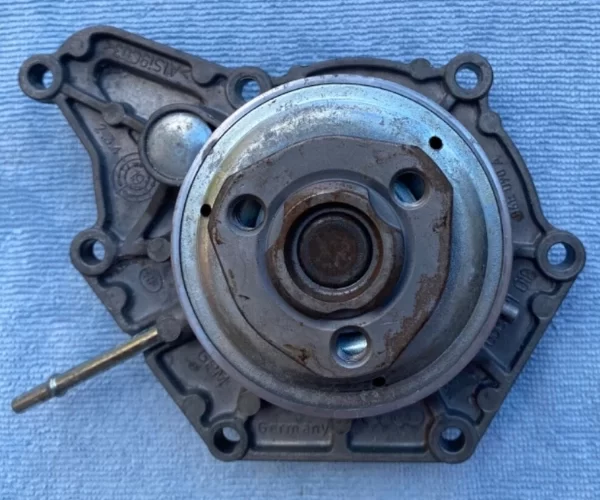
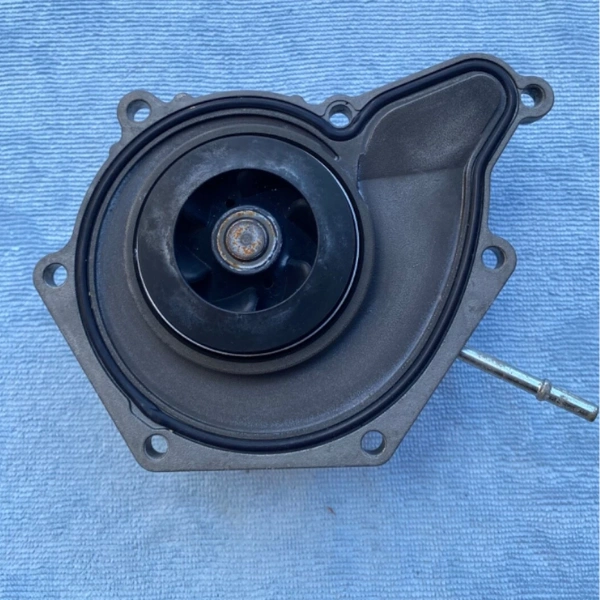
| INCLUDED | The water pump as photographed. |
| NOT INCLUDED | Gasket, thermostat, coolant, and drive belt. |
| Tools You Need | Standard hand tools per the live FAQ, a fresh OEM-spec gasket or sealant, and coolant for the bleed; access and torque sequences vary by engine. |
Engine Variant Compatibility
| Detail | Description |
|---|---|
| Audi Q7, 4L generation (donor 2006) | Engine and VIN confirmed before shipping |
| Multiple Q7 engines | The pump varies by engine; call with your VIN so the correct pump ships |
| Reference Application | 2006 Audi Q7 |
Why Buy From Part Nests
- Engine variant correctly identified (3.6L FSI VR6 / 3.0L TFSI / 4.2L FSI / 4.2L TDI / 3.0L TDI / 2.0L TFSI / 4.0L TDI / 4.0L TFSI)
- Chassis generation confirmed (4L 2006-2015 vs 4M 2016-current)
- Belt-driven mechanical vs electric coolant pump distinction noted
- Impeller material documented (metal vs plastic)
- Bearing condition assessed
- Weep hole condition checked
- Free shipping to all 50 states
- 15 day replacement warranty on defects
- Audi / VAG-experienced support team familiar with the Q7 engine variant complexity
- Call (855) 634-4447 to confirm Audi Q7 water pump (belt-driven mechanical coolant pump for the Audi Q7 chassis or auxiliary electric coolant pump for some later 4M-generation variants with cooling system electrification, OEM water pump for the first-generation 4L 2006-2015 and second-generation 4M 2016-current Audi Q7 SUV), engine variant verified (3.6L FSI VR6 BHK / BHL engine codes 4L base US-market V6 2007-2010, 3.0L TFSI Supercharged V6 CJTC / CJWC engine codes 4L 2011-2015 supercharged base V6, 4.2L FSI V8 BAR / CDRA engine codes 4L 2007-2010 V8 variant, 4.2L TDI V8 Diesel BTR / CCFA engine codes 4L 2009-2012 diesel V8, 3.0L TDI V6 Diesel BUG / CASA / CJGA engine codes 4L 2009-2015 diesel V6 subject to the diesel emissions scandal recall, 2.0L TFSI Inline-4 CYMC / DKNA engine codes 4M 2017 plus base engine in some markets, 3.0L TFSI V6 CRECA / DCBA engine codes 4M 2017 plus primary US-market gasoline engine, 3.0L TDI V6 Diesel CRTC / DDXA engine codes 4M 2017 plus diesel V6 limited US availability post-scandal, OR SQ7 variants with the 4.0L TDI V8 CZAC / DGVA engine codes electric-compressor V8 diesel or the 4.0L TFSI V8 CTGA / DGVF engine codes twin-turbo V8 gasoline), chassis generation confirmed (4L 2006-2015 or 4M 2016-current or 4M facelift 2020 plus), belt-driven mechanical vs electric coolant pump configuration noted (most Q7 water pumps are belt-driven mechanical pumps driven off the accessory belt or timing chain, however some later variants particularly later 4M-generation engines with cooling system electrification use auxiliary electric coolant pumps in addition to or in place of the main mechanical pump), impeller condition documented (the Audi plastic impeller issue where some Audi water pumps particularly on the 3.6L FSI VR6 / 3.0L TFSI Supercharged V6 / 2.0L TFSI Inline-4 engines use plastic impellers that can degrade over time and eventually shear off the shaft causing complete cooling failure without warning, aftermarket water pumps with metal impellers typically from Genuine VW / Audi parts or quality aftermarket brands like Hepu / Pierburg / Graf are widely considered upgrades over the original plastic-impeller OEM design), bearing condition (no audible roughness no shaft play), weep hole condition checked (no coolant residue indicating prior leak), gasket / O-ring surface inspected, electric coolant pump function tested where applicable on later variants, the common Audi Q7 water pump failure modes (coolant leak from weep hole the most common, bearing noise audible whine or growl at idle, plastic impeller failure causing complete loss of coolant circulation and rapid overheating, shaft play indicating worn bearings, coolant in oil on engines with integrated water pump designs, electric pump failure on variants with electric auxiliary coolant pumps), and Audi / European cooling system drivetrain pairing context (Lexus LS460 radiator per vaz632 / Lexus SC 400 water pump per vaz678 / Mazda 3 water pump per vaz643 / Genesis GV60 thermostat housing per vaz440 with critical BEV disambiguation) before ordering
15 Day Replacement Warranty
Every used Audi Q7 water pump purchased through Part Nests carries a 15 day replacement warranty starting on the delivery date.
What Is Covered
- Internal defects already present when the water pump arrives
- Impeller failures within 15 days from installation
- Bearing failures within 15 days from installation (where condition was documented as serviceable at shipping)
- Shaft seal failures within 15 days from installation
- Weep hole leaks within 15 days from installation (where weep hole was documented as clean at shipping)
- Housing crack failures not disclosed at shipping
- Pulley failures within 15 days from installation (on belt-driven mechanical pumps)
- Electric pump motor failures within 15 days from installation (on electric auxiliary coolant pumps where supplied as functional)
- Incorrect engine variant shipped (3.6 FSI VR6 vs 3.0 TFSI vs 4.2 FSI vs 4.2 TDI vs 3.0 TDI vs 2.0 TFSI vs 4.0 TDI vs 4.0 TFSI mismatch where engine was documented) due to an error on our end
- Incorrect chassis generation shipped (4L 2006-2015 vs 4M 2016-current mismatch where chassis was documented) due to an error on our end
What Is Not Covered
- Damage caused during installation
- Damage from incorrect coolant (Audi / VAG specifies G12 evo or G13 OAT/HOAT coolant; using generic green coolant or incompatible coolant types accelerates seal degradation and plastic impeller wear)
- Damage from neglected coolant maintenance (Audi specifies coolant change at the lifetime fluid claim with the original spec, but realistic maintenance recommends 60,000-100,000 mile change interval)
- Damage from overheating events
- Damage from incorrect engine variant cross-application (Q7 engines have substantially different water pump specifications across the VR6 / V6 supercharged / V8 / TDI / inline-4 lineup)
- Damage from timing chain service errors (on engines with timing-chain-driven water pumps)
- Damage from operating with worn cooling system components (failed thermostat, clogged radiator)
- Damage from electrolysis in cooling system
- External components (timing belt or timing chain, tensioner, idler pulleys, thermostat, gaskets if not supplied, coolant, hoses, radiator) unless itemized
- Labor expenses of any kind
To start a warranty claim, reach us within 15 days of delivery at (855) 634-4447.
- Function Tested Before Shipping: Bearing, impeller, and seal condition documented
- Engine Variant Verified: Across the Q7 VR6 / V6 / V8 / TDI / Inline-4 lineup
- Chassis Generation Confirmed: 4L 2006-2015 vs 4M 2016-current
- Impeller Material Documented: Metal vs plastic (plastic impellers are a known wear point)
- Belt-Driven vs Electric Coolant Pump Distinction Noted: Configuration verified
- 15 Day Replacement Cover: Defects protected from delivery onward
Additional information
| Housing | Die-cast aluminum with bleed/vent port |
|---|---|
| Impeller | Balanced composite for low cavitation |
| Drive | Belt-driven mechanical |
| Pulley | Correct OE offset |
| Seal | Carbon/ceramic faces |
| Shaft/Bearing | Hardened, sealed |
| Application | 2006 Audi Q7 |
| SKU | vaz687 |
| Price | $99.00 |
Belt-driven mechanical coolant pump for the Audi Q7 chassis. The Audi Q7 water pump is the belt-driven mechanical coolant pump for the Audi Q7 chassis (or auxiliary electric coolant pump for some later 4M-generation variants with cooling system electrification). OEM water pump for the first-generation 4L (2006-2015) and second-generation 4M (2016-current) Audi Q7 SUV. Critical for ordering: specify your engine variant precisely, as Audi V6 / V8 / Inline-4 / Diesel engines all use different water pumps. The Audi Q7 has used a wide range of engines across its two generations, and the water pump varies significantly by engine variant.
Wide range across two generations. First-Generation Q7 4L (2006-2015): 3.6L FSI VR6 (BHK / BHL engine codes, the base US-market V6 in 2007-2010), 3.0L TFSI Supercharged V6 (CJTC / CJWC engine codes, 2011-2015 supercharged base V6), 4.2L FSI V8 (BAR / CDRA engine codes, 2007-2010 V8 variant), 4.2L TDI V8 Diesel (BTR / CCFA engine codes, 2009-2012 diesel V8), 3.0L TDI V6 Diesel (BUG / CASA / CJGA engine codes, 2009-2015 diesel V6 subject to the diesel emissions scandal recall). Second-Generation Q7 4M (2016-current): 2.0L TFSI Inline-4 (CYMC / DKNA engine codes, 2017 plus base engine in some markets), 3.0L TFSI V6 (CRECA / DCBA engine codes, 2017 plus primary US-market gasoline engine), 3.0L TDI V6 Diesel (CRTC / DDXA engine codes, 2017 plus diesel V6, limited US availability post-scandal), SQ7 variants with the 4.0L TDI V8 (CZAC / DGVA engine codes, electric-compressor V8 diesel) or the 4.0L TFSI V8 (CTGA / DGVF engine codes, twin-turbo V8 gasoline).
Most Q7 pumps are belt-driven mechanical; some later 4M variants add auxiliary electric pumps. An important distinction across Q7 variants: most Q7 water pumps are belt-driven mechanical pumps driven off the accessory belt or timing chain. However, some later variants (particularly later 4M-generation engines with cooling system electrification) use auxiliary electric coolant pumps in addition to or in place of the main mechanical pump. When you order, specify: your engine variant (the primary determinant of water pump architecture), whether you need the main mechanical water pump or an auxiliary electric coolant pump. Our team will match your needs and ship the correct pump. The electric coolant pumps on later variants enable cooling-on-demand operation that improves fuel economy and emissions during light-load driving.
Plastic impellers can shear off causing complete cooling failure. Some Audi water pumps (particularly on the 3.6L FSI VR6, 3.0L TFSI Supercharged V6, and 2.0L TFSI Inline-4 engines) use plastic impellers that can degrade over time and eventually shear off the shaft, causing complete cooling failure without warning. Aftermarket water pumps with metal impellers (typically from Genuine VW / Audi parts or quality aftermarket brands like Hepu, Pierburg, Graf) are widely considered upgrades over the original plastic-impeller OEM design. When ordering a used Audi Q7 water pump, ask whether the donor pump has a metal or plastic impeller, the metal-impeller pumps are typically the preferred replacement. We document impeller material on every Q7 water pump we ship and prioritize sourcing metal-impeller units when available.
Multiple cooling system components across our catalog. The Audi Q7 water pump (this listing) is the belt-driven mechanical coolant pump for the Audi Q7 chassis. The Lexus LS460 radiator per vaz632 is the cross-application Lexus radiator listing (aluminum-core radiator with plastic end tanks for the 2007-2017 LS460 with 4.6L 1UR-FSE V8). The Lexus SC 400 water pump per vaz678 is the related Japanese-market water pump for the legendary Toyota / Lexus V8 platform (cast iron impeller / cast aluminum housing OEM water pump for the 1991-2000 Lexus SC 400 with the legendary 1UZ-FE 4.0L V8 32-valve DOHC engine that defined Lexus first-generation V8 architecture). The Mazda 3 water pump per vaz643 is the within-batch related water pump listing (engine-matched coolant pump for the Mazda3 lineup across BK / BL / BM / BN chassis generations with critical belt-driven MZR vs timing-chain-driven SkyActiv-G distinction). The Genesis GV60 thermostat housing per vaz440 represents the related thermostat housing component category (with critical BEV electric vehicle disambiguation since the GV60 uses a battery thermal management system NOT an engine cooling system).
Six common failure modes buyers should understand. Coolant leak from weep hole (the most common failure mode; coolant drips from the designated weep hole at the bottom of the pump housing). Bearing noise (audible whine or growl, particularly noticeable at idle with the engine warm). Plastic impeller failure (some Audi water pumps use plastic impellers that can shear off the shaft, causing complete loss of coolant circulation and rapid overheating). Shaft play (indicates worn bearings). Coolant in oil (on engines with integrated water pump designs, internal failure can leak coolant into the engine oil). Electric pump failure (on variants with electric auxiliary coolant pumps, causes localized cooling issues even when the main mechanical pump functions correctly). Symptoms warrant water pump replacement before complete failure to avoid the consequences of sudden coolant loss (overheating, cylinder head warpage, head gasket failure).
Audi / VAG specifies G12 evo or G13 OAT/HOAT coolant. Audi / VAG specifies G12 evo (the long-life violet coolant) or G13 OAT/HOAT (the more recent purple-pink coolant) for the Q7 cooling system. Both are compatible with the Q7 water pump and other cooling system components. Using generic green coolant or incompatible coolant types accelerates seal degradation and plastic impeller wear (a particularly important consideration given the documented plastic impeller failure pattern on some Q7 engines). Audi originally specified coolant change at the lifetime fluid claim with the original spec, but realistic maintenance recommends 60,000-100,000 mile change interval to preserve cooling system component life. Maintain proper ground connections in the cooling system to prevent electrolysis (improper ground or contaminated coolant causes electrolysis that degrades aluminum and plastic components).
No. There is no core return required.
15 Day Replacement Warranty
Every used Audi Q7 water pump purchased through Part Nests carries a 15 day replacement warranty starting on the delivery date.
What Is Covered
- Internal defects already present when the water pump arrives
- Impeller failures within 15 days from installation
- Bearing failures within 15 days from installation (where condition was documented as serviceable at shipping)
- Shaft seal failures within 15 days from installation
- Weep hole leaks within 15 days from installation (where weep hole was documented as clean at shipping)
- Housing crack failures not disclosed at shipping
- Pulley failures within 15 days from installation (on belt-driven mechanical pumps)
- Electric pump motor failures within 15 days from installation (on electric auxiliary coolant pumps where supplied as functional)
- Incorrect engine variant shipped (3.6 FSI VR6 vs 3.0 TFSI vs 4.2 FSI vs 4.2 TDI vs 3.0 TDI vs 2.0 TFSI vs 4.0 TDI vs 4.0 TFSI mismatch where engine was documented) due to an error on our end
- Incorrect chassis generation shipped (4L 2006-2015 vs 4M 2016-current mismatch where chassis was documented) due to an error on our end
What Is Not Covered
- Damage caused during installation
- Damage from incorrect coolant (Audi / VAG specifies G12 evo or G13 OAT/HOAT coolant; using generic green coolant or incompatible coolant types accelerates seal degradation and plastic impeller wear)
- Damage from neglected coolant maintenance (Audi specifies coolant change at the lifetime fluid claim with the original spec, but realistic maintenance recommends 60,000-100,000 mile change interval)
- Damage from overheating events
- Damage from incorrect engine variant cross-application (Q7 engines have substantially different water pump specifications across the VR6 / V6 supercharged / V8 / TDI / inline-4 lineup)
- Damage from timing chain service errors (on engines with timing-chain-driven water pumps)
- Damage from operating with worn cooling system components (failed thermostat, clogged radiator)
- Damage from electrolysis in cooling system
- External components (timing belt or timing chain, tensioner, idler pulleys, thermostat, gaskets if not supplied, coolant, hoses, radiator) unless itemized
- Labor expenses of any kind
To start a warranty claim, reach us within 15 days of delivery at (855) 634-4447.
- Function Tested Before Shipping: Bearing, impeller, and seal condition documented
- Engine Variant Verified: Across the Q7 VR6 / V6 / V8 / TDI / Inline-4 lineup
- Chassis Generation Confirmed: 4L 2006-2015 vs 4M 2016-current
- Impeller Material Documented: Metal vs plastic (plastic impellers are a known wear point)
- Belt-Driven vs Electric Coolant Pump Distinction Noted: Configuration verified
- 15 Day Replacement Cover: Defects protected from delivery onward
2 reviews for Audi Q7 Water Pump for Sale | OEM Used Belt-Driven Mechanical Coolant Pump for the First-Generation 4L and Second-Generation 4M Q7 Chassis
Related products

About Us
At Part Nests, we specialize in high-quality used and OEM auto parts, with a wide selection of components ready to ship to customers.
© 2026 Part Nests. All rights reserved.

Sebastian H. –
Got an Audi Q7 water pump for a 2012 Q7 4L with the 3.0L TFSI Supercharged V6 (within the first-generation 4L 2006-2015 production window, 3.0L TFSI Supercharged V6 CJTC / CJWC engine codes that succeeded the 3.6L FSI VR6 as the base US-market V6 for 2011-2015 4L Q7 applications). Engine variant verified as 3.0L TFSI Supercharged V6 (NOT the 3.6L FSI VR6 BHK / BHL early base engine, NOT the 4.2L FSI V8 BAR / CDRA, NOT the 4.2L TDI V8 BTR / CCFA diesel, NOT the 3.0L TDI V6 BUG / CASA / CJGA diesel), chassis generation confirmed as 4L 2006-2015 (NOT the 4M 2016-current second-generation chassis), belt-driven mechanical pump configuration noted (the standard Q7 architecture), impeller condition documented as metal impeller (NOT the plastic impeller variant that can degrade and shear off the shaft causing complete cooling failure without warning), bearing condition assessed (no audible roughness, no shaft play), weep hole condition checked clean (no coolant residue indicating prior leak), gasket / O-ring surface inspected. Honest pre-purchase information about the Audi plastic impeller issue (some Audi water pumps particularly on the 3.6L FSI VR6 / 3.0L TFSI Supercharged V6 / 2.0L TFSI Inline-4 engines use plastic impellers that can degrade over time and eventually shear off the shaft, aftermarket metal-impeller pumps from Hepu / Pierburg / Graf are widely considered upgrades) and the Audi / European cooling system drivetrain pairing context (Lexus LS460 radiator per vaz632 / Lexus SC 400 water pump per vaz678 / Mazda 3 water pump per vaz643 / Genesis GV60 thermostat housing per vaz440 with critical BEV disambiguation).
Cordelia M. –
Sourced an Audi Q7 water pump for a 2018 Q7 4M with the 3.0L TFSI V6 (within the second-generation 4M 2016-current production window, 3.0L TFSI V6 CRECA / DCBA engine codes the primary US-market gasoline engine for 2017 plus 4M Q7 applications). Engine variant verified as 3.0L TFSI V6 (NOT the 2.0L TFSI Inline-4 base engine, NOT the 3.0L TDI V6 diesel limited US availability post-scandal, NOT the SQ7 variants with the 4.0L TDI V8 electric-compressor diesel or 4.0L TFSI V8 twin-turbo gasoline), chassis generation confirmed as 4M 2016-current, belt-driven mechanical pump primary configuration noted plus auxiliary electric coolant pump function tested (the later 4M-generation engines with cooling system electrification use auxiliary electric coolant pumps in addition to the main mechanical pump). Honest pre-purchase information about the Q7 engine variant complexity (3.6L FSI VR6 / 3.0L TFSI Supercharged V6 / 4.2L FSI V8 / 4.2L TDI V8 / 3.0L TDI V6 / 2.0L TFSI Inline-4 / 4.0L TDI / 4.0L TFSI V8 across the two generations) and the proper G12 evo or G13 OAT/HOAT coolant specification.