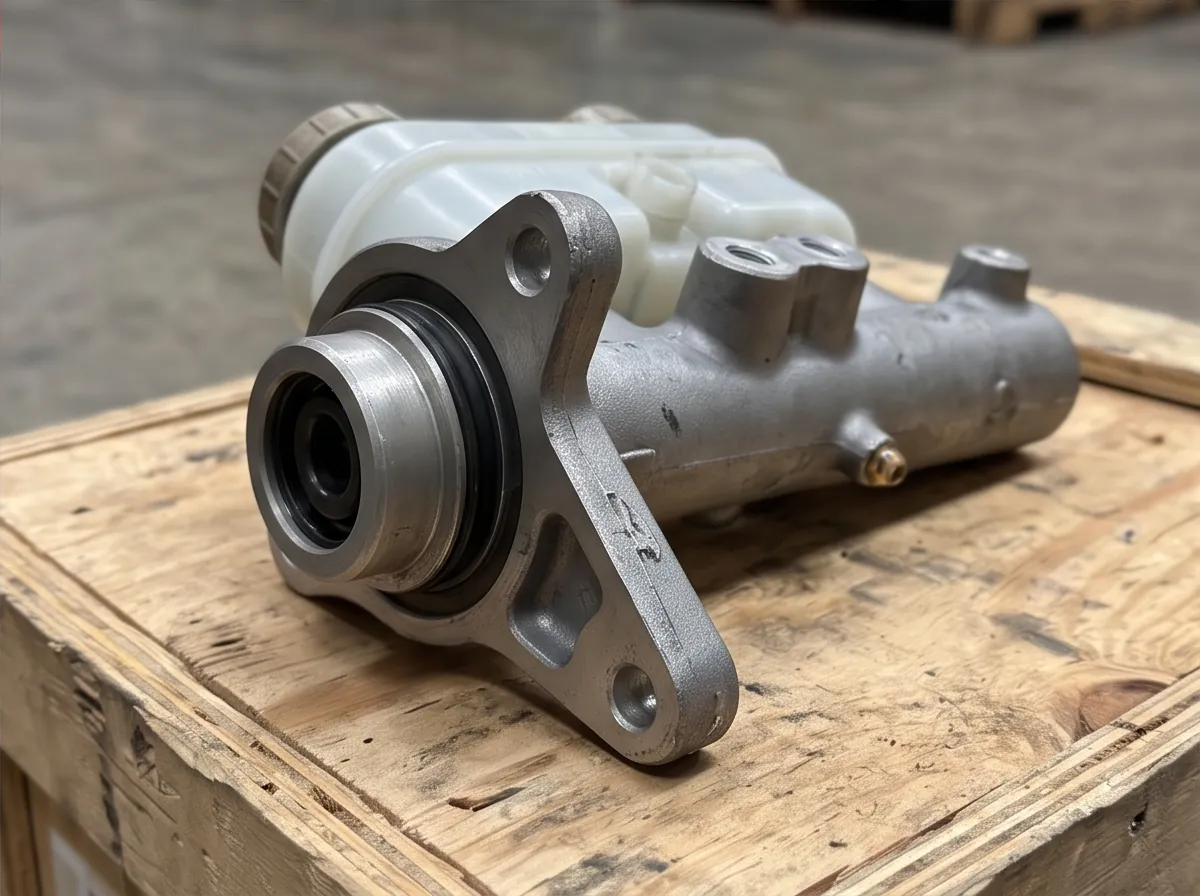
2013 Ford F150 Brake Cylinder | OEM Hydraulic Brake Master Cylinder Replacement
$120.00
At a Glance
- Condition: OEM used, tested before shipping
- Availability: Standard and heavy-duty engine variants in stock
- Shipping: Free freight to all 50 states, 5 to 10 business days
- Piston seal integrity verified before shipping
- Reservoir cap and low-fluid sensor connector verified
- Engine and trim compatibility confirmed
- Bench bleed required before installation
- Compatible with 2009 to 2014 F-150 (P415/P417 chassis)
- 100% fitment verified before every order ships
- Backed by a 15 day replacement warranty against operational defects
Description
About the 2013 Ford F150 Brake Cylinder
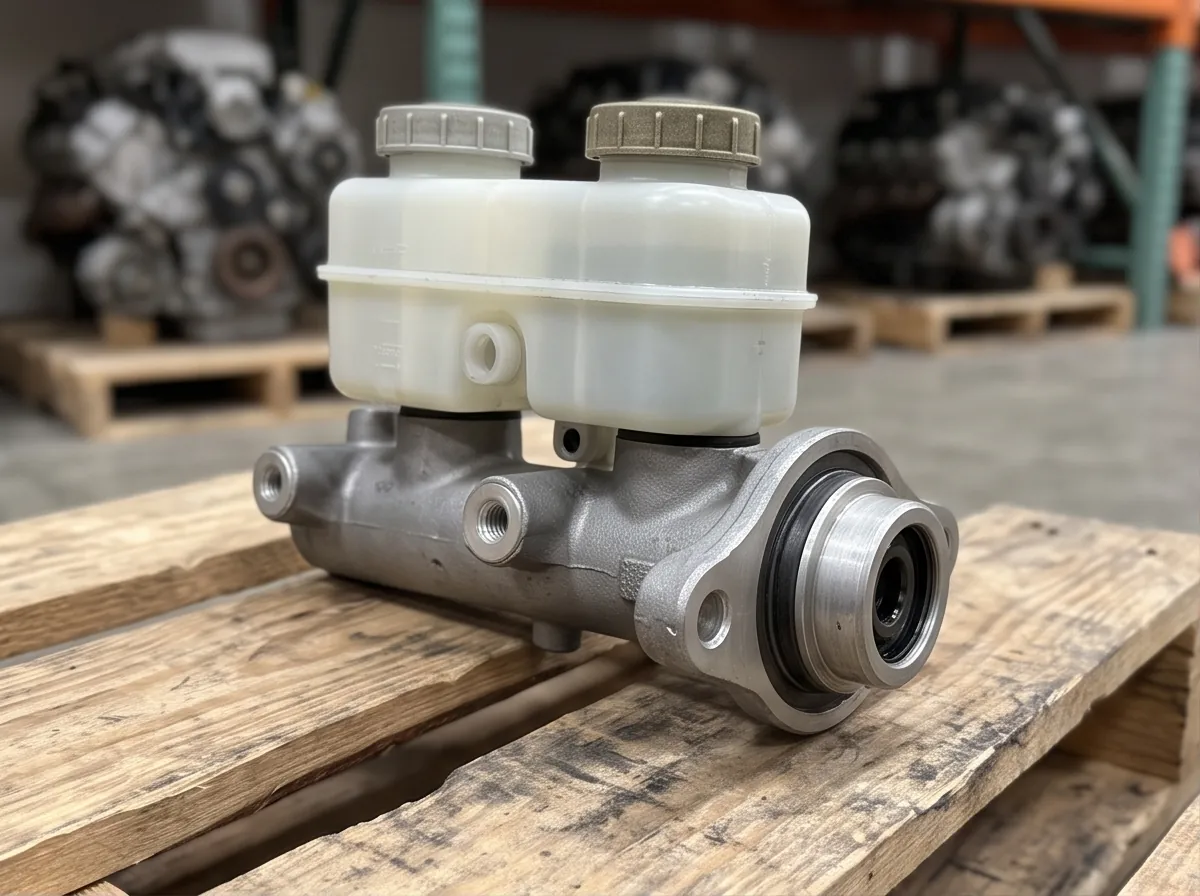
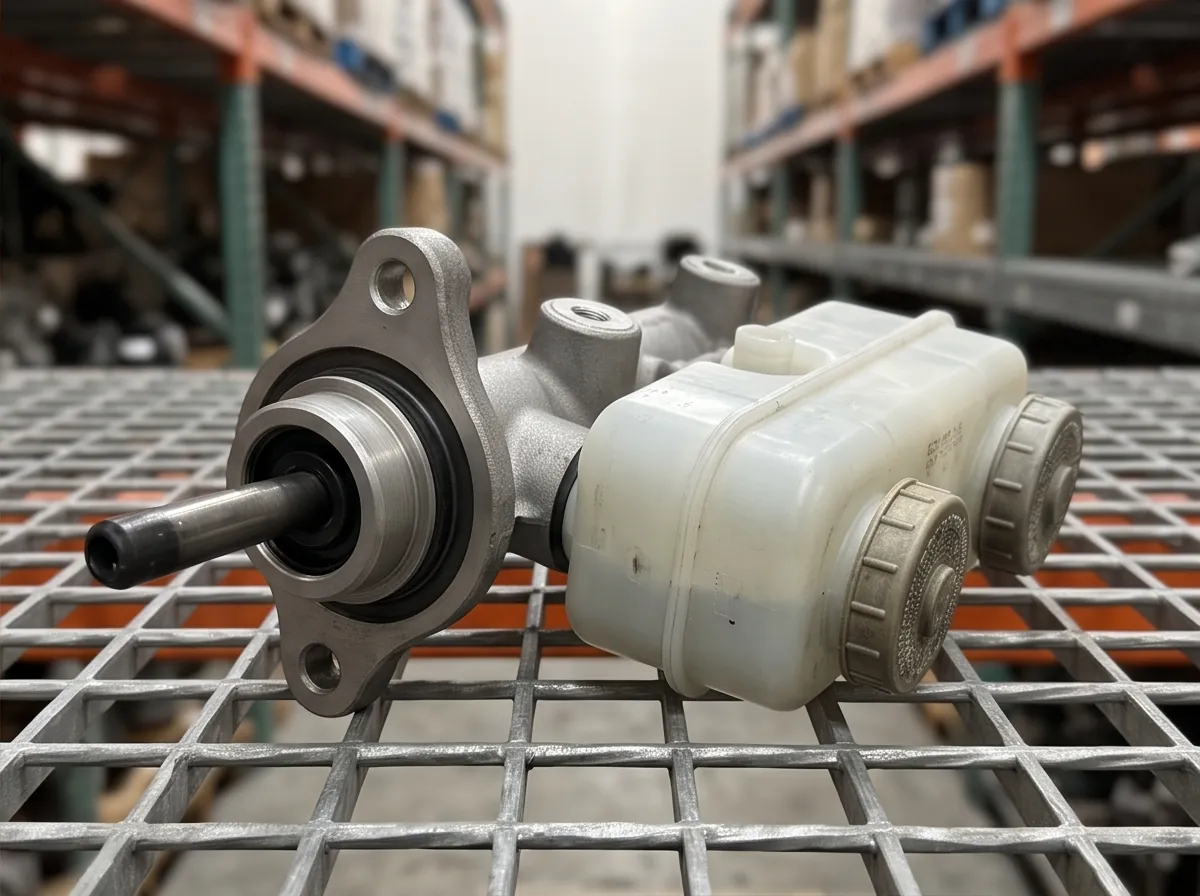
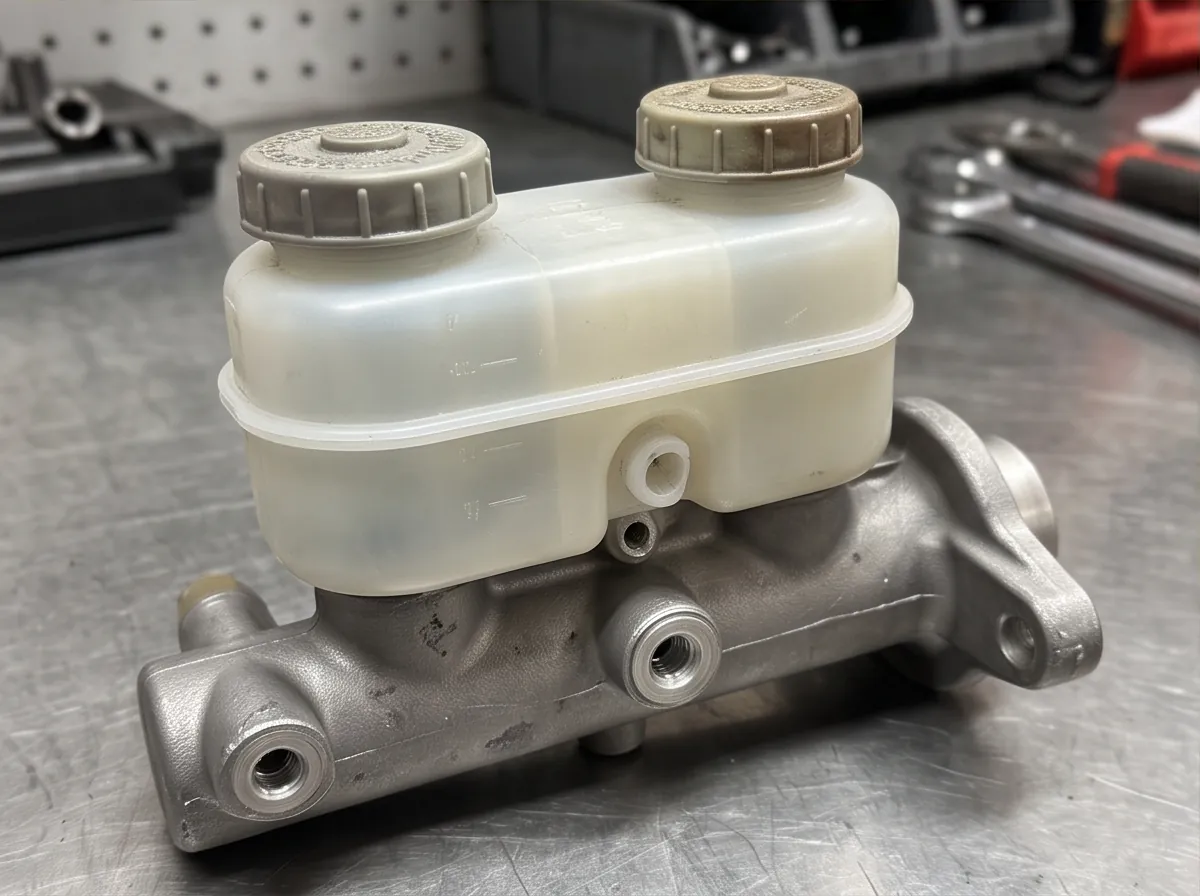
The brake master cylinder, often simply called the brake cylinder, is the hydraulic heart of your 2013 Ford F-150’s braking system. When you press the brake pedal, the brake power booster amplifies your foot pressure, and the master cylinder converts that amplified force into hydraulic pressure that travels through the brake lines to engage the calipers and slow the truck. The 2013 F-150 uses a tandem (dual-piston) master cylinder design with two separate brake circuits (typically diagonal split) so that if one circuit fails, the other continues to provide partial braking, a critical safety feature.
Why 2013 F-150 Owners Replace the Brake Master Cylinder
Common 2013 F-150 brake master cylinder replacement triggers include:
- Spongy or soft brake pedal: Air in the system or internal leak in the master cylinder
- Sinking brake pedal under steady foot pressure: Internal seal failure
- Brake fluid loss with no visible external leak: Internal seal failure leaking fluid past the seal
- Loss of one brake circuit: Front-only or rear-only brake function
- Brake warning light on: Often triggered by pressure imbalance from internal leak
- Visible brake fluid leak from master cylinder body or seals
- Reduced overall braking power: Beyond what worn pads or rotors would explain
- After major brake fluid contamination event: When water or debris contaminates the system, master cylinder seals can be damaged
Common 2013 F-150 Master Cylinder Issues
| Detail | Description |
|---|---|
| Internal Seal Failure | The internal piston seals fail after years of cycling, allowing fluid to bypass between chambers |
| External Fluid Leak | Leak from the body or pushrod seal, visible as fluid pooling under the master cylinder |
| Reservoir Cracking | Plastic reservoir can crack from heat or impact, allowing fluid to escape and air to enter |
| Low-Fluid Sensor Failure | Sensor connector or wiring failure causing false low-fluid warnings |
Things to Confirm Before Ordering
- Engine in your specific 2013 F-150 (3.7 V6, 3.5 EcoBoost, 5.0 V8, 6.2 V8), affects size on heavier trims
- Year (2009 to 2014 cross-fits in most cases)
- Trim level
- Whether your truck has ABS, traction control, and/or stability control (affects port configuration)
- Brake fluid spec (DOT 3 or DOT 4 to OEM Ford)
What Ships and What Does Not
| Item | Details |
|---|---|
| INCLUDED | Tested used OEM brake master cylinder with integrated fluid reservoir, low-fluid sensor connector, and mounting hardware where applicable. |
| NOT INCLUDED | Brake power booster (sold separately), brake fluid (refill required), bench bleed kit, brake bleeder kit, tools. |
| Tools You Need | Standard hand tools, brake fluid (DOT 3 or DOT 4 to Ford spec), bench bleed kit (REQUIRED before installation), brake bleeder kit, line wrenches, brake fluid catch pan. |
Direct-Fit Vehicle Applications
This 2013 Ford F-150 brake cylinder is compatible with the following:
| Vehicle | Compatibility |
|---|---|
| 2013 Ford F-150 (all engines) | 3.7L V6, 3.5L EcoBoost V6, 5.0L V8 Coyote, 6.2L V8 |
| 2009 to 2014 Ford F-150 (P415/P417) | All trims and engines (size varies slightly by trim) |
| 2010 to 2014 Ford Raptor SVT | 6.2L V8, larger performance braking system |
| 2009 to 2014 Ford Expedition | Similar master cylinder spec on some variants |
NOT compatible with: 2008 and earlier F-150 (different mounting and port configuration), F-250 / F-350 Super Duty (much larger master cylinder for the heavier truck), Ranger or other Ford trucks.
Inspection Workflow
Every used 2013 F-150 brake master cylinder we ship goes through this process:
- Internal piston seal integrity tested (no fluid bypass between chambers)
- External seal integrity verified (no leaks at body or pushrod)
- Reservoir integrity inspected (no cracks, no warping)
- Reservoir cap seal inspected
- Low-fluid sensor connector verified
- Outlet port threads inspected for damage
- Donor application documented when available
These are used OEM master cylinders, not new. Bench bleed is required before installation.
Why Buy From Part Nests
- Tested OEM-specification 2013 F-150 brake master cylinder
- Internal and external seal integrity verified before shipping
- Reservoir integrity inspected (no cracks, no warping)
- Engine and trim compatibility confirmed
- Low-fluid sensor connector verified
- Outlet port threads inspected for cross-thread damage
- Compatible with 2009 to 2014 F-150 (P415/P417 chassis)
- Free shipping to all 50 states, no hidden surcharges
- 15 day replacement warranty on operational defects
- Call (855) 634-4447 to speak with someone who knows F-150 brake hydraulic diagnostics, master cylinder versus booster failure differentiation, and bench bleed procedure
15 Day Replacement Warranty
Every used 2013 F-150 brake master cylinder purchased through Part Nests carries a 15 day replacement warranty starting on the delivery date.
What Is Covered
- Operational defects in internal piston seals or external seals
- Reservoir cracks or warping not disclosed at shipping
- Outlet port thread damage beyond what was disclosed
- Low-fluid sensor connector failures
- Incorrect part shipped due to an error on our end
What Is Not Covered
- Damage caused during installation
- Damage from skipping the required bench bleed before installation
- Damage from operating with contaminated brake fluid
- External components unless specifically itemized
- Labor expenses of any kind
To start a warranty claim, reach us within 15 days of delivery at (855) 634-4447.
- Internal Seal Tested: No fluid bypass between chambers
- External Seal Verified: No leaks at body or pushrod
- Reservoir Integrity Inspected: No cracks, no warping
- Low-Fluid Sensor Verified: Electrical connector tested operational
- Port Threads Checked: Inspected for damage from prior installation
- 15 Day Replacement Cover: Operational defects protected from delivery onward
Additional information
| application | 2013 Ford F-150 (P415/P417 chassis) |
|---|---|
| cylinder-type | Brake Master Cylinder (hydraulic, tandem dual-piston) |
| function | Generates hydraulic brake pressure for both brake circuits |
| construction | Tandem dual-piston for safety redundancy |
| reservoir | Integrated plastic reservoir with low-fluid sensor |
| mounting | Bolts to brake power booster on firewall |
| compatible-engines | 3.7L V6, 3.5L EcoBoost V6, 5.0L V8 Coyote, 6.2L V8 |
The master cylinder converts the amplified force from the brake booster into hydraulic pressure that travels through the brake lines to engage the calipers. It uses two separate brake circuits (typically diagonal split) for safety: if one circuit fails, the other continues to provide partial braking. The reservoir on top of the master cylinder holds brake fluid for the system.
Common signs of master cylinder failure include a spongy or sinking brake pedal under steady foot pressure (internal seal leak), brake fluid loss with no visible external leak (fluid is leaking past internal seals), loss of one brake circuit (only front or only rear brakes working), brake warning light on the dash (often triggered by pressure imbalance from internal leak), or visible brake fluid leak from the master cylinder body.
Pedal feel. Booster failure produces a hard brake pedal (requires extreme force to depress, because the booster is not amplifying your foot pressure). Master cylinder failure produces a soft or sinking pedal (the pedal moves easily but does not produce hydraulic pressure, because fluid is leaking past internal seals). The two failures feel completely different and indicate different repairs.
Bench bleeding removes air from the master cylinder before it is installed on the truck. Without bench bleeding, air trapped inside the master cylinder cannot be easily purged through normal corner-by-corner bleeding, resulting in a persistently soft brake pedal. Bench bleed kits are inexpensive and the procedure takes 15 to 30 minutes; skipping it causes hours of frustration trying to get a firm pedal.
Yes within the same engine and trim. The 2009 to 2014 F-150 (P415/P417 chassis) uses the same master cylinder mounting and port configuration across all years. Size varies slightly by engine and trim (heavier-duty trims and 6.2L V8 applications have slightly larger master cylinders). Confirm engine and trim when ordering.
No. The F-250 and F-350 Super Duty trucks use much larger master cylinders designed for the heavier truck weight and higher hydraulic capacity. F-150 master cylinders are not compatible with Super Duty trucks. The F-250/F-350 master cylinders also use different mounting and port configurations.
The low-fluid sensor in the reservoir cap triggers the dash brake warning light if brake fluid drops below safe operating level. Without a working sensor, you would not be warned of a slow brake fluid loss until braking performance is significantly degraded. The sensor is a simple float switch and we verify the connector and float operation on every master cylinder we ship.
DOT 3 or DOT 4 to Ford specification (typically DOT 3 for most 2013 F-150 applications, DOT 4 for heavy-duty and towing-package trucks). Check your owner's manual for the specific recommendation. Never mix DOT 5 silicone fluid with DOT 3 or DOT 4; the two are not compatible and contamination requires a full system flush. Brake fluid is hygroscopic (absorbs moisture from the air); flush every 2 to 3 years for best performance and corrosion protection.
2 reviews for 2013 Ford F150 Brake Cylinder | OEM Hydraulic Brake Master Cylinder Replacement
Related products


Daniel S. –
Got a master cylinder for a 2013 F-150 5.0 V8 replacing a sinking-pedal unit. Internal seal integrity specifically pressure-tested before payment, reservoir inspected for cracks, low-fluid sensor connector verified. Bench-bled before installation per their note. Brake pedal firm and consistent after install.
Greg N. –
Sourced a master cylinder for a 2011 F-150 EcoBoost (cross-compatible with the 2013 spec). Engine and year cross-compatibility confirmed, external seal integrity verified, port threads inspected for prior cross-thread damage. Honest pre-purchase information about the bench bleed requirement. Clean working unit.