
Volvo 240 Brake Booster for Sale | OEM Used Vacuum-Assist Servo
$199.00
At a Glance
- Condition: OEM used, vacuum servo function tested, diaphragm integrity verified, mounting studs inspected
- Availability: In stock across Volvo 240 model years
- Shipping: Free shipping to all 50 states, 5 to 10 business days on classic vehicle applications
- Application: Volvo 240 Series 1974-1993 – iconic Swedish safety car with 20-year single-generation production
- Longest single-generation Volvo production run – 240 stayed in production essentially unchanged in concept from 1974 through 1993
- Body styles: Volvo 242 (2-door sedan), 244 (4-door sedan), 245 (5-door wagon)
- Engines: Volvo B21 2.1L I4, B23 2.3L I4, B230 2.3L I4 (with F, FT turbo variants including intercooled turbo)
- Body-on-frame RWD architecture with live axle rear – classic Volvo mechanical simplicity and durability
- Established the Volvo boxy safety car reputation in the US market through the 1970s, 1980s, and early 1990s
- Vacuum-assisted brake booster (servo) reduces pedal effort required for braking
- 15 day replacement warranty on component defects, classic-vehicle disclosure applies
Description
About the Volvo 240 Brake Booster
Need a replacement Volvo 240 brake booster (vacuum-assisted brake servo)? Part Nests sources OEM used brake boosters for classic Volvo 240 Series applications from 1974 through 1993. The Volvo 240 is one of Volvo’s most iconic vehicles – the boxy safety car that established Volvo’s global reputation for safety, reliability, and understated Swedish design during a 20-year single-generation production run. The vacuum-assisted brake booster (servo) reduces pedal effort required for braking by using engine intake manifold vacuum to amplify driver pedal force. Each brake booster is inspected for vacuum servo function, diaphragm integrity, and mounting stud condition. Call (855) 634-4447 to verify year and configuration before ordering.
Volvo 240 Series Vehicle Context (1974-1993)
- Production era: 1974-1993 Sweden and international markets. Twenty-year production run – the longest single-generation Volvo production run in the company’s history. Design and engineering evolved with running updates but core architecture remained consistent
- Body styles: Volvo 242 (two-door sedan, discontinued mid-production), Volvo 244 (four-door sedan, most common variant), Volvo 245 (five-door wagon / estate – the iconic Volvo 245 wagon is one of the most recognizable classic Volvos)
- Iconic status: The Volvo 240 established Volvo’s boxy safety car reputation in the US market through the 1970s, 1980s, and early 1990s. Distinctive boxy styling with straight body lines, upright greenhouse, and utilitarian proportions became synonymous with Volvo brand identity
- 140 Series successor: The 240 Series succeeded the Volvo 140 Series (Volvo 142 / 144 / 145) that had preceded it. The 240 retained many mechanical concepts from the 140 with modernized architecture, updated safety features, and refined execution
- Discontinued 1993: Ended in 1993 as Volvo modernized with the FWD 850 Series that introduced a completely different platform architecture. The 240’s discontinuation ended the classic RWD Volvo era
Volvo 245 Wagon – The Iconic Family Wagon
- Volvo 245 wagon iconic status: The Volvo 245 wagon (five-door estate variant of the 240) is one of the most iconic classic Volvos. Distinctive boxy wagon proportions, superior cargo capacity, family utility, and understated Scandinavian design made the 245 wagon a preferred vehicle for professionals, academics, families, and outdoor enthusiasts
- Cultural significance: The Volvo 245 wagon has strong cultural associations – the vehicle of choice for architects, professors, doctors, environmental professionals, and other buyers who valued reliability, safety, and utilitarian design over flashy styling. Continues to have enthusiast collector value
- Long-service durability: Volvo 245 wagons routinely accumulated 300,000+ miles in family use, establishing the classic Volvo durability reputation. Many are still in active use today after 30+ years and decades of service
Volvo 240 Engine Options
- B21 2.1L I4: Volvo’s 2.1L inline-4 engine for early 240 years (1975+). Naturally aspirated, single overhead cam. Modest power (about 100-110 HP) with emphasis on reliability and low emissions during the mid-1970s emissions regulation era
- B23 2.3L I4: Slightly larger 2.3L variant for mid-production years. Improved output with continued reliability focus
- B230 2.3L I4: Refined 2.3L variant for later production years. B230F (fuel-injected naturally aspirated), B230FT (fuel-injected turbocharged), and B230FT with intercooler for high-performance turbo Volvo 240 variants
- Volvo 240 Turbo: Turbocharged variants (B21FT initially, later B230FT with intercooler) produced up to about 165 HP – notable performance for a boxy family sedan. Established Volvo turbo credibility that continued into the 850, S70, V70, and modern T5 / T6 turbo Volvo variants
- Volvo Turbo Racing: Volvo turbo variants competed in touring car championships including Group A racing in the 1980s, establishing Volvo motorsport credentials with the boxy Volvo silhouette on race circuits
Classic RWD Volvo Architecture
- Rear-wheel drive (RWD): The Volvo 240 used classic longitudinal front engine, rear-wheel drive architecture. RWD gave the 240 balanced weight distribution, straightforward drivetrain, and durability appropriate for the classic Volvo positioning
- Live axle rear suspension: Live rear axle with coil springs, Panhard rod, and trailing arms for location. Simple and durable rear suspension architecture that contributed to the 240’s long-service durability reputation
- Front suspension: MacPherson strut front suspension with A-arm lower control arms and stabilizer bar. Refined evolution of the classic Volvo front strut architecture
- Safety features: The 240 was the vehicle that first met US federal 30 mph frontal barrier safety standards – Volvo was often cited as demonstrating safety leadership through the 240’s structural design
Brake Booster Specifications
- Type: OEM vacuum-assisted brake booster (brake servo) for Volvo 240
- Function: Amplifies driver brake pedal force using engine intake manifold vacuum. Vacuum on one side of a large diaphragm and atmospheric pressure on the other side creates a pressure differential that assists the driver’s pedal input, reducing required pedal effort for braking
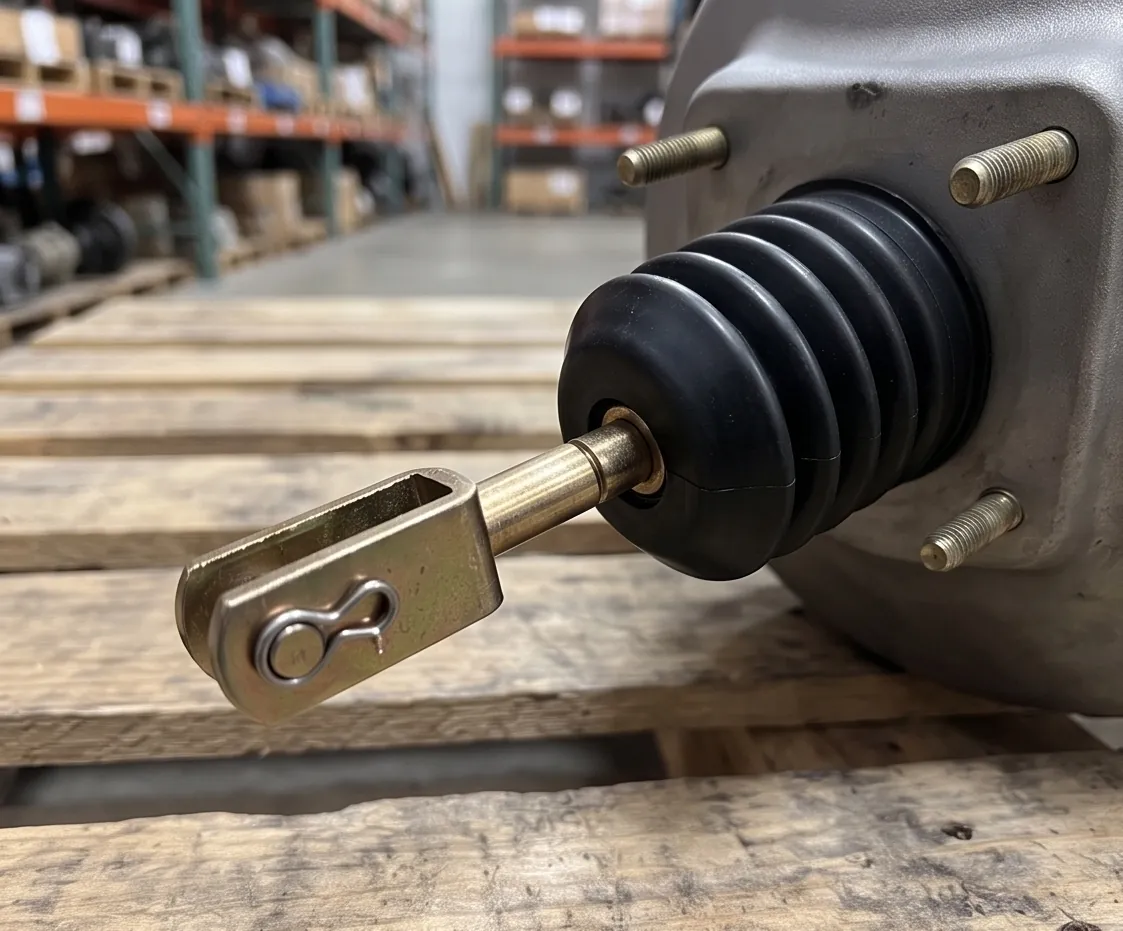
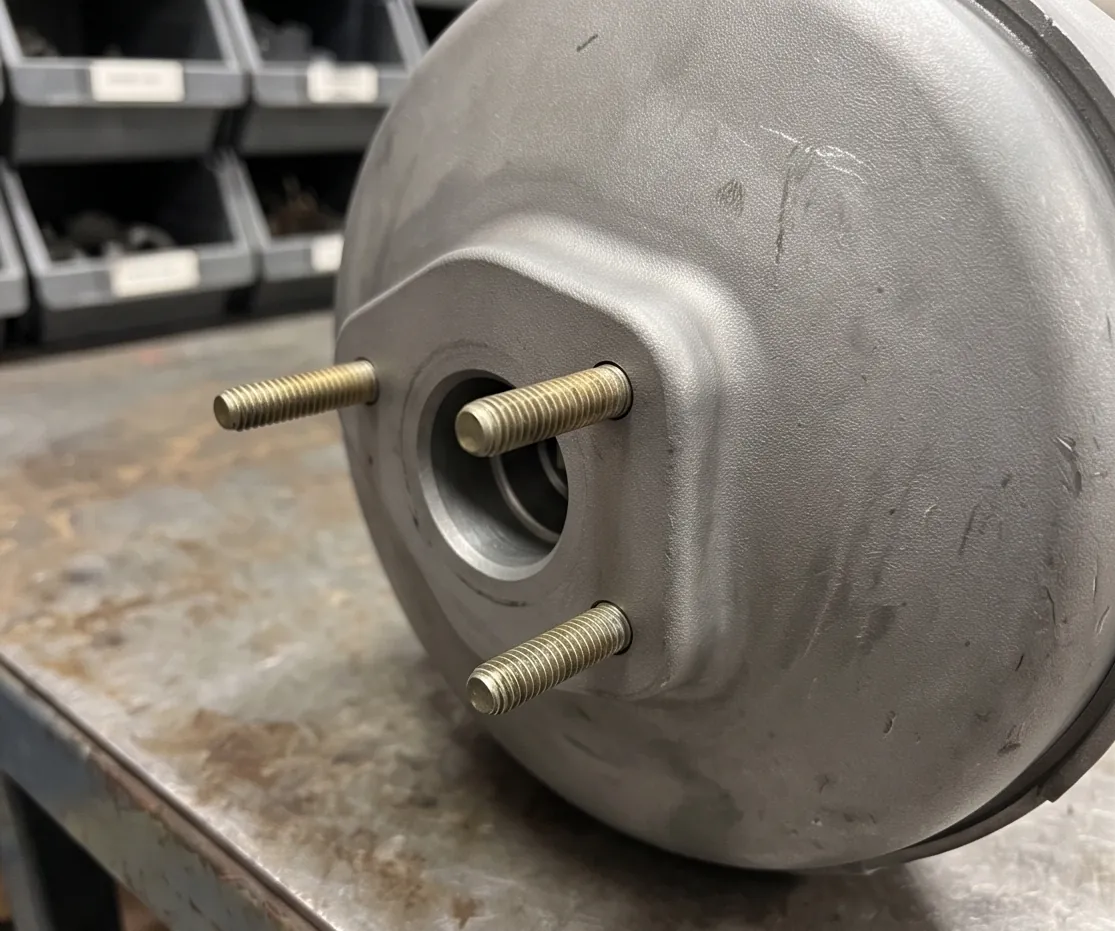
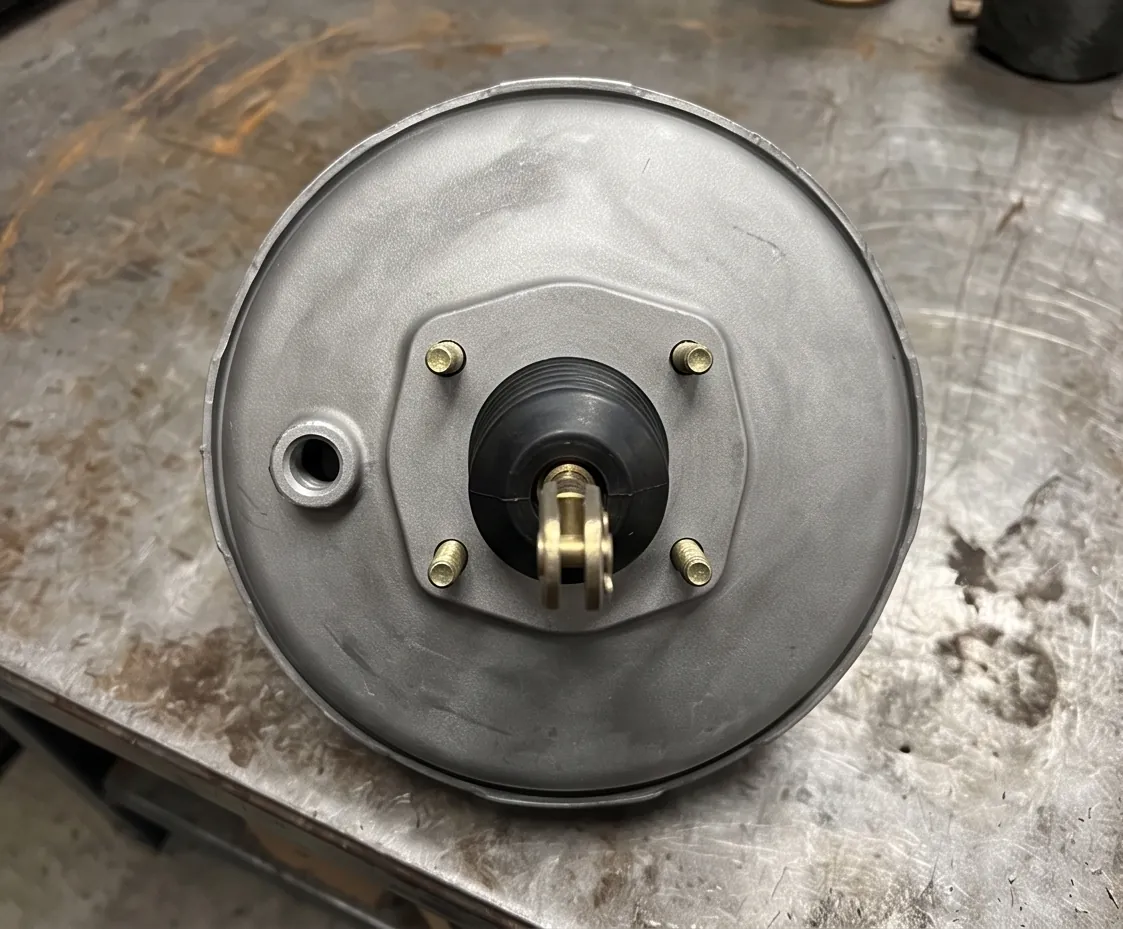
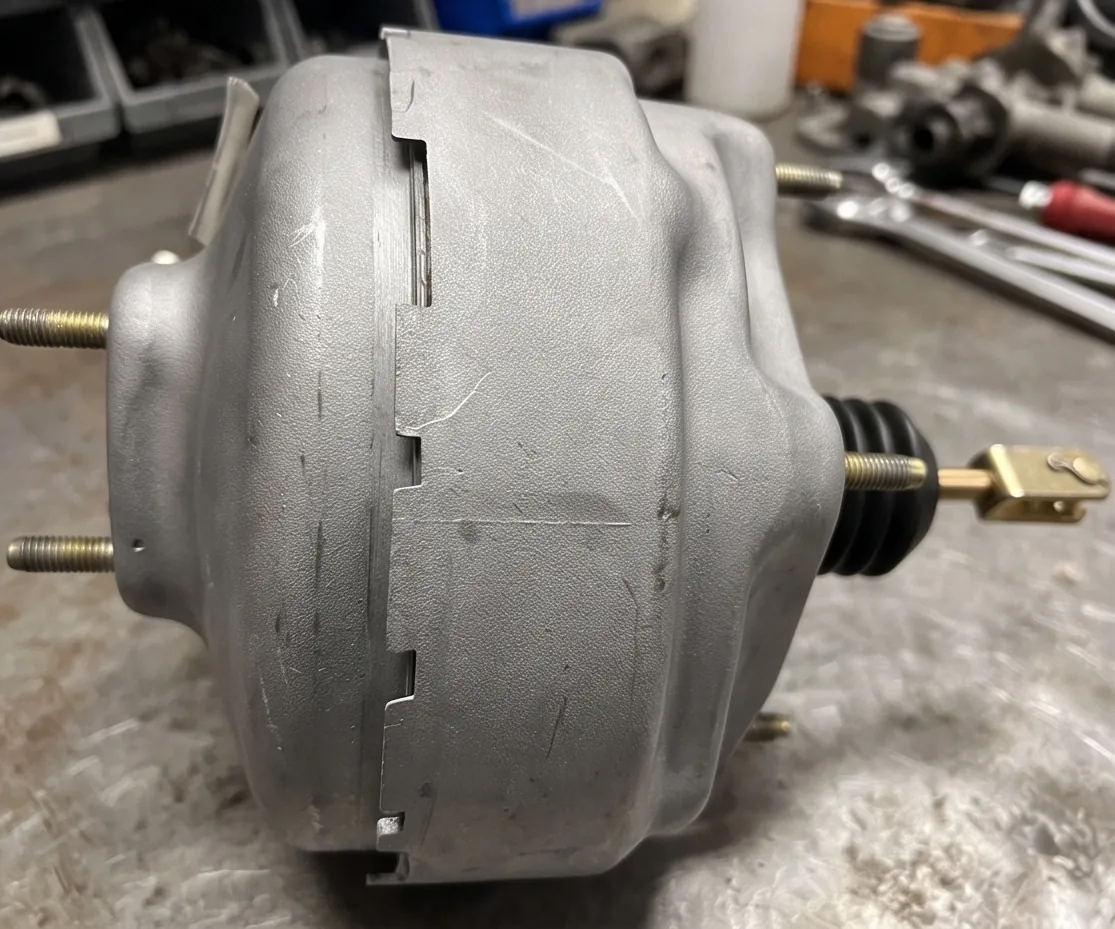
- Construction: Metal housing containing large rubber diaphragm, vacuum port fitting (connects to engine intake manifold via vacuum line), master cylinder mounting studs on the master cylinder side, brake pedal pushrod attachment on the driver side, and check valve for maintaining vacuum during engine-off braking
- Common failure modes: Diaphragm rupture (vacuum leak causes hard brake pedal with excessive effort required), check valve failure (loss of vacuum reserve for engine-off braking), mounting stud thread damage, housing corrosion. Symptoms include hard brake pedal, engine stalling when brakes applied, vacuum leak audible from the booster area, or check engine light with vacuum leak diagnostic codes
- Testing: Vacuum servo function tested, diaphragm integrity verified, mounting stud condition inspected before shipment
Related Volvo Classic and Modern Listings
- Volvo 120 Series (Amazon): The classic Volvo Amazon that preceded the 140 / 160 / 240 lineage – see our Amazon shock absorber listing. Established Volvo safety heritage through three-point seat belt introduction in 1959
- Volvo 160 Series (Volvo 164): Luxury 6-cylinder variant of the 140 that preceded the 260 – see our 160 Series struts listing
- Volvo 260 Series: V6 variant of the 240 chassis using PRV V6 – see our 260 wheel hub listing. Direct sibling of the 240
- Modern Volvo range: Volvo 30 through 90 Series covering the modern S60 / V60 / XC60, S70 / V70 / XC70, S80, S90 / V90 / XC90 lineup that continues the safety heritage established by the 240
Volvo 240 Body Style Reference
| Detail | Description |
|---|---|
| 240 NA (Naturally Aspirated) | Standard vacuum booster for B21A, B21F, B23F, B230F naturally aspirated I4 engines. Single diaphragm design. Direct vacuum connection to intake manifold. |
| 240 Turbo (1981 to 1985, 1988 to 1991 returning) | Same physical booster as NA 240 but with check valve sized for turbo intake characteristics. Turbo engines produce less vacuum than NA at boost, so check valve retention is more critical. Confirm year and turbo status when ordering. |
| 260 V6 (1974 to 1985) | Different vacuum characteristics from PRV V6 (Peugeot-Renault-Volvo joint V6 engine). Booster is similar but vacuum hose routing and check valve differ. Confirm 260 V6 application when ordering. |
Volvo 240 Engine and Configuration Reference
| Detail | Description |
|---|---|
| INCLUDED | The complete brake booster assembly with internal diaphragm, valves, pushrod, mounting studs for firewall, mounting studs for master cylinder, vacuum check valve. Sealed unit ready to install on the firewall and accept the master cylinder. |
| NOT INCLUDED | Master cylinder (separate part), vacuum hose to intake manifold (replace if cracked or hardened, often a good idea after 30+ years), mounting nuts (reuse originals or source new from hardware store), brake pedal pushrod adapter, brake fluid, brake lines. |
| Tools You Need | Metric and SAE socket sets (240 uses mostly metric but some imperial), brake line wrenches for master cylinder connections, brake fluid catch pan, vacuum gauge for testing (optional but helpful), torque wrench, jack and stands or lift. Bench bleeding the master cylinder before reinstalling is recommended. |
Vehicle Compatibility
| Detail | Description |
|---|---|
| Volvo 240 DL Sedan (1974 to 1993) | Standard trim 4-door sedan, NA I4 engines |
| Volvo 240 GL Sedan (1974 to 1993) | Higher trim 4-door sedan, NA I4 engines, more options |
| Volvo 240 Turbo Sedan (1981 to 1985, 1988 to 1991) | Turbocharged variant with B21FT or B230FT engine |
| Volvo 240 DL Wagon (1974 to 1993) | The famous boxy Volvo wagon, 5-door, NA I4 |
| Volvo 240 GL Wagon (1974 to 1993) | Higher trim wagon, NA I4 |
| Volvo 240 Turbo Wagon | Turbocharged wagon variant |
| Volvo 240 2-Door (1974 to ~1984) | Less common 2-door variant, mostly early years |
| Volvo 260 Sedan (1974 to 1985) | V6 variant with PRV engine (B27/B28/B280) |
| Volvo 260 Wagon (1974 to 1982) | V6 wagon variant, rare in US market |
Why Buy From Part Nests
- OEM verified brake booster for classic Volvo 240 Series 1974-1993
- Vacuum servo function tested, diaphragm integrity verified, mounting studs inspected
- Cross-references with Volvo 260 (V6 variant of the same chassis) applications when compatible
- Free shipping to all 50 states
- 15 day replacement warranty on component defects
- Support team familiar with classic Volvo restoration including turbo variants and Group A racing heritage
- Call (855) 634-4447 to confirm year, body style, and engine configuration before ordering.
15 Day Replacement Warranty
Every used Volvo 240 Brake Booster carries a 15 day replacement warranty starting on the delivery date. Classic vehicle used parts commonly show cosmetic wear consistent with 30+ year old classic vehicle disclosure. Call (855) 634-4447 to start a warranty claim within 15 days of delivery.
What Is Covered
- Component defects present on arrival beyond what was disclosed
- Diaphragm or check valve failures within 15 days from installation
- Vacuum servo function failures not disclosed at sale
- Incorrect part shipped due to an error on our end
What Is Not Covered
- Damage caused during installation
- Cosmetic wear consistent with 30+ year old classic vehicle used part disclosure
- Damage from vacuum leaks elsewhere in the intake system
- Labor expenses of any kind, including master cylinder service or brake bleeding
- Part: OEM vacuum-assisted brake booster (servo)
- Application: Volvo 240 Series 1974-1993 (20-year single-gen production)
- Body Styles: 242 (2-door), 244 (4-door), 245 (wagon)
- Iconic 245 Wagon: One of most recognizable classic Volvo wagons
- Engines: B21 2.1L, B23 2.3L, B230 2.3L (F, FT turbo, intercooled turbo)
- Architecture: RWD with live axle rear, MacPherson strut front
- Turbo Racing: Group A touring car heritage in 1980s
- Related Listings: Volvo 120 (Amazon), 160, 260 classics + modern range
Additional information
| Brand | Volvo |
|---|---|
| Application | Volvo 240 and 260 series classic |
| Year Range | 1974 to 1993 (20-year production run) |
| Production Total | Approximately 2.86 million 240 and 260 vehicles produced worldwide |
| Body Styles | 4-door sedan (DL, GL, Turbo), 5-door wagon, 2-door (early years) |
| Engine Compatibility | B20, B21A/B21F/B23F/B230F I4 NA, B204 Turbo, B230FT Turbo, B280F V6 (260) |
| Drivetrain | Rear-wheel drive (RWD) all variants |
| Booster Type | Vacuum-assisted single diaphragm servo |
| Diaphragm Size | 9 to 10 inches |
| Vacuum Source | Intake manifold via hose with check valve |
| Master Cylinder Interface | Front face, 2 studs, 240-specific master cylinder |
| Firewall Mounting | 4 studs to firewall |
| Sister Series | Volvo 260 (V6 variant 1974 to 1985) |
| Successor | Volvo 940 (1991 to 1998) |
| Predecessor | Volvo 140 series (1966 to 1974) |
| Cultural Note | Iconic US-market Volvo of the 1970s and 1980s, "the boxy Volvo" |
| Warranty | 15 day replacement on bench test failure |
| Shipping | Free UPS or FedEx Ground to all 50 states |
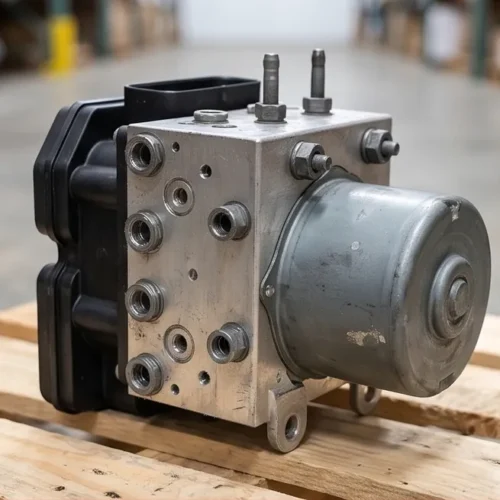
An OEM used vacuum-assisted brake booster (brake servo) for classic Volvo 240 Series applications from 1974 through 1993. Metal housing containing large rubber diaphragm, vacuum port fitting connecting to engine intake manifold, master cylinder mounting studs, brake pedal pushrod attachment, and check valve for maintaining vacuum during engine-off braking. Function is to amplify driver brake pedal force using engine intake manifold vacuum, reducing required pedal effort for braking. Confirm year before ordering - please call (855) 634-4447 for verification.
One of Volvo's most iconic vehicles - the boxy safety car that established Volvo's global reputation for safety, reliability, and understated Swedish design. Twenty-year single-generation production 1974-1993 - the longest single-generation Volvo production run in the company's history. Body styles: 242 (two-door sedan), 244 (four-door sedan), 245 (five-door wagon). Established the Volvo boxy safety car reputation in the US market. Please call (855) 634-4447 for restoration inquiries.
The Volvo 245 wagon (five-door estate variant of the 240) is one of the most iconic classic Volvos. Distinctive boxy wagon proportions, superior cargo capacity, family utility, and understated Scandinavian design. Strong cultural associations - the vehicle of choice for architects, professors, doctors, environmental professionals, and other buyers who valued reliability and utilitarian design. Routinely accumulated 300,000+ miles in family use, establishing the classic Volvo durability reputation. Continues to have enthusiast collector value.
The B21 2.1L I4 (early 240 years 1975+, naturally aspirated single overhead cam, about 100-110 HP). The B23 2.3L I4 (slightly larger for mid-production years). The B230 2.3L I4 (refined 2.3L for later production, B230F fuel-injected naturally aspirated, B230FT fuel-injected turbocharged, and B230FT with intercooler for high-performance turbo variants). Volvo 240 Turbo variants produced up to about 165 HP. Please call (855) 634-4447 to confirm engine before ordering.
Volvo turbo variants competed in touring car championships including Group A racing in the 1980s. Establishing Volvo motorsport credentials with the boxy Volvo silhouette on race circuits. The B21FT and later B230FT turbo engines were the foundation of Volvo turbo credibility that continued into the 850, S70, V70, and modern T5 / T6 turbo Volvo variants. The 240 Turbo helped establish that Volvo could produce genuinely quick vehicles despite the boxy family-sedan aesthetic.
The Volvo 240 used classic longitudinal front engine, rear-wheel drive architecture. Live axle rear suspension with coil springs, Panhard rod, and trailing arms for location - simple and durable. MacPherson strut front suspension. Body-on-frame-inspired unibody construction with structural rigidity that contributed to Volvo's safety reputation. This classic RWD architecture ended in 1993 when Volvo modernized with the FWD 850 Series.
The Volvo 240 was the vehicle that first met US federal 30 mph frontal barrier safety standards - Volvo was often cited as demonstrating safety leadership through the 240's structural design. Continued the Volvo safety heritage established by the three-point seat belt introduction on the Amazon in 1959. The 240's substantial body structure, side impact protection, and comprehensive safety systems for the era established Volvo's boxy safety car reputation in the US market.
Diaphragm rupture (vacuum leak causes hard brake pedal with excessive effort required to brake). Check valve failure (loss of vacuum reserve for engine-off braking). Mounting stud thread damage. Housing corrosion. Symptoms include hard brake pedal, engine stalling when brakes applied (vacuum leak affects engine idle), vacuum leak audible from the booster area, or check engine light with vacuum leak diagnostic codes. Common Volvo 240 service item on high-mileage classic vehicles.
Related products




Reviews
There are no reviews yet.