

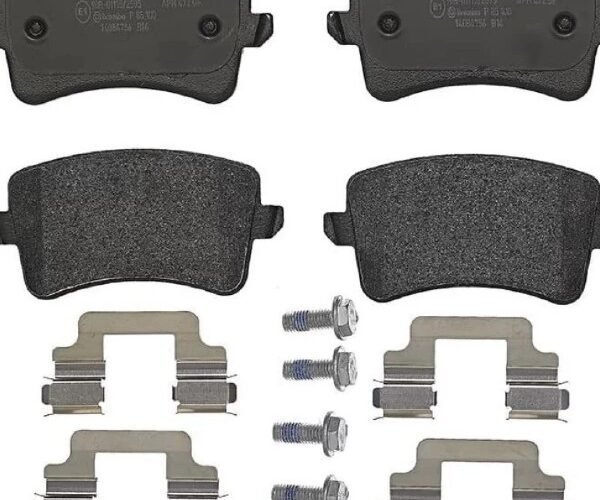
Audi A4 Brake Pads | OEM Specification Front and Rear Pad Sets
Product Overview
- Condition: New OEM-specification brake pads
- Availability: Front, rear, and combo sets in stock
- Shipping: Free freight to all 50 states, 3 to 7 business days
- Chassis generation (B5 / B6 / B7 / B8 / B9) confirmed before shipping
- Compound type (ceramic or semi-metallic) confirmed before shipping
- Anti-rattle clips and shims included where applicable
- 100% fitment verified before every order ships
- Backed by a 15 day replacement warranty against manufacturing defects
Description
About the Audi A4 Brake Pads
Audi A4 brake pads are a routine maintenance item that should be replaced every 30,000 to 70,000 miles depending on driving style, chassis, and pad compound. The A4 has used five distinct chassis generations from 1996 through current model years, and each generation has a specific pad shape, thickness, and caliper interface. Front pads carry approximately 70% of stopping force on the A4 (and most front-engine cars), so front pads typically wear out first. Rear pads on quattro all-wheel drive A4 trims wear faster than rear pads on front-wheel drive A4 trims because the rear axle does more braking work in the AWD car.
We supply OEM-specification brake pads in two compound types: ceramic (lower dust, quieter operation, slightly less initial bite, longer rotor life) and semi-metallic (higher friction, better cold bite, slightly more dust, slightly faster rotor wear). Both compounds meet OEM Audi specification and ECE R-90 type approval, both work with Audi’s electronic pad wear sensor system, and both come with anti-rattle clips and shims where applicable.
Which Compound Should You Choose
For most A4 owners doing daily driving (commuting, errands, occasional spirited drive), ceramic pads are the right choice because they keep wheels cleaner, run quieter, and extend rotor life. For drivers who tow occasionally, drive in mountainous terrain, or prefer a firmer pedal feel, semi-metallic pads deliver better high-temperature performance. We can recommend the right compound for your specific use case; call to discuss.
When Brake Pad Replacement Becomes Necessary
- Squealing or squeaking when braking, pad wear indicator contact
- Brake warning light on dash, electronic wear sensor activation
- Visible pad thickness less than 3 millimeters, replacement threshold
- Pulsating brake pedal under braking, possible warped rotor (often replace rotors with pads)
- Longer stopping distance, reduced friction from worn or contaminated pads
- Burning smell after extended braking, overheated pad material
- Grinding noise when braking, severely worn pads contacting rotor (replace rotors at this point)
Known A4 Brake Pad Considerations
- quattro versus FrontTrak rear pad wear: quattro models cycle the rear pads more aggressively because the AWD system distributes braking force more evenly. Rear pads on quattro typically last 60 to 75% as long as rear pads on FrontTrak. Front pad wear is similar between drivetrains.
- Wear sensor replacement: the electronic pad wear sensor is a single-use component that should be replaced with the pads. Many entry-level pad sets ship without wear sensors; verify whether sensors are included with your order. We can include sensors on request.
- Anti-rattle clip integrity: aged anti-rattle clips can produce brake noise even with new pads. The new pad sets include fresh clips and shims; reusing old clips is a common cause of post-install noise.
- Compound matching across axles: avoid mixing ceramic on the front with semi-metallic on the rear (or vice versa). The friction characteristics differ enough that brake bias is affected, which can produce unpredictable behavior in emergency braking.
- Bedding-in procedure: new pads require a bedding-in cycle (typically 10 to 15 moderate-to-firm stops from 30 to 50 mph) to transfer a thin layer of pad material to the rotor surface. Skipping this step can cause judder, reduced friction, and uneven wear.
What Ships and What Does Not
| Item | Details |
|---|---|
| INCLUDED | Front pad set (4 pads) and / or rear pad set (4 pads) as ordered. Anti-rattle clips and shims pre-installed on the pad backing plates where applicable. |
| NOT INCLUDED | Brake rotors (sold separately), wear sensors (sold separately, single use, must be replaced with pads), brake fluid, anti-seize compound, brake cleaner, retaining hardware (typically reuses car’s hardware in good condition). |
| Tools You Need | Standard hand tools, brake caliper compression tool, torque wrench, brake cleaner, anti-seize compound for slide pins. |
Direct-Fit Vehicle Applications
These Audi A4 brake pads are compatible with the following:
| Vehicle | Compatibility |
|---|---|
| Audi A4 B5 (Type 8D) | 1996 to 2001 Sedan and Avant |
| Audi A4 B6 (Type 8E) | 2002 to 2005 Sedan, Avant, Cabriolet |
| Audi A4 B7 (Type 8E facelift) | 2006 to 2008 Sedan, Avant, Cabriolet |
| Audi A4 B8 (Type 8K) | 2009 to 2016 Sedan, Avant, Allroad |
| Audi A4 B9 (Type 8W) | 2017 to 2024 Sedan, Avant, Allroad |
| Audi S4 (matching chassis) | Compatible front pad sizes vary, often share rear pads with A4. Call to confirm. |
| Audi A5 (matching chassis) | Many A5 chassis share pads with A4 of the same generation. Call to confirm. |
Trim notes: A4 quattro (AWD) and A4 FrontTrak (FWD) generally use the same pad set within a chassis generation. S4 sedan uses larger front pads in most generations. RS4 uses ceramic-composite rotors with specific pad compounds (call us if you have an RS4).
Quality Control Workflow
These are new brake pads in OEM specification. Quality control includes:
- Pad compound consistency check
- Backing plate flatness and thickness verification
- Anti-rattle clip and shim installation check
- Wear indicator integrity (where applicable)
- Compatible packaging integrity check before shipping
These pads are new, not used. We do not sell used brake pads. New pads only, in OEM-equivalent quality from established brake friction manufacturers.
Why Buy From Part Nests
- New OEM-specification brake pads from established friction manufacturers
- Chassis generation (B5 / B6 / B7 / B8 / B9) confirmed for your specific A4
- Compound type (ceramic or semi-metallic) recommended based on your use case
- Anti-rattle clips and shims included for proper noise control
- ECE R-90 type approval, compatible with Audi electronic pad wear sensor system
- Free shipping to all 50 states, no hidden surcharges
- 15 day replacement warranty on manufacturing defects
- Front, rear, and combo set pricing available
- Call (240) 306-7051 to speak with someone who can match your VIN to the correct pad set and recommend ceramic versus semi-metallic for your driving profile
Additional information
| application | Allroad, Audi A4 Sedan, Avant, B5 to B9 |
|---|---|
| sets-available | Front (4 pads), or both, Rear (4 pads) |
| compound-options | Ceramic or Semi-Metallic |
| wear-sensor-compatible | Yes (sensor sold separately) |
| dot-approved | Yes |
| friction-coefficient-ceramic | 0.32 to 0.38 |
| bedding-procedure | Standard 30 stop bed-in recommended |
| operating-temperature-max-ce | 850 degrees F |
Depends on driving style. Ceramic is the right choice for most daily drivers: lower dust, quieter operation, longer rotor life, slightly less initial bite. Semi-metallic is better for drivers who tow occasionally, drive in mountainous terrain, or prefer firmer pedal feel: higher friction, better cold bite, slightly more dust, slightly faster rotor wear. Both meet OEM Audi specification and ECE R-90 type approval.
Every 30,000 to 70,000 miles depending on driving style, chassis, and pad compound. Front pads typically wear out first because they carry approximately 70% of stopping force. Aggressive city driving (frequent stops) accelerates wear; highway-heavy driving extends life. Quattro AWD models cycle rear pads faster than FrontTrak FWD models because the AWD system distributes braking force more evenly across all four corners.
Generation. B5 (1996 to 2001, Type 8D) was the first-generation North American A4. B6 (2002 to 2005, Type 8E) was the second generation. B7 (2006 to 2008, Type 8E facelift) was a refresh of B6. B8 (2009 to 2016, Type 8K) was the third generation. B9 (2017 to 2024, Type 8W) is the current generation. Each chassis has a specific pad shape, thickness, and caliper interface. Pads are NOT interchangeable across generations.
Not always, but often recommended. Replace rotors with pads if: rotors are below minimum thickness specification, rotors show visible scoring or grooves, rotors show heat spotting (blue or dark spots), or rotors are warped (causing pedal pulsation). If rotors are within specification and surface is clean, you can reuse rotors with new pads. Many shops recommend resurfacing rotors with new pads as a precautionary measure.
AWD braking distribution. The quattro all-wheel-drive system distributes braking force more evenly across all four corners than the FrontTrak front-wheel-drive system, which puts most braking load on the front axle. The result: quattro rear pads cycle more aggressively and wear faster. Front pad wear is similar between drivetrains. For quattro owners, plan rear pad replacement around 60 to 75% of typical FrontTrak rear pad service life.
Not by default. The electronic pad wear sensor is sold separately on most entry-level pad sets, since the sensor is a single-use component that must be replaced with the pads. We can include sensors with your order on request. Skipping sensor replacement leaves the brake warning light on the dash inactive, removing an important wear notification.
Many A5 chassis share pads with the A4 of the same generation, but not all. The A5 coupe (B8 chassis, 2008 to 2017) uses similar front and rear pads to the B8 A4. The newer B9 A5 (2017 onward) typically uses larger pads. We can confirm A5 compatibility on request based on your specific year and trim.
A break-in cycle for new pads that transfers a thin layer of pad material to the rotor surface, improving friction consistency and wear pattern. Procedure: 10 to 15 moderate-to-firm stops from 30 to 50 mph, with brief cool-down between stops. Avoid hard panic stops during break-in. Avoid extended sitting with hot brakes (e.g., stopping at a red light immediately after hard braking) during the first 100 to 200 miles. Skipping bedding-in causes judder, reduced friction, and uneven wear.
15 Day Replacement Warranty
Every Audi A4 brake pad set purchased through Part Nests carries a 15 day replacement warranty starting on the delivery date.
What Is Covered
- Manufacturing defects in compound, backing plate, or shims
- Dimensional mismatch from OEM specification
- Wear indicator failure from manufacturing defects
- Incorrect part shipped due to an error on our end
What Is Not Covered
- Damage caused during installation
- Wear from normal use (brake pads are a consumable item)
- Damage from operating with severely worn rotors
- Damage from skipping the bedding-in procedure
- Labor expenses of any kind
To start a warranty claim, reach us within 15 days of delivery at (240) 306-7051.
- OEM Specification Build: ECE R-90 type approved, Audi spec compliant
- Chassis Generation Confirmed: B5, B6, B7, B8, or B9 documented before payment
- Compound Type Recommended: Ceramic vs semi-metallic matched to your use case
- Anti-Rattle Clips Included: Fresh hardware for proper noise control
- Wear Sensor Compatibility: Compatible with Audi electronic pad wear system
- 15 Day Replacement Cover: Manufacturing defects protected from delivery onward
2 reviews for Audi A4 Brake Pads | OEM Specification Front and Rear Pad Sets

About Us
At Part Nests, we specialize in high-quality used and OEM auto parts, with a wide selection of components ready to ship to customers.
© 2026 Part Nests. All rights reserved.

Olivia W. –
Got a B8 front and rear ceramic combo set for a 2013 A4 quattro. Chassis generation confirmed (B8), compound recommended as ceramic for daily driving (correct call given my use case). Anti-rattle clips included. Wear sensor compatibility verified. Direct fit, quiet operation after bedding-in.
Marcus R. –
Sourced a semi-metallic front set for a 2007 A4 (B7) used for occasional mountain driving with a small trailer. Compound recommendation made sense for the use case, ECE R-90 approval verified. Slightly more dust than the prior ceramic set as expected. Bedding-in procedure clearly documented in their pre-order notes. Fair price for OEM-equivalent quality.