


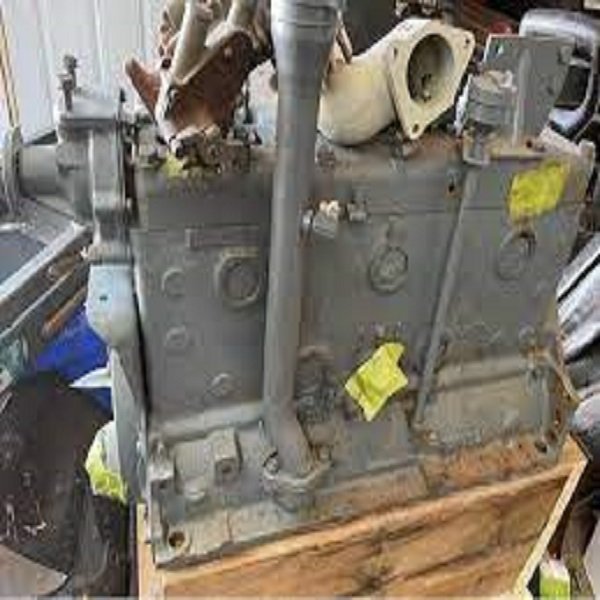
Dodge 230 Flathead Engine for Sale | OEM L-Head Inline-6 (1942 to 1959)
$3,299.99
Product Overview
- Displacement: 230.2 cu in (3.8L)
- Engine Family: Chrysler L-Head (Flathead) Inline-6
- Configuration: Inline-6, L-Head (side-valve flathead), 12 valves (in block)
- Horsepower: 95 to 130 hp, application and year dependent
- Condition: OEM used, compression tested and inspected
- Availability: Call to confirm current availability
- Shipping: Free freight to all 50 states, 5 to 10 business days
- All 6 cylinders pressure-tested with results shared before payment
- 218 versus 230 displacement confirmed before every order ships
- Year and application documented: car, truck, or Power Wagon variant noted
- Zero core charge required, your existing engine stays with you
- Backed by a 15 day replacement warranty against internal defects
Did you like this product? Add to favorites now and follow the product.
(+800) 1234 5678 90 Start Live Chat
Description
Engine Background
The Dodge 230 is the largest and final displacement of the Chrysler flathead inline-six family, an engine architecture that began production in 1933 and remained in continuous use for over 35 years in automotive, truck, military, and industrial applications. The 230 cubic inch displacement was standardized for both Dodge and Plymouth passenger cars starting in 1954, ending a decade-long period where Dodge used slightly different specifications from Plymouth. The basic internal design (four main bearings, solid lifters, L-head valve arrangement, single-barrel carburetor) remained essentially unchanged from the engine’s introduction through the end of civilian production in 1959.
The 230’s defining characteristic is its extremely long stroke: 4.625 inches compared to a 3.25 inch bore. This undersquare ratio was chosen deliberately for maximum low-rpm torque at minimal rpm, exactly what a 1950s family car, half-ton truck, or loaded Power Wagon needed. The engine produces its peak torque well below 2,000 rpm and is happiest operating between 1,200 and 2,500 rpm. Asking more than that from it is possible but increasingly inefficient and wears out the crank oiling system faster than Chrysler intended.
The 230 flathead powered every Dodge and Plymouth automobile from 1942 through 1959, plus the full range of Dodge D-series trucks, the legendary Power Wagon, and the wartime Dodge WC series military trucks. In military and industrial applications, the engine continued in production well into the 1970s. The Dodge Power Wagon (WM300) used the 251 cubic inch variant of this same flathead family through its final production year of 1968. Finding a tested, documented 230 flathead is a meaningful event for any serious vintage Dodge restoration.
When Replacement Becomes Necessary
- Valve train clatter that does not reduce after warm-up, valve lash out of adjustment (solid lifters require periodic manual adjustment unlike hydraulic lifters in later engines)
- Low compression across multiple cylinders, worn piston rings or scored cylinder walls on high-mileage examples
- Oil burning on all conditions, worn valve guides, a common flathead wear point since the valve stems are exposed to combustion gases and cylinder heat
- Overheating at low speeds, restricted cooling passages in aged flathead blocks, blocked radiator, or failed water pump
- Loss of oil pressure at idle, worn main bearings on high-mileage engines. The 230’s 4-bearing crank is vulnerable to oil pressure loss on neglected units.
- Hard starting in cold weather, typical flathead characteristic due to low compression ratios (6.7 to 8.0:1)
Known Issues We Document Before Shipping
- Valve guide wear, the most common 230 flathead maintenance concern: the L-head design exposes the valve stems to heat from the combustion chamber. Valve guides wear over time, causing oil consumption and rough running. We inspect for valve guide wear indicators before shipping.
- Main bearing oiling concern above 2,500 rpm: the 230’s crankshaft oiling system was designed for the engine’s intended low-rpm operating range. Sustained operation above 2,500 rpm can cause main bearing wear. We listen for bearing noise during pre-ship inspection.
- 218 versus 230 confusion: the earlier 218 cubic inch flathead (used 1942 to 1953) and the 230 share the same external dimensions and basic architecture. Block casting numbers distinguish them. The 218 has a 3.875-inch stroke versus the 230’s 4.625-inch stroke. We verify displacement on every order via casting number and stroke measurement.
- Aged seals and gaskets throughout: a 60-to-80-year-old engine has aged rubber and cork seals throughout. Plan a complete seal and gasket refresh at installation regardless of donor condition. Inexpensive insurance against post-install leaks.
- Babbitt versus insert bearing variants: the earliest 230 production used babbitt rod bearings; later production switched to insert bearings. For rebuilds, knowing which bearing type was originally fitted matters for parts sourcing. We document where determinable from external indicators.
230 Flathead Variants and Applications
Critical buyer information across the 1942 to 1959 civilian production run:
| Application | Years | HP | Compression | Notes |
|---|---|---|---|---|
| Dodge Passenger Car (D-series) | 1942 to 1948 | 95 hp | 6.7:1 | Single 1-barrel carb. Lower compression. Wartime and immediate post-war era. |
| Dodge Passenger Car (D-series) | 1949 to 1953 | 103 hp | 7.0:1 | Revised carburetion and timing. Coronet, Meadowbrook, Diplomat. |
| Dodge Passenger Car- Upgraded | 1954 to 1955 | 110 hp | 7.25:1 | Standardized 230 displacement for Dodge and Plymouth from 1954 onward. |
| Dodge Passenger Car- Hi-CR Option | 1956 to 1959 | 120 to 130 hp | 8.0:1 | High-compression option available. Stromberg WW 2-barrel on some Dodge models. |
| Dodge Truck (D-series 1 ton and up) | 1946 to 1959 | 95 to 100 hp | 6.7:1 | Lower compression tuning for commercial duty. Single 1-barrel carb. |
| Power Wagon (WM300) | 1946 to 1959 | 95 hp | 6.7:1 | Low-compression truck tune. Rear-sump oil pan (different from car engines). Must confirm pan configuration. |
| INCLUDED- Long Block | Block, crankshaft, pistons, connecting rods, camshaft, cylinder head, L-head valve train (valves, springs, lifters in block), oil pan, timing cover, and water pump where present. |
|---|---|
| NOT INCLUDED | Carburetor, intake and exhaust manifold (combined in L-head design- on same side of block), distributor and ignition system, generator or alternator, starter, transmission, accessories. |
| Oil Pan Note | Car and truck versions use different oil pan configurations (rear sump vs center sump). Power Wagon and truck engines use rear-sump pans that may not fit in car chassis. We note pan configuration before shipping. |
| Core Note | No core charge. You are not required to return your old engine. |
What Ships and What Does Not
| Dodge Coronet, Meadowbrook, Wayfarer, Diplomat (all passenger cars) | 1942 to 1959 |
|---|---|
| Plymouth Cranbrook, Belvedere, Savoy, Plaza (Plymouth passenger cars) | 1954 to 1959 (230 displacement standardized for Plymouth from 1954) |
| Dodge D-Series Trucks (1-ton and heavy) | 1946 to 1959 |
| Dodge Power Wagon (WM300) | 1946 to 1959 (car and truck variants differ- confirm pan type) |
| Dodge WC-Series Military Trucks (various) | 1942 to 1945- primarily 218 cubic inch variant but some 230 applications |
| Industrial and stationary applications | Through early 1970s- forklifts, generators, stationary power plants |
Direct-Fit Vehicle Applications
| Dodge 230 flathead | Most common buyer search |
|---|---|
| 230 L-head engine | Technical designation buyer |
| Chrysler flathead 6 | Brand family designation |
| Dodge flathead engine | General flathead buyer |
| Power Wagon 230 engine | Power Wagon restoration buyer |
| 230 inline-6 flathead | Full description buyer |
| vintage Dodge engine | Broad restoration buyer |
| 1950s Dodge engine | Era-specific buyer |
| Dodge 230 for sale | Purchase intent |
| Mopar flathead 6 | Mopar community buyer |
Used OEM Versus Specialist Rebuild
For a vintage Dodge or Plymouth passenger car restoration or a Dodge D-series truck rebuild, a documented used 230 with compression results uniform and casting verified is the cost-effective path. For a show-quality restoration or a Power Wagon rebuild, a specialist rebuild with hard valve seats (for unleaded fuel), fresh valve guides, refreshed bearings, and new seals throughout is the better long-term investment. Specialist 230 flathead rebuilds typically run $4,500 to $8,000 from established Mopar vintage shops. Hard valve seat conversion adds approximately $400 to $700 to a rebuild and is essential for sustained unleaded fuel operation.
Inspection Workflow
- Compression test logged across all 6 cylinders with uniformity reported
- Displacement verified: 218 versus 230 via casting number and stroke measurement
- Year and application documented: passenger car, D-series truck, or Power Wagon donor
- Valve guide condition assessed where determinable
- Main bearing noise evaluated
- Babbitt versus insert bearing variant noted where determinable
- External oil leak survey at valve cover, side cover, timing cover, oil pan
- Cooling passage condition assessed where accessible
Pre-Purchase Buyer Notes
- Plan a hard valve seat conversion for unleaded fuel operation: the 230 was designed for leaded fuel. Modern unleaded fuel accelerates exhaust valve seat wear. A hard seat conversion (approximately $400 to $700 in machine work) at installation is essential for sustained modern fuel use. Skipping this leads to dropped valves and major engine damage.
- Refresh all seals and gaskets at installation: a 60-to-80-year-old engine has aged seals throughout. Source a complete gasket set in advance.
- Use detergent oil with care: original 230 flatheads were designed for non-detergent oil. Switching a heavily sludged engine to modern detergent oil can dislodge accumulated sludge and cause oil passage blockages. For engines with unknown service history, start with a conservative oil and inspect oil filter frequently in the first 1,000 miles.
- Match displacement to your vehicle: verify whether your vehicle originally had the 218 or 230 before ordering. The two engines are not directly interchangeable for show-quality restoration despite similar appearance.
- Plan for solid lifter adjustment: the 230 uses solid lifters requiring periodic manual lash adjustment (typically every 6,000 to 8,000 miles). Hydraulic lifter conversion kits exist but compromise originality for restoration purposes.
Why Buy From Part Nests
- Displacement verified: 218 versus 230 confirmed before payment via casting and stroke
- Year and donor application documented (passenger car, D-series truck, or Power Wagon)
- Babbitt versus insert bearing variant noted where determinable
- Valve guide condition assessed
- All 6 cylinders compression-tested with uniformity reported
- Cooling passage condition externally assessed
- No core return required
- Free freight delivery to every state
- 15 day replacement warranty against internal defects
- Call (240) 306-7051 to speak with someone who knows 230 versus 218 displacement identification, hard valve seat conversion requirements for unleaded fuel, and Power Wagon versus D-series truck variant differences
Additional information
| displacement | 230.2 cu in (3.8L) |
|---|---|
| engine-family | Chrysler L-Head (Flathead) Inline-6 |
| configuration | 12 valves (in block), Inline-6, L-Head (side-valve flathead) |
| bore-x-stroke | 3.250 in x 4.625 in |
| firing-order | 1-5-3-6-2-4 |
| aspiration | Naturally Aspirated |
| valve-train | Solid lifters- manual valve adjustment required (no hydraulic lifters) |
| fuel-system | Single 1-barrel downdraft carb (Carter BB or Stromberg WW) | Some 1956 to 1959 models used Stromberg WW 2-barrel |
| block-material | Cast Iron |
| head-material | Cast iron (flat- L-head design) |
| main-bearings | 4 main bearings |
| compression-ratio | 6.7:1 to 8.0:1- year and application dependent |
| production-years | 1942 to 1959 (automotive) | through early 1970s (industrial and military) |
| manufacturer | Chrysler Corporation (Dodge and Plymouth) |
| important | 218 and 230 are DIFFERENT engines- both from same family but different stroke. We confirm displacement before every order. |
| oil-viscosity | Use 10W-40 or 15W-40 conventional oil- NOT modern thin synthetic 5W-20 |
| horsepower | 95 to 130 hp- application and year dependent |
| compatible-transmissions | Chrysler Fluid Drive semi-auto | 3-speed manual | Power Wagon transfer case units |
| condition | compression tested and inspected, Used OEM |
Stroke and displacement. The 218 (used 1942 to 1953) has a 3.875-inch stroke for 218 cubic inches. The 230 (1954 onward in passenger cars) has a 4.625-inch stroke for 230 cubic inches. Same 3.25-inch bore, same external dimensions, but different internals. Block casting numbers distinguish them. We verify displacement on every order.
Every Dodge and Plymouth passenger car from 1954 to 1959 (Coronet, Custom, Royal, Plaza, Belvedere, Savoy, and others), the Dodge D-series truck lineup (1954 to 1960), the Dodge Power Wagon (in 251 cubic inch form), and the Dodge military WC series. In industrial and military applications, the flathead family continued in production well into the 1970s.
Machining the cylinder block to accept hardened steel valve seat inserts in place of the original integrally-cast seats. The original 230 was designed for leaded fuel, which lubricated and cushioned the valve seats. Modern unleaded fuel accelerates seat wear, eventually causing dropped valves and major engine damage. Hard seat conversion (approximately $400 to $700 in machine work) eliminates this issue and is essential for sustained modern fuel operation.
The 4-main-bearing crankshaft and oiling system were designed for low-rpm torque, not high-rpm power. Above approximately 2,500 rpm, the oiling system struggles to maintain adequate flow to the main bearings, accelerating wear. The 230 is happiest in the 1,200 to 2,500 rpm range. For vehicles requiring sustained higher rpm operation, the post-1960 slant-six is the more appropriate engine choice.
Yes, with caution. Modern detergent oils have additives that can dislodge accumulated sludge in engines that have run for decades on non-detergent oil. For an engine with unknown service history, switching to detergent oil may cause sludge migration that blocks oil passages. Start with a moderate-detergent oil, change frequently (every 1,000 miles for the first 3,000 miles), and inspect the oil filter for sludge content.
Stroke and displacement, otherwise same architecture. The Power Wagon 251 used a 4.75-inch stroke for 251 cubic inches in the WDX and WM300 trucks. The 230 has the same basic block, head, and supporting hardware but the 4.625-inch stroke for 230 cubic inches. Many parts (gaskets, ignition, water pumps) interchange between the two, but the crankshaft, pistons, and connecting rods are different.
Some valve clatter is normal on solid-lifter engines, but excessive clatter indicates lash out of adjustment. The 230 requires periodic valve lash adjustment (typically every 6,000 to 8,000 miles). Hydraulic lifter conversion kits exist but are non-original and may compromise show-quality restoration value. For drivers prioritizing quietness over originality, the conversion is a reasonable option.
No. There is no core return required.
15 Day Replacement Warranty
Every used Dodge 230 flathead engine purchased through Part Nests carries a 15 day replacement warranty starting on the delivery date.
What Is Covered
- Internal defects already present when the engine arrives
- Performance materially different from how the engine was described
- Incorrect part shipped due to an error on our end
What Is Not Covered
- Damage caused during installation
- Damage from sustained operation above the engine's designed 2,500 rpm range
- Damage from skipping hard valve seat conversion on extended unleaded fuel operation
- External components unless specifically itemized
- Labor expenses of any kind
To start a warranty claim, reach us within 15 days of delivery at (240) 306-7051.
- Displacement Verified: 218 vs 230 confirmed via casting and stroke before payment
- Year and Application Documented: Passenger car, D-series truck, or Power Wagon source
- Bearing Variant Noted: Babbitt vs insert disclosed where determinable
- Valve Guides Assessed: Common flathead wear point inspected
- All 6 Cylinders Tested: Compression results shared before payment
- 15 Day Replacement Cover: Internal defects protected from delivery onward
2 reviews for Dodge 230 Flathead Engine for Sale | OEM L-Head Inline-6 (1942 to 1959)
Related products
Recently Viewed Products
About Us
At Part Nests, we specialize in high-quality used and OEM auto parts, with a wide selection of components ready to ship to customers.
© 2026 Part Nests. All rights reserved.

Ralph K. –
Got a 230 flathead for a 1956 Dodge Coronet restoration. Displacement verified as 230 (not the earlier 218), donor application documented as passenger car. All six cylinders tested uniform on compression. Plan a hard valve seat conversion at install per their recommendation for sustained unleaded fuel use. Foundation for the restoration is exactly right.
Earl D. –
Sourced a 230 for a D-series truck rebuild. Honest about it being a 60-plus-year-old core with valve guide wear disclosed. Plan a complete rebuild approach with valve guide replacement and hard seat conversion. Babbitt versus insert bearing variant noted as insert (later production). Solid foundation for the project.