
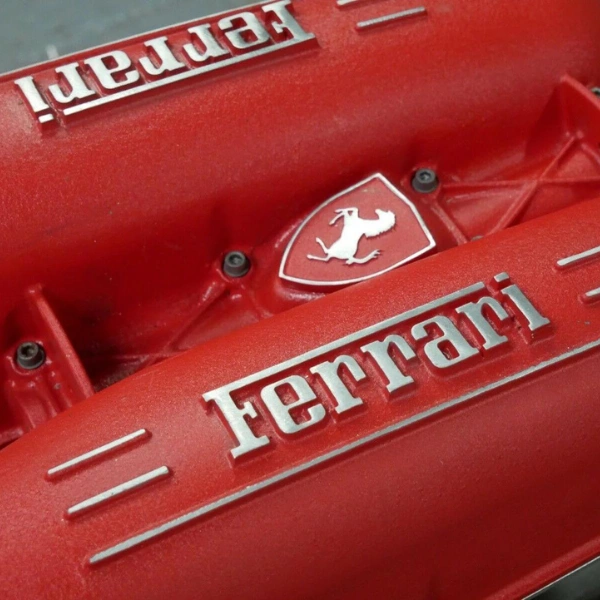
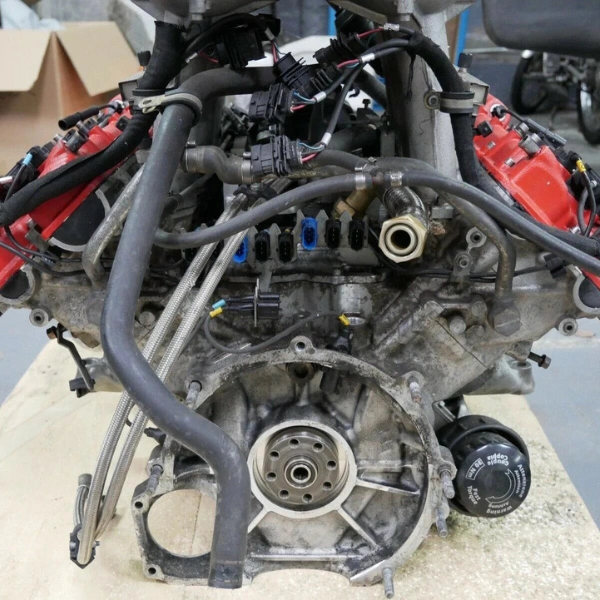
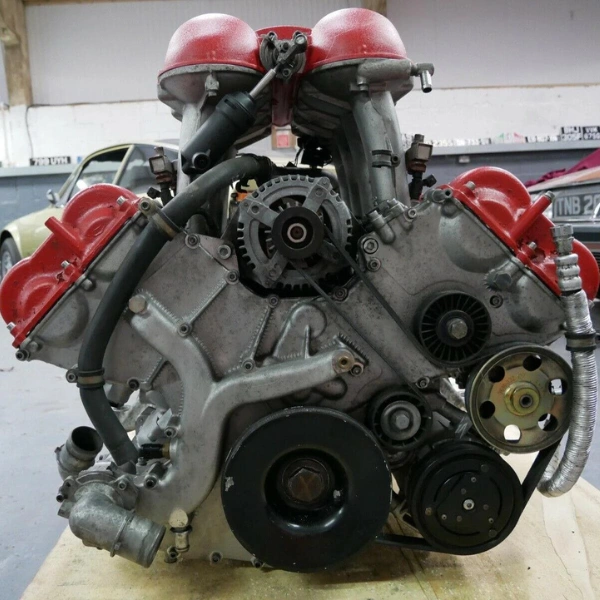
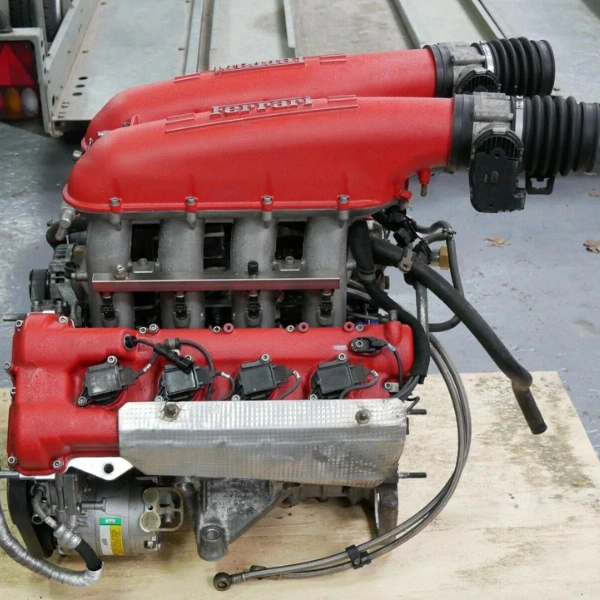
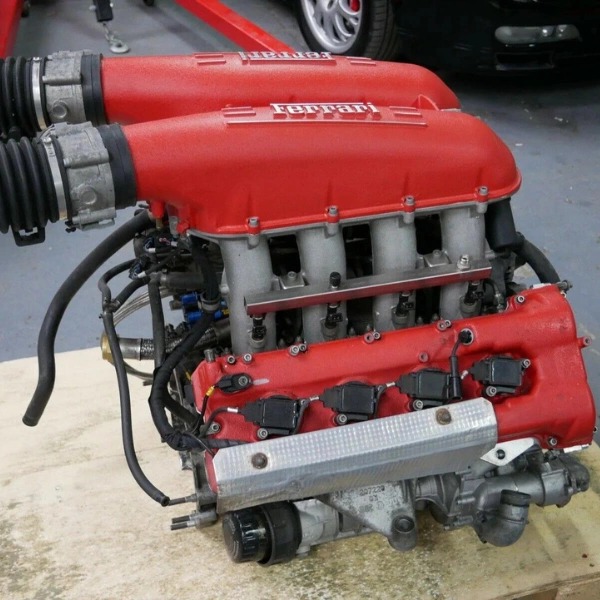
Ferrari F136 Engine for Sale | OEM F430, 458 Italia, California 4.3L and 4.5L Naturally Aspirated V8
$24,250.00
Product Overview
- Engine Family: Ferrari F136, jointly developed with Maserati, produced by Ferrari
- Production Years: 2001 to 2019
- Condition: OEM used, inspected and documented
- Availability: F136E (F430), F136F (458), and F136IB (California) variants, call to confirm
- Shipping: Free freight to all 50 states with specialist exotic engine handling
- Fully inspected and documented: F136 variant code confirmed before shipping
- Flat-plane vs cross-plane crankshaft configuration documented
- Dry sump vs wet sump application confirmed
- Zero core charge required, your original engine stays with you
- Backed by a 15 day replacement warranty against internal defects
Did you like this product? Add to favorites now and follow the product.
(+800) 1234 5678 90 Start Live Chat
Description
Engine Background
The Ferrari F136 is the engine family that powered Ferrari’s most beloved naturally aspirated era, from the F430 in 2004 through the 458 Speciale’s final run in 2015. Jointly developed by Ferrari and Maserati, the F136 produced some of the most celebrated high-revving V8 sounds in road car history while incorporating technologies drawn directly from Ferrari’s Formula 1 engineering division, including advanced aluminum casting techniques, carbon fiber intake manifolds on later variants, and direct injection introduced with the 458 Italia.
The F136 family’s defining characteristic in Ferrari applications is the flat-plane crankshaft, a configuration where the crankpin pairs are separated by 180 degrees rather than the 90 degrees of a conventional cross-plane V8. This arrangement allows the engine to rev more freely and respond more instantaneously to throttle inputs, while producing the distinctive alternating-bank exhaust sound that Ferrari V8 owners universally describe as one of the finest sounds in automotive history. The 458 Italia’s F136F variant extended this philosophy to 9,000 rpm and 562 hp from 4.5 liters, among the highest specific outputs of any production V8 engine without forced induction.
The F136 was the last naturally aspirated V8 Ferrari installed in a road car. Its successor, the F154 turbocharged V8, arrived in 2014 with the California T and then the 488 GTB in 2015. The turbocharged engine produces more power but the F136’s naturally aspirated character, sound, and driving feel have made it one of the most desirable Ferrari powerplants for enthusiasts who value the experience of an unassisted high-revving Italian V8.
When Replacement Becomes Necessary
- Oil leaks at cam cover gaskets or oil filter housing area, common on aged F136 engines in all applications
- Rough idle or misfire codes, individual coil-on-plug failures (one coil per cylinder on 458 GDI applications) or injector issues
- DISA-style intake actuator fault codes on F430 applications, variable intake system actuator wear
- Overheating, F136 cooling systems in both mid-engine and front-engine applications require correct coolant specification and complete system maintenance
- Oil consumption beyond manufacturer specification, internal seal deterioration on high-mileage examples
- Cam timing fault codes, variable valve timing actuator wear on high-mileage units
Known Issues We Document Before Shipping
- F136 variant code compatibility, the most critical ordering issue: the F136E (F430), F136F (458 Italia), and F136IB (California) use different bore sizes, different displacement, different crankshaft configurations, different ECU calibrations, and different intake/exhaust manifold configurations. They are NOT interchangeable without major modification. We identify and confirm the specific variant code before every order.
- ECU VIN-linking on 458 applications: the 458 Italia’s F136F ECU may be VIN-linked in some configurations, requiring Ferrari dealer programming to adapt to a replacement engine. Confirm ECU compatibility with your receiving Ferrari specialist before ordering.
- Direct injection carbon buildup on 458 applications: the F136F in the 458 Italia uses direct injection, which can develop carbon deposits on intake valves over time, particularly in vehicles that see short trips at low operating temperature. Walnut blasting service is the standard remediation. We note where applicable.
- Flat-plane crankshaft inherent vibration: the flat-plane configuration produces secondary vibrations that conventional cross-plane V8s do not exhibit. This is a design characteristic, not a defect. Ferrari engineers and the chassis design accommodate this. Buyers expecting smoother cross-plane V8 behavior should set expectations accordingly.
- Specialist installation required: F136 engine installation is not a general-shop task. Ferrari Classiche, Ferrari Approved Service Center, or recognized independent Ferrari specialists are the appropriate installers. Verify your specialist before ordering.
F136 Variants and Applications
Critical buyer information across the 2001 to 2019 production run:
| Variant Code | Application | Displacement | HP | Notes |
|---|---|---|---|---|
| F136E | Ferrari F430 (2004 to 2009) | 4,308 cc (4.3L) | 490 PS / 483 hp at 8,500 rpm | Flat-plane crank. Dry sump. Port injection. The defining naturally aspirated Ferrari V8 of the 2000s. |
| F136ED | Ferrari 430 Scuderia (2007 to 2009) | 4,308 cc (4.3L) | 510 PS / 503 hp at 8,500 rpm | Track-focused F430 variant. Revised valve timing, reduced internal friction. Same block as F136E. |
| F136F | Ferrari 458 Italia (2009 to 2015) | 4,497 cc (4.5L) | 570 PS / 562 hp at 9,000 rpm | Flat-plane crank. Dry sump. Direct injection (first F136 GDI). 9,000 rpm redline. The pinnacle of the naturally aspirated F136. |
| F136FF | Ferrari 458 Speciale (2013 to 2015) | 4,497 cc (4.5L) | 605 PS / 597 hp at 9,000 rpm | Highest output naturally aspirated F136. Optimized combustion, revised cam profiles. |
| F136IB | Ferrari California (2008 to 2014) | 4,296 cc (4.3L) | 460 PS at 7,750 rpm | Cross-plane crank (front-engine GT). Direct injection. Wet sump. Different architecture from mid-engine variants. |
| INCLUDED | Engine assembly as removed from donor vehicle. Specific accessories confirmed before shipping. |
|---|---|
| NOT INCLUDED | Dry sump tank and scavenge lines (F430 and 458), ECU and wiring harness, exhaust manifolds (titanium on some Scuderia models), intake system, gearbox. |
| ECU Note | Confirm ECU compatibility with your receiving shop before ordering- particularly for 458 applications which may have VIN-linked ECU configurations. |
| Core Note | No core charge. |
What Ships and What Does Not
| Ferrari F430 Berlinetta, Spider, and Scuderia (F136E/ED) | 2004 to 2009 |
|---|---|
| Ferrari 458 Italia, Spider, and Speciale (F136F/FF) | 2009 to 2015 |
| Ferrari California (F136IB) | 2008 to 2014 |
| Maserati GranTurismo (F136L- cross-plane, 4.7L) | 2007 to 2019- different variant from Ferrari applications |
| Alfa Romeo 8C Competizione (F136L- cross-plane) | 2007 to 2010 |
Direct-Fit Vehicle Applications
| Ferrari F136 | Most common buyer search code |
|---|---|
| F136 engine | Short code buyer |
| Ferrari 458 engine | 458 application buyer |
| Ferrari F430 engine | F430 application buyer |
| F136E | F430-specific variant code |
| F136F | 458-specific variant code |
| Ferrari 4.5L V8 | Displacement-format buyer |
| Ferrari flat-plane V8 | Architecture designation buyer |
| Ferrari naturally aspirated V8 | NA designation buyer |
| Ferrari V8 for sale | General Ferrari V8 buyer |
Used OEM Versus Specialist Rebuild
For a Ferrari F430, 458 Italia, 458 Spider, California, or Maserati GranTurismo with engine failure, a documented used F136 with variant code verified and donor history disclosed is the most accessible path. Given the engine’s value and complexity, many buyers opt for a specialist rebuild with refreshed bearings, fresh seals, and refreshed VVT actuators as part of any installation. Specialist F136 rebuilds typically run $35,000 to $65,000-plus from authorized Ferrari service centers depending on damage scope and variant. For a high-value Ferrari, the specialist path is often the better long-term investment given the collector value of the vehicles.
Inspection Workflow
- External condition assessed at all accessible areas
- F136 variant code confirmed: F136E (F430), F136F (458), F136IB (California), or Maserati-spec variants
- Donor application identified: Ferrari F430, 458 Italia, 458 Spider, California, or Maserati GT/GranTurismo
- Flat-plane versus cross-plane crankshaft configuration documented
- Dry sump versus wet sump application confirmed
- Cam cover and oil filter housing gasket areas inspected
- VVT actuator external condition assessed
- Mileage and donor service history documented where available
Pre-Purchase Buyer Notes
- Confirm variant code before ordering: F136E, F136F, and F136IB are NOT interchangeable. The most critical F136 sourcing distinction. Verify your vehicle’s engine code and match accordingly.
- Coordinate with your Ferrari specialist for ECU compatibility: 458 applications may have VIN-linked ECU requiring Ferrari dealer programming for engine replacement. Confirm with your installer before ordering.
- Plan walnut blasting for 458 direct injection applications: carbon buildup on intake valves is inherent to direct injection. Service at installation prevents post-install rough idle and reduced response.
- Use Ferrari-specified fluids only: Ferrari-approved engine oil, coolant, and gear oil. Generic substitutes are not acceptable on F136 engines. Verify specifications with your specialist.
- Document donor source: provenance documentation matters significantly for Ferrari value preservation. We provide everything available from the donor vehicle history.
Why Buy From Part Nests
- F136 variant code confirmed: F136E, F136F, or F136IB documented before payment
- Donor application identified: Ferrari or Maserati source disclosed
- Flat-plane versus cross-plane configuration verified
- Dry sump versus wet sump application confirmed
- Mileage and donor history documented where available
- Cam cover and oil filter housing condition externally inspected
- Specialist exotic engine packaging and freight handling
- No core return required
- 15 day replacement warranty against internal defects
- Call (240) 306-7051 to speak with someone who knows F136 variant code compatibility, 458 ECU VIN-linking, and Ferrari versus Maserati donor variant differences
Additional information
| engine-family | Ferrari F136- jointly developed with Maserati, produced by Ferrari |
|---|---|
| variants-available | F136E (F430 4.3L) | F136F (458 Italia 4.5L) | F136IB (California 4.3L)- confirm at order |
| f430-specs | 308 cc | 92mm x 81mm | 490 PS at 8, 4, 500 rpm | flat-plane crank | dry sump |
| 458-italia-specs | 000 rpm | flat-plane crank | dry sump | GDI, 4, 497 cc | 94mm x 81mm | 570 PS at 9 |
| california-specs | 296 cc | 94mm x 77.4mm | 460 PS at 7, 4, 750 rpm | cross-plane crank | wet sump | GDI |
| aspiration | Naturally Aspirated- no turbo, no supercharger on any road-going F136 |
| production-years | 2001 to 2019 |
| last-naturally-aspirated-fer | Yes- succeeded by turbocharged F154 in 2014 |
| manufacturer | Ferrari S.p.A. (Maranello, Italy) |
| condition | Inspected and Documented, Used OEM |
Variant codes for different applications, all NOT interchangeable. The F136E is the F430 variant (4.3L, flat-plane, dry sump). The F136F is the 458 Italia variant (4.5L, flat-plane, direct injection, dry sump). The F136IB is the California variant (4.3L, front-engine layout, wet sump, slightly different tuning). Bore sizes, displacement, crankshaft configurations, ECU calibrations, and intake/exhaust manifolds are all different. We confirm variant code on every order, the most critical F136 sourcing distinction.
Firing interval geometry. A flat-plane V8 fires alternately on each bank (left-right-left-right), creating an even exhaust pulse pattern that produces the distinctive Ferrari V8 sound. A conventional cross-plane V8 (used in most American V8s) fires twice on one bank, then twice on the other, producing the characteristic American V8 burble. The flat-plane configuration also allows lighter rotating mass and faster revving, contributing to the F136's instantaneous throttle response and high redline.
Tuning, mechanical configuration, and crankshaft. Maserati-version F136 engines (in the GT, GranTurismo, Quattroporte) typically use cross-plane crankshafts and wet sump oiling, producing a different sound character and lower peak output but smoother low-end behavior. Ferrari-version F136 engines (F430, 458, California) use flat-plane crankshafts and (mostly) dry sump oiling, producing the characteristic Ferrari V8 sound and higher peak output. The two are NOT directly interchangeable.
Yes. The F136 was jointly developed by Ferrari and Maserati in the early 2000s as Ferrari took technical leadership of Maserati after the FIAT group reorganization. Ferrari produced all F136 engines at the Maranello facility for both brands. Despite shared architecture, the specific variants for each brand are tuned and configured very differently.
Emissions regulations and efficiency requirements. The naturally aspirated F136 was replaced by the F154 turbocharged V8 starting with the California T (2014) and the 488 GTB (2015). The turbocharged engine produces more power and better fuel economy but loses the F136's naturally aspirated character. Collectors and enthusiasts have recognized the F136 as the last of a great Ferrari era, contributing to value appreciation for F430 and 458 examples.
No. F136 engine installation is a specialist task requiring Ferrari Classiche, Ferrari Approved Service Center, or recognized independent Ferrari specialist support. The mid-engine architecture (F430, 458), dry sump system integration, ECU programming, and chassis-specific torque specifications are not standard repair procedures. Verify your specialist before any used engine purchase.
No, not without major modification. The F136F is 4.5L versus the F136E's 4.3L. Bore, stroke, crankshaft, intake manifold, exhaust manifold, ECU, and chassis integration are all different. Cross-installation between F430 and 458 platforms is not a documented swap. Source the engine matching your specific Ferrari application.
No. There is no core return required.
15 Day Replacement Warranty
Every used Ferrari F136 engine purchased through Part Nests carries a 15 day replacement warranty starting on the delivery date.
What Is Covered
- Internal defects already present when the engine arrives
- Performance materially different from how the engine was described
- Incorrect part shipped due to an error on our end
What Is Not Covered
- Damage caused during installation
- Damage from variant code mismatch (F136E vs F136F vs F136IB)
- Damage from non-Ferrari-specification fluids or non-specialist installation
- External components unless specifically itemized
- Labor expenses of any kind
To start a warranty claim, reach us within 15 days of delivery at (240) 306-7051.
- Variant Code Confirmed: F136E, F136F, or F136IB documented before payment
- Donor Application Identified: Ferrari or Maserati source disclosed
- Crankshaft Configuration Verified: Flat-plane vs cross-plane documented
- Sump Type Confirmed: Dry sump vs wet sump application verified
- Specialist Freight Handling: Exotic engine packaging on every shipment
- 15 Day Replacement Cover: Internal defects protected from delivery onward
2 reviews for Ferrari F136 Engine for Sale | OEM F430, 458 Italia, California 4.3L and 4.5L Naturally Aspirated V8
Related products
About Us
At Part Nests, we specialize in high-quality used and OEM auto parts, with a wide selection of components ready to ship to customers.
© 2026 Part Nests. All rights reserved.

Antonio M. –
Sourced an F136E for an F430 engine replacement. Variant code confirmed as F136E (matching the F430), donor application identified as F430 source. Flat-plane crankshaft and dry sump configuration verified. Specialist freight packaging was clearly the appropriate level for the value involved. Coordinated with my Ferrari specialist for installation.
Vincent K. –
Got an F136F for a 458 Italia engine replacement project. F136F variant verified, 458 donor application identified, ECU VIN-linking concern raised in their pre-order notes (coordinated with my Ferrari Approved Service Center accordingly). Plan walnut blasting at install for the direct injection carbon buildup per their recommendation.