

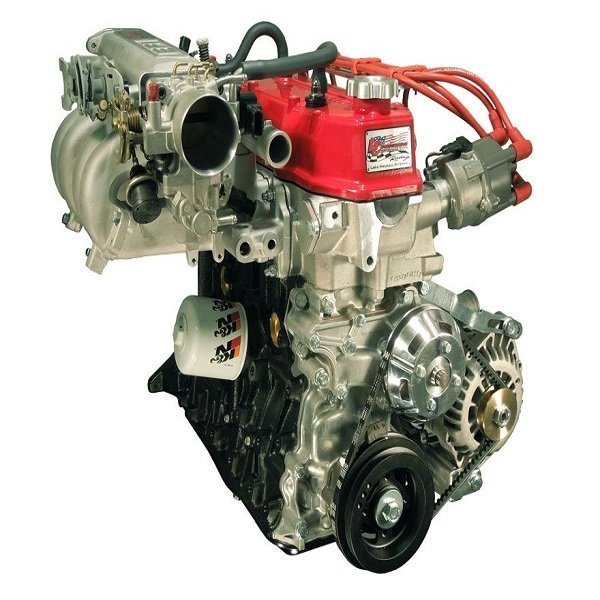
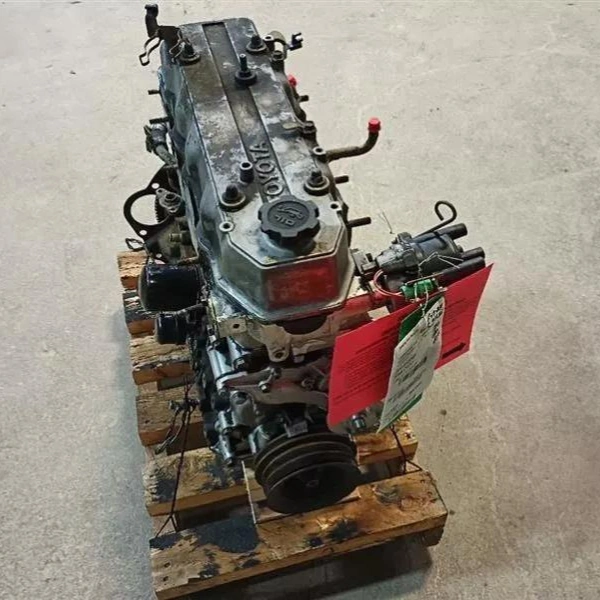
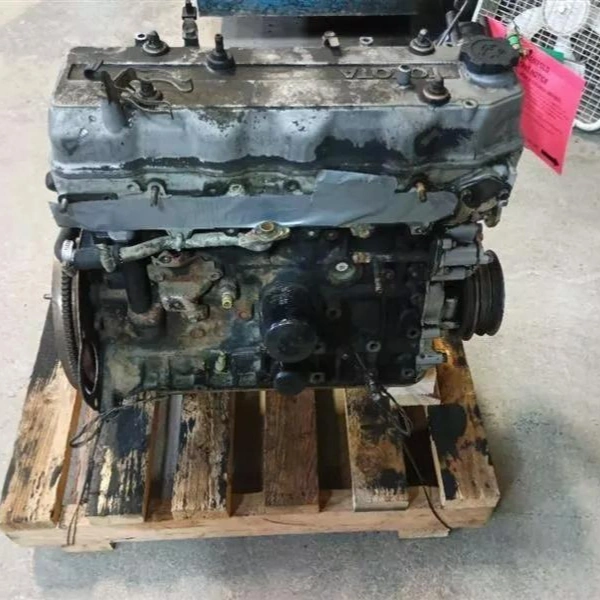
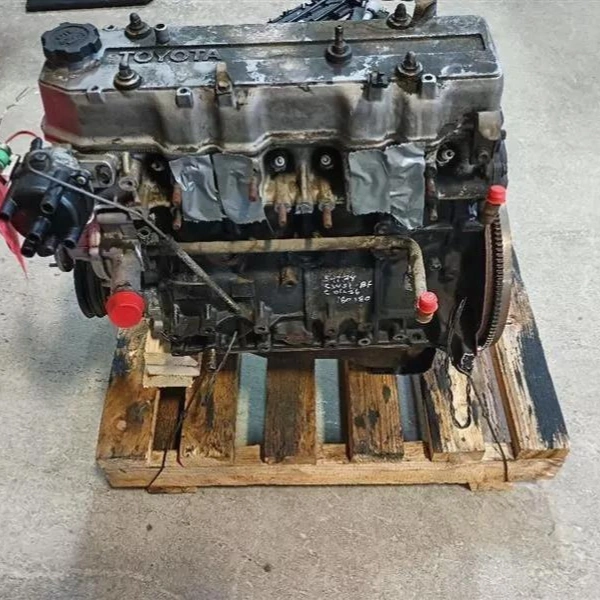
Toyota 22RE Engine for Sale | OEM 2.4L EFI Inline-4 (Pickup and 4Runner)
$1,600.00
Product Overview
- Displacement: 2,366 cc (2.4L / 144.4 cu in)
- Configuration: Inline-4, SOHC, 8 valves
- Horsepower: 105 hp (1983 to 1988) | 112 hp (1989 to 1995)
- Torque: 137 lb-ft (1983 to 1988) | 142 lb-ft (1989 to 1995)
- Condition: OEM used, compression tested and inspected
- Availability: Multiple year ranges from 1983 to 1995 in stock
- Shipping: Free freight to all 50 states, 5 to 10 business days
- All 4 cylinders pressure-tested with results shared before payment
- Pre-1985 vs post-1985 block generation confirmed before every order ships
- 22RE EFI vs 22R carbureted configuration confirmed
- Zero core charge required, your existing engine stays with you
- Backed by a 15 day replacement warranty against internal defects
Did you like this product? Add to favorites now and follow the product.
(+800) 1234 5678 90 Start Live Chat
Description
Engine Background
The Toyota 22RE is one of the most reliable inline-four engines ever built for a production vehicle. With its 2.4-liter displacement, SOHC design, and Toyota EFI system, the 22RE powered the Toyota Pickup (known internationally as the Hilux) and the Toyota 4Runner from 1983 through 1995. Many examples exceed 300,000 miles with regular maintenance; some documented examples have approached 500,000 miles. This is not marketing language: it is why the Toyota Pickup and early 4Runner became the reference vehicle for reliability in cultures from rural America to the Australian outback to conflict zones worldwide.
The 22RE distinguishes itself from the carbureted 22R by its Toyota EFI system, an L-type airflow meter-based injection setup that provides consistently accurate fuel delivery across temperature extremes, altitude changes, and load variations. For off-road use in particular, the EFI’s consistent operation regardless of vehicle angle gives the 22RE a significant advantage over the 22R’s carburetor, which can flood or starve on steep grades.
The critical piece of information every 22RE buyer needs to know: Toyota significantly redesigned the 22RE in 1985. The post-1985 block has a different deck height. The cylinder head, pistons, timing components, water pump, and oil pump changed. Pre-1985 and post-1985 parts are largely not interchangeable. Installing a pre-1985 head on a post-1985 block (or vice versa) will cause severe compression problems and potential engine damage. We confirm block generation before every order ships. Call (240) 306-7051 to verify pre-1985 vs post-1985 availability for your truck.
When Replacement Becomes Necessary
- Coolant loss without visible external leak, head gasket failure (the most common major 22RE failure). Check the oil for a milky appearance or the coolant for oiliness.
- Blue smoke under hard acceleration, valve stem seal wear or piston ring wear on high-mileage units
- Hard cold start or rough cold idle that resolves after warmup, EFI cold start system issue, airflow meter failure, or coolant temperature sensor fault
- Oil burning on all conditions not just cold start, ring and cylinder wall wear on high-mileage engines
- Timing chain rattle on cold start that persists after warmup, timing chain tensioner or guide wear
- Fuel delivery hesitation under load, clogged injectors or failing airflow meter
Known Issues We Document Before Shipping
- Head gasket failure, the 22RE’s primary weakness: despite legendary reliability overall, the 22RE aluminum head gasket is the engine’s Achilles heel. Overheating at any point in the engine’s life compromises the head gasket. We compression test all 4 cylinders and inspect coolant for contamination before shipping. Any unit showing signs of head gasket failure is rejected.
- Pre-1985 versus post-1985 block incompatibility: this is the most common installation mistake. In 1985, Toyota changed the cylinder head, block deck height, timing system, and pump configurations. Parts from the two generations do not interchange. If you are replacing a post-1985 22RE with a pre-1985 unit (or vice versa), all associated cooling system and timing components must match the new engine’s generation. We document block generation on every unit.
- Timing chain wear: the 22RE uses a timing chain (not a belt), which is reliable but does wear on high-mileage units. Timing chain rattle on cold start is the primary indicator. We inspect timing chain noise where accessible during pre-ship inspection.
- Carburetor versus EFI: the 22R is carbureted; the 22RE is fuel-injected. Block architecture is similar but heads, intakes, and fuel systems differ significantly. We confirm 22RE (EFI) versus 22R (carb) on every order.
- Mass airflow sensor wear: the 22RE’s L-type airflow meter contains a moving vane that wears on high-mileage units. Symptoms include rough idle and poor cold start. The sensor is serviceable separately from the engine.
22RE Variants by Year
Critical buyer information across the 1983 to 1995 production run:
| Engine | Years | HP | Fuel System | Notes |
|---|---|---|---|---|
| 22R | 1981 to 1995 | 96 to 108 hp | Carburetor | The carbureted version. Simpler but less consistent than 22RE at altitude and in off-camber situations. |
| 22RE | 1983 to 1995 | 105 to 116 hp | EFI (electronic) | Fuel-injected. Better cold-start, better off-road consistency, slightly more power. This is the unit sold on this page. |
| 22R-TE | 1986 to 1988 only | 135 hp | EFI + Turbo | Factory turbocharged version. Very rare. Lower compression (7.5:1). Compatible only with 22R-TE-specific components. |
| INCLUDED- Long Block | Block, crankshaft, pistons, connecting rods, SOHC camshaft, aluminum cylinder head, valve train, timing chain assembly, oil pan, front timing cover. |
|---|---|
| NOT INCLUDED | Intake manifold and EFI fuel rail and injectors, throttle body, airflow meter (MAF/AFM), coolant temperature sensor, exhaust manifold, distributor and ignition system, alternator, power steering pump, starter, flywheel, accessory drive components. |
| EFI Note | The 22RE EFI system components (airflow meter, fuel rail, injectors) are specific to the 22RE and should be reused from your original engine if in good condition, or sourced separately. These are not included with the long block. |
| Core Note | No core charge. You are not required to return your old engine. |
What Ships and What Does Not
| Toyota Pickup (Hilux)- RWD and 4WD | 1983 to 1995- 2WD and 4WD configurations |
|---|---|
| Toyota 4Runner- all generations | 1984 to 1995- 2WD and 4WD |
| Toyota HiAce Van (select markets) | 1984 to 1989 |
| Toyota Cressida (select international markets) | Limited applications |
Direct-Fit Vehicle Applications
| Toyota 22RE | Most common buyer search |
|---|---|
| 22RE engine | Short code buyer |
| 22R-E engine | Hyphenated designation |
| Toyota 2.4L engine | Displacement-format buyer |
| Toyota pickup engine | Application descriptor |
| 4Runner engine | 4Runner-specific buyer |
| 22RE EFI engine | Fuel system designation buyer |
| Toyota 22RE for sale | Purchase intent |
| 22RE long block | Long block buyer |
| Toyota truck engine replacement | Replacement buyer intent |
Not sure which generation your truck needs? Call us at (240) 306-7051. We verify pre-1985 versus post-1985 block generation before every order ships.
Used OEM Versus Specialist Rebuild
For a Toyota Pickup, Hilux, or 4Runner restoration or replacement, a documented used 22RE with head gasket condition assessed and block generation confirmed is the cost-effective path given the engine’s inherent durability. For a high-mileage donor or an off-road expedition build, a specialist rebuild with refreshed head, new head gasket, fresh timing chain, and updated water and oil pumps is the better long-term investment. Specialist 22RE rebuilds typically run $3,000 to $5,000 from established Toyota truck shops.
Inspection Workflow
- Compression test logged across all 4 cylinders with uniformity reported
- Block generation confirmed: pre-1985 or post-1985
- Fuel system identified: 22RE (EFI) or 22R (carb)
- Head gasket condition assessed via coolant cross-contamination check
- Timing chain noise evaluated at cold start where accessible
- Mass airflow meter condition externally inspected
- External oil leak survey at front cam seal, valve cover, oil pan, distributor o-ring
Pre-Purchase Buyer Notes
- Confirm block generation before ordering: pre-1985 22RE parts are not interchangeable with post-1985 parts. Mixing generations causes severe problems. Verify your donor truck year and match the generation accordingly.
- Plan a head gasket service at install: the 22RE head gasket is the engine’s known weak point. Inexpensive insurance against post-install overheating. Use Toyota OEM or equivalent multi-layer steel gasket.
- Refresh the timing chain on high-mileage units: timing chain wear is a known issue. Replacing the chain, tensioner, and guides while the engine is out is straightforward and cheap insurance.
- Inspect the mass airflow meter: a worn airflow meter causes rough idle and poor cold start. The component is serviceable separately and inexpensive to replace if needed.
- Source supporting parts in advance: 22RE parts are widely available (one of the engine’s advantages) but specific items like cold start injectors, distributor caps, and airflow meters are easier to source as a complete refresh package.
Why Buy From Part Nests
- Block generation confirmed: pre-1985 or post-1985 documented before payment
- Fuel system identified: 22RE (EFI) or 22R (carbureted)
- Head gasket condition assessed (the 22RE’s primary failure mode)
- Timing chain noise evaluated where accessible
- All 4 cylinders compression-tested with uniformity reported
- Mass airflow meter condition externally inspected
- No core return required
- Free freight delivery to every state
- 15 day replacement warranty against internal defects
- Call (240) 306-7051 to speak with someone who knows 22RE head gasket failure patterns, pre-1985 versus post-1985 block differences, and Toyota Pickup versus 4Runner application matching
Additional information
| displacement | 2, 366 cc (2.4L / 144.4 cu in) |
|---|---|
| engine-code | 22R-E |
| configuration | 8 valves, Inline-4, SOHC |
| bore-x-stroke | 92 mm x 89 mm |
| compression-ratio | 9.3:1 |
| horsepower | 105 hp (1983 to 1988) | 112 hp (1989 to 1995) |
| torque | 137 lb-ft (1983 to 1988) | 142 lb-ft (1989 to 1995) |
| firing-order | 1-3-4-2 |
| aspiration | Naturally Aspirated |
| fuel-system | Electronic Fuel Injection (L-type airflow meter) |
| timing-system | Timing chain- not a belt |
| block-material | Cast Iron |
| head-material | Aluminum alloy (crossflow) |
| critical-note | Pre-1985 and post-1985 blocks- parts NOT interchangeable between generations |
| production-years | 1983 to 1995 |
| manufacturer | Toyota Motor Corporation |
| applications | Toyota Pickup (Hilux) | Toyota 4Runner | select international applications |
| condition | compression tested and inspected, Used OEM |
Fuel system. The 22R is carbureted (Aisan downdraft 2-barrel carburetor). The 22RE is fuel-injected (Toyota L-type airflow meter EFI). Both use the same basic 2.4L SOHC architecture, but heads, intakes, and engine management are different. The 22RE is generally preferred for consistent operation across temperatures, altitudes, and off-road conditions where carburetor float bowls can flood or starve.
Toyota made significant block, head, and timing system changes in 1985. The deck height changed, pistons are different, the head changed (with corresponding gasket changes), and the water pump and oil pump configurations changed. Pre-1985 and post-1985 parts are largely not interchangeable. Installing a pre-1985 head on a post-1985 block will cause severe compression problems. Verify your donor truck year before ordering.
Among the most reliable inline-four engines ever built for a production vehicle. Many examples exceed 300,000 miles on original internals with routine maintenance. Some documented examples approach 500,000 miles. The Toyota Pickup and 4Runner became reference vehicles for reliability worldwide largely on the strength of the 22RE's durability. The engine's primary weakness is the head gasket, which can fail after overheating.
The Toyota Pickup (US market) and Hilux (international market) from 1983 to 1995, and the Toyota 4Runner from 1984 to 1995. The 22RE was the EFI option; the 22R was the carbureted option. Most North American Pickups and 4Runners shipped with the 22RE after 1985.
The 22RE's aluminum head expands and contracts at a different rate than the iron block. Any episode of significant overheating (running low on coolant, stuck thermostat, clogged radiator) can warp the head or compromise the head gasket. Once compromised, the gasket can leak coolant into the cylinders, oil into the coolant, or fail catastrophically. We compression test and check coolant on every unit and reject units showing head gasket failure indicators.
The 22RE was used in the Toyota Pickup (not Tacoma; the Tacoma replaced the Pickup in 1995 with a different engine family). For 1983 to 1995 Toyota Pickups and 4Runners, the 22RE is the OEM fit. For Hilux models in international markets, the 22RE was used in the same era. Newer Tacoma models use entirely different engines.
Yes, technically. The 22RE has interference geometry between the valves and pistons. However, the timing chain is robust and rarely fails catastrophically. Timing chain rattle on cold start is the primary wear indicator. Even with significant chain wear, sudden catastrophic failure is rare. We inspect timing chain noise on every unit.
No. There is no core return required.
15 Day Replacement Warranty
Every used Toyota 22RE engine purchased through Part Nests carries a 15 day replacement warranty starting on the delivery date.
What Is Covered
- Internal defects already present when the engine arrives
- Performance materially different from how the engine was described
- Incorrect part shipped due to an error on our end
What Is Not Covered
- Damage caused during installation
- Damage from mixing pre-1985 and post-1985 generation components
- Damage from overheating after installation
- External components unless specifically itemized
- Labor expenses of any kind
To start a warranty claim, reach us within 15 days of delivery at (240) 306-7051.
- Block Generation Confirmed: Pre-1985 or post-1985 documented before payment
- Fuel System Identified: 22RE (EFI) or 22R (carb) noted on every order
- Head Gasket Assessed: 22RE primary failure mode specifically inspected
- Timing Chain Evaluated: High-mileage wear indicator checked
- All 4 Cylinders Tested: Compression results shared before payment
- 15 Day Replacement Cover: Internal defects protected from delivery onward
4 reviews for Toyota 22RE Engine for Sale | OEM 2.4L EFI Inline-4 (Pickup and 4Runner)
Related products
Recently Viewed Products

About Us
At Part Nests, we specialize in high-quality used and OEM auto parts, with a wide selection of components ready to ship to customers.
© 2026 Part Nests. All rights reserved.

Joe N. –
Got a post-1985 22RE for a 1992 4Runner. Block generation confirmed (post-1985), fuel system verified as EFI (22RE not 22R), head gasket condition specifically assessed and disclosed as acceptable. All four cylinders tested uniform on compression. Plan a head gasket service at install per their note. 4Runner is back to daily duty.
Hector G. –
Sourced a pre-1985 22RE for a 1984 Pickup restoration. Block generation correctly identified as pre-1985, EFI fuel system confirmed. Timing chain noise evaluated as acceptable. Honest about the 22RE being a high-mileage engine family by design (donor showed normal aged condition for its years). Foundation for the restoration is solid.
Joe N. –
Got a post-1985 22RE for a 1992 4Runner. Block generation confirmed (post-1985), fuel system verified as EFI (22RE not 22R), head gasket condition specifically assessed and disclosed as acceptable. All four cylinders tested uniform on compression. Plan a head gasket service at install per their note. 4Runner is back to daily duty.
Hector G. –
Sourced a pre-1985 22RE for a 1984 Pickup restoration. Block generation correctly identified as pre-1985, EFI fuel system confirmed. Timing chain noise evaluated as acceptable. Honest about the 22RE being a high-mileage engine family by design (donor showed normal aged condition for its years). Foundation for the restoration is solid.