

VW New Beetle Engine Computer ECM for Sale | OEM Used Control Module
$1,600.00
At a Glance
- Condition: OEM used, communication tested via OBD-II, connector pin integrity verified, housing condition inspected
- Availability: In stock across New Beetle model years
- Shipping: Free shipping to all 50 states, 3 to 7 business days
- Application: Volkswagen New Beetle 1998-2010 (US market 1998-2010, European market 1998-2011)
- Retro-styled hatchback/coupe successor to the iconic original VW Beetle (1938-2003 international, US market ended 1979)
- Built on the VW Golf MK4 platform – FWD front-engine architecture with modern safety and features
- Engines: 1.8L 20V turbo I4, 2.0L I4, 2.5L I5, 1.9L TDI turbo diesel (limited US), and 1.6L I4 (European market)
- Body styles: New Beetle coupe and New Beetle Convertible (2003+ soft-top convertible)
- Cultural icon of the late 1990s and 2000s retro-styling trend
- ECM is programmable to VIN – key coding or immobilizer registration may be required
- 15 day replacement warranty on component defects
Description
About the VW New Beetle Engine Computer ECM
Need a replacement VW New Beetle Engine Control Module (ECM)? Part Nests sources OEM used ECMs for Volkswagen New Beetle applications from 1998 through 2010. The New Beetle was Volkswagen’s retro-styled successor to the iconic original VW Beetle – one of the most successful retro design trends of the late 1990s and 2000s automotive era. Built on the VW Golf MK4 platform with modern FWD architecture, safety systems, and features while echoing the beloved original Beetle silhouette. Each ECM is tested for OBD-II communication, connector pin integrity, and housing condition. Call (855) 634-4447 to verify year and engine before ordering, and to discuss immobilizer registration requirements.
Volkswagen New Beetle Vehicle Context (1998-2010)
- Production era: 1998-2010 US market, 1998-2011 European market. Approximately 13-year production run establishing the retro Beetle as a modern VW icon
- Retro-styling successor: The New Beetle was Volkswagen’s retro-styled successor to the iconic original VW Beetle (Type 1, 1938-2003 internationally, US market ended 1979). Echoed the beloved original Beetle silhouette with modern FWD architecture, safety systems, and features while creating a distinctive retro aesthetic that appealed to buyers wanting nostalgia combined with modern reliability
- VW Golf MK4 platform basis: Built on the VW Golf MK4 platform – FWD front-engine transverse architecture with MacPherson strut front suspension and torsion beam rear suspension. Shared platform with Golf MK4, Jetta MK4, Audi TT first generation, Audi A3 first generation, Skoda Octavia first generation, SEAT Leon first generation
- Body styles: New Beetle coupe (three-door hatchback body with distinctive retro Beetle silhouette) and New Beetle Convertible (2003+ soft-top convertible variant that took over the VW convertible role from the discontinued VW Cabrio – see our related Cabrio engine fuse box listing)
- Successor – VW Beetle (2011-2019): The New Beetle was succeeded by the VW Beetle A5 (2011-2019, also called the Beetle without the New prefix). The A5 refined the retro Beetle concept with more sport-oriented styling and updated engineering
Cultural Significance of the Retro Trend
- Late 1990s / 2000s retro-styling era: The New Beetle was one of the flagship vehicles of the late 1990s and 2000s retro-styling trend that also produced the Chrysler PT Cruiser (2000-2010), Ford Thunderbird (2002-2005), Chevrolet HHR (2006-2011), Mini Cooper (2001+), Ford Mustang (2005+ retro styling), Dodge Challenger (2008+), and others
- 1998 concept-to-production success: VW originally showed the Concept 1 concept car at the 1994 Detroit Auto Show. Strong public response led VW to produce the concept for the 1998 model year, resulting in the New Beetle. One of the most successful concept-to-production transitions in modern automotive history
- Distinctive retro Beetle aesthetics: Rounded fenders, circular headlights, arched roofline, and distinctive bud vase on the dashboard (early years) evoked the original Beetle. Modern interior with premium materials, dashboard-mounted flower vase, and quirky details made the New Beetle immediately recognizable
Volkswagen New Beetle Engine Options
- 1.8L 20V turbo I4: VW’s 1.8T turbocharged 20-valve inline-4. Producing about 150 HP. Enthusiast engine option that gave the New Beetle genuine performance credentials. Same engine also used in Golf MK4 GTI, Jetta MK4 GLI, Audi TT first generation, Audi A3 first generation, and other VW / Audi group vehicles
- 2.0L I4: VW’s 2.0L naturally aspirated inline-4. Producing about 115 HP. Base and mid-tier engine offering balanced performance and refinement
- 2.5L I5 (later years): VW’s 2.5L naturally aspirated inline-5 introduced in later New Beetle production. About 150 HP. VW’s inline-5 architecture provided smooth power delivery
- 1.9L TDI turbo diesel (limited US): VW’s 1.9L Turbocharged Direct Injection diesel. Limited US market availability with strong fuel economy. Produced diesel-loving enthusiast buyer group
- 1.6L I4 (European market): Smaller-displacement gasoline variant for European markets, not offered in US
Engine Control Module (ECM) Specifications
- Type: OEM Engine Control Module (ECM) / Engine Control Unit (ECU) for VW New Beetle
- Function: Central engine management computer that controls fuel injection timing, ignition timing, idle speed, emission systems, and various engine sensor inputs. Communicates with other vehicle modules via CAN bus network and provides diagnostic capability via OBD-II port
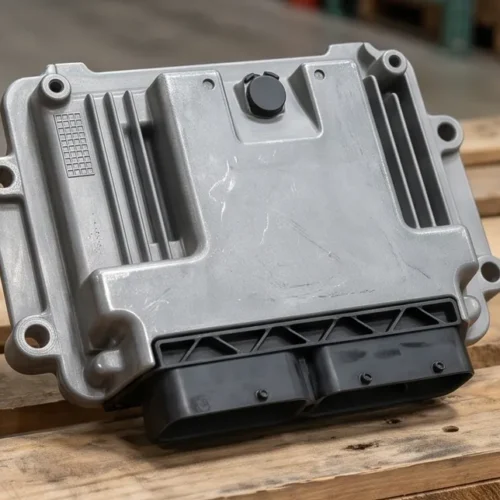
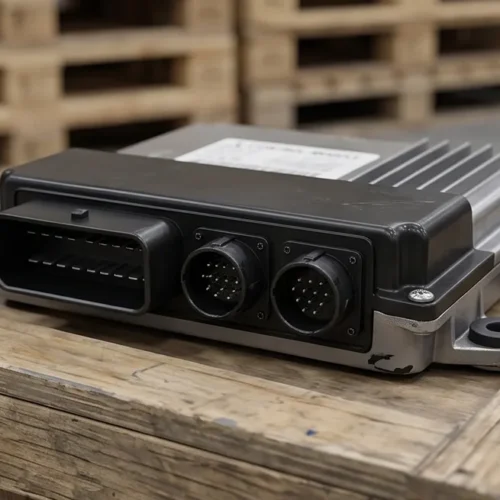
- Construction: Sealed metal housing containing printed circuit board with microprocessor, memory chips, input/output driver circuits, multi-pin electrical connectors for vehicle wiring integration, and heat sink for thermal management
- Immobilizer / VIN coding: Modern VW ECMs are programmed with VIN-specific coding and immobilizer key registration. Replacement ECMs typically require immobilizer registration to the specific vehicle before the vehicle will start. Discuss immobilizer registration requirements when ordering
- Testing: Communication tested via OBD-II protocol, connector pin integrity verified, housing condition inspected before shipment
- Common failure modes: Water ingress causing PCB corrosion, thermal cycling damage causing solder joint cracking, connector pin corrosion, EEPROM memory failure. Symptoms include no communication with scan tools, complete no-start condition, intermittent operation, and various sensor error codes
Related Volkswagen Listings
- VW Atlas: Modern three-row SUV – see our Atlas ignition coil listing
- VW Cabriolet: MK1 Karmann classic convertible – see our Cabriolet engine wiring harness listing
- VW Arteon: Modern sport sedan – see our Arteon airbag clock spring listing
- VW Cabrio: MK3 convertible – see our Cabrio engine fuse box listing
- VW EOS: Modern hardtop convertible successor – see our EOS glove box listing
- VW Golf: Perennial VW hatchback (same MK4 platform for early New Beetle) – see our Golf sun visor listing
VW New Beetle Body Style and Engine Reference
| Detail | Description |
|---|---|
| Classic Type 1 Beetle (1938 to 2003) | Most US variants had NO ECM (mechanical fuel injection or carburetor). Some late Mexican Type 1 with Bosch electronic injection had simple ECUs but very different from modern Beetle ECMs. This ECM is NOT for Classic Type 1 Beetle. |
| New Beetle (1998 to 2010) | Modern Beetle on Golf MK4 platform. Full ECM control with engine variants 2.0L SOHC, 1.8T, 2.5L I5, 1.9L TDI, 2.0L TDI. This ECM applies to New Beetle by year and engine match. |
| Beetle A5 (2012 to 2019) | Final Beetle generation on Golf MK6 platform. Updated electronics with engines 2.5L I5, 1.8 TSI, 2.0 TSI, 2.0 TDI (until VW TDI scandal ended 2015). This ECM applies to Beetle A5 by year and engine match. |
VW Golf MK4 Platform Family Reference
| Detail | Description |
|---|---|
| INCLUDED | The ECM unit in sealed aluminum housing with all connector terminals intact, mounting flange, and identifying labels. Pre-tested for power-on, self-test pass, and CAN bus communication. |
| NOT INCLUDED | Programming or coding to your vehicle VIN (perform at VW dealer or VCDS shop after install), mounting bolts (reuse originals), electrical harness (reuse your existing vehicle harness), immobilizer key matching service (if your vehicle has immobilizer requiring matching), software updates beyond donor vehicle baseline. |
| Tools You Need | Basic hand tools for ECM removal and installation (typically T20 Torx and 10mm socket), VAG-COM/VCDS cable and software for self-installation programming (or use a shop), patience for any required coding procedures, OBD-II scanner for verifying engine codes after install. |
Vehicle Compatibility
| Detail | Description |
|---|---|
| New Beetle 2.0L (1998 to 2005) | AEG/AVH 8-valve SOHC engine, most common early New Beetle |
| New Beetle 1.8T (1998 to 2010) | AWP/AWV/BNU 20-valve turbo, performance variant |
| New Beetle 2.5L I5 (2006 to 2010) | BGP/BGQ/CBTA 5-cylinder, replaced 2.0L SOHC |
| New Beetle 1.9L TDI Diesel (1998 to 2005) | ALH/BEW turbocharged diesel |
| New Beetle 2.0L TDI Diesel (2005 to 2006) | BRM common rail diesel, briefly offered |
| Beetle A5 2.5L I5 (2012 to 2014) | CBTA/CBUA 5-cylinder base engine |
| Beetle A5 1.8 TSI Turbo (2014 to 2019) | CPRA/CPKA 20-valve turbo replacing 2.5L I5 |
| Beetle A5 2.0 TSI Turbo (2012 to 2019) | R-Line/Turbo high-performance variant |
| Beetle A5 2.0 TDI Diesel (2012 to 2015) | CBEA common rail diesel, discontinued after VW TDI scandal |
Why Buy From Part Nests
- OEM verified Engine Control Module (ECM) for VW New Beetle 1998-2010
- Communication tested via OBD-II, connector pin integrity verified, housing condition inspected
- Compatible across gasoline (1.8T, 2.0L, 2.5L) and TDI diesel engine variants (specify engine when ordering)
- Free shipping to all 50 states
- 15 day replacement warranty on component defects
- Support team familiar with VW New Beetle immobilizer registration and Golf MK4 platform architecture
- Call (855) 634-4447 to confirm year, engine, and discuss immobilizer registration before ordering.
15 Day Replacement Warranty
Every used VW New Beetle Engine Control Module carries a 15 day replacement warranty starting on the delivery date. ECM immobilizer registration may be required by a qualified VW service facility. Call (855) 634-4447 to start a warranty claim within 15 days of delivery.
What Is Covered
- Component defects present on arrival beyond what was disclosed
- Complete failure or communication failures within 15 days from installation
- Connector pin failures not disclosed at sale
- Incorrect part shipped (wrong engine or year) due to an error on our end
What Is Not Covered
- Damage caused during installation
- Immobilizer registration expenses at a service facility
- Damage from continued operation with a failing wiring harness or other components
- Labor expenses of any kind, including ECM installation and coding
- Part: OEM Engine Control Module (ECM/ECU)
- Application: VW New Beetle 1998-2010 (US market)
- Retro-Styling Success: Late 1990s / 2000s retro trend flagship
- Platform: VW Golf MK4 (shared with Jetta MK4, Audi TT / A3)
- Body Styles: New Beetle coupe and Convertible (2003+)
- Engines: 1.8T 20V, 2.0L, 2.5L I5, 1.9L TDI
- Immobilizer: VIN coding and key registration typically required
- Related Listings: VW Atlas, Cabriolet, Arteon, Cabrio, EOS, Golf
Additional information
| Brand | Volkswagen |
|---|---|
| Application | Volkswagen Beetle modern generations |
| Year Range Covered | New Beetle 1998 to 2010, Beetle A5 2012 to 2019 |
| CRITICAL | Classic Type 1 Beetle (1938 to 2003) had no ECM on most variants |
| New Beetle Platform | Golf MK4 (A4) shared platform |
| Beetle A5 Platform | Golf MK6 (A5) shared platform |
| Engine Compatibility | 2.0L SOHC, 1.8T, 2.5L I5, 2.0 TSI, 1.9 TDI, 2.0 TDI variants |
| Function | Engine control with fuel injection, ignition, idle, emissions management |
| Communication | CAN bus to other vehicle modules |
| Housing | Sealed aluminum enclosure with mounting flange |
| Connector | Multi-pin Tyco/AMP, varies by year and engine |
| Software | Volkswagen-specific calibration to engine and vehicle |
| Programming Required | Often yes, at VW dealer or shop with VAG-COM/VCDS |
| Programming Cost Estimate | $150 to $250 dealer, $75 to $150 independent |
| Common Failures | Capacitor age, water damage, voltage spikes |
| Warranty | 15 day replacement on bench test failure |
| Shipping | Free UPS or FedEx Ground to all 50 states |
An OEM used Engine Control Module (ECM) / Engine Control Unit (ECU) for Volkswagen New Beetle applications from 1998 through 2010. Sealed metal housing containing printed circuit board with microprocessor, memory chips, input/output driver circuits, multi-pin electrical connectors for vehicle wiring integration, and heat sink for thermal management. Function is central engine management - controls fuel injection timing, ignition timing, idle speed, emission systems, and various engine sensor inputs. Communicates via CAN bus and OBD-II.
Volkswagen's retro-styled successor to the iconic original VW Beetle (Type 1, 1938-2003 internationally, US market ended 1979). Produced 1998-2010 in the US market. Echoed the beloved original Beetle silhouette with modern FWD architecture, safety systems, and features while creating a distinctive retro aesthetic. Body styles: New Beetle coupe (three-door hatchback) and New Beetle Convertible (2003+ soft-top). One of the most successful concept-to-production transitions in modern automotive history.
Built on the VW Golf MK4 platform - FWD front-engine transverse architecture with MacPherson strut front suspension and torsion beam rear suspension. Shared platform with Golf MK4, Jetta MK4, Audi TT first generation, Audi A3 first generation, Skoda Octavia first generation, SEAT Leon first generation. Many mechanical components including ECMs, suspension components, and drivetrain items cross-reference within the Golf MK4 platform family.
The late 1990s and 2000s retro-styling automotive trend produced the New Beetle (1998) along with the Chrysler PT Cruiser (2000-2010), Ford Thunderbird (2002-2005), Chevrolet HHR (2006-2011), Mini Cooper (2001+), Ford Mustang (2005+ retro styling), Dodge Challenger (2008+), and others. Automakers found strong buyer response to designs referencing iconic classic vehicles combined with modern engineering. VW's Concept 1 (1994 Detroit Auto Show) and resulting New Beetle production was one of the flagship successes of this era.
The 1.8L 20V turbo I4 (VW's 1.8T turbocharged 20-valve inline-4, about 150 HP - enthusiast engine also used in Golf MK4 GTI, Jetta MK4 GLI, Audi TT / A3 first generation). The 2.0L I4 (naturally aspirated, about 115 HP - base engine). The 2.5L I5 (later years, VW's inline-5 architecture, about 150 HP). The 1.9L TDI turbo diesel (limited US market, strong fuel economy). Please call (855) 634-4447 to confirm engine before ordering.
Modern VW ECMs are programmed with VIN-specific coding and immobilizer key registration. Replacement ECMs typically require immobilizer registration to the specific vehicle before the vehicle will start. Immobilizer registration is typically performed by a qualified VW service facility with the appropriate diagnostic equipment. Discuss immobilizer registration requirements when ordering - please call (855) 634-4447 for guidance on the process for your specific vehicle.
The VW Beetle A5 (2011-2019, also called simply the Beetle without the New prefix). The A5 refined the retro Beetle concept with more sport-oriented styling and updated engineering on the VW Golf MK6 platform. The A5 ended in 2019 as VW discontinued the Beetle line entirely, ending the retro Beetle era after two generations. VW currently focuses on modern SUVs and electric vehicles rather than retro-styled offerings.
Water ingress causing printed circuit board corrosion (particularly common in vehicles that have experienced water damage). Thermal cycling damage causing solder joint cracking over time. Connector pin corrosion from moisture exposure. EEPROM memory failure causing loss of stored coding. Symptoms include no communication with scan tools, complete no-start condition, intermittent operation, various sensor error codes, and immobilizer-related no-start faults.
Related products



Reviews
There are no reviews yet.