

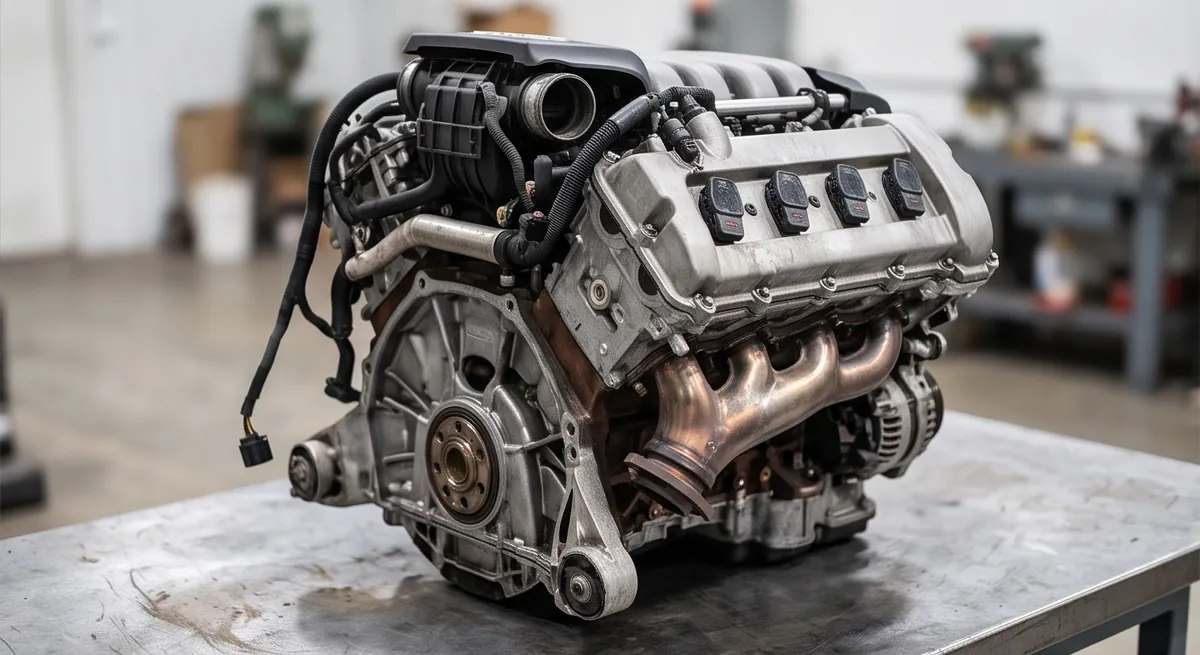
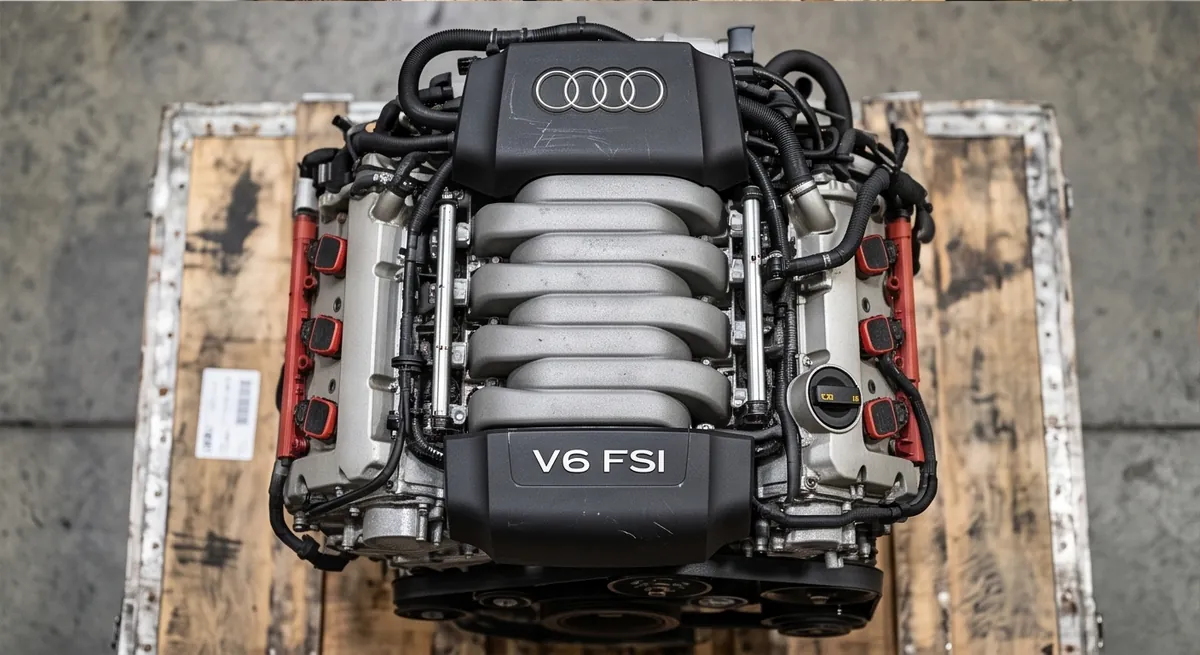
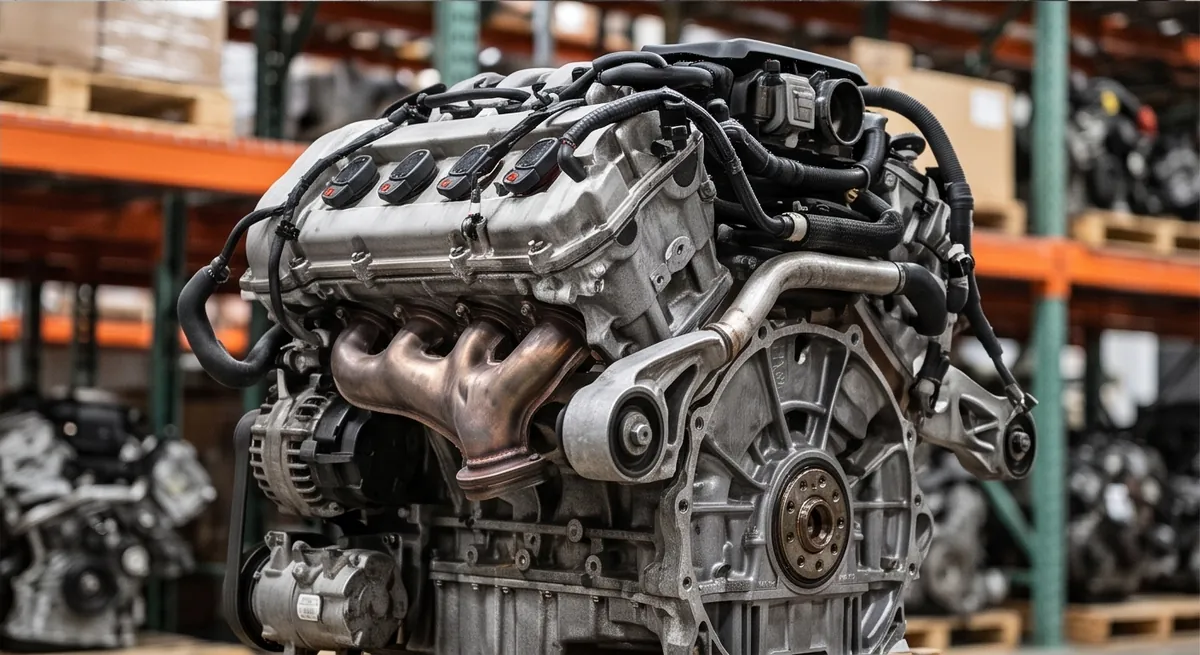
Audi Q7 Engine for Sale | OEM Used Premium 3.6L FSI V6 Naturally Aspirated
$1,999.00
At a Glance
- Condition: OEM used, compression and leak-down tested all 6 cylinders
- Availability: In stock, Audi Q7 3.6L FSI V6 engine available
- Shipping: Free shipping to all 50 states via heavy freight, 7 to 14 business days
- Engine code verified (BHK / BHL the standard BHK / BHL designation for the 3.6L FSI VR6)
- Application confirmed (2007-2010 Audi Q7 4L base US-market V6)
- VR6 narrow-angle V6 architecture confirmed (Volkswagen narrow-angle V6 design, 10.6 degree V-angle)
- Horsepower rating documented (280 HP at 6,200 RPM)
- Compression and leak-down tested all 6 cylinders
- Cylinder head condition documented (single head for the narrow-angle VR6 architecture)
- Timing chain condition assessed
- Direct injection FSI system condition noted
- Carbon buildup status on intake valves noted
- Backed by a 15 day replacement warranty against internal defects
Description
About the Audi Q7 3.6L FSI V6 Engine
Looking for a reliable replacement engine for your first-generation Audi Q7? Part Nests stocks OEM used Audi Q7 3.6L FSI V6 engines for the 4L Q7 (2007-2010) base US-market V6 application. The 3.6L FSI V6 (engine codes BHK / BHL) is the Volkswagen-designed VR6 narrow-angle V6 that served as the base US-market engine in the first-generation Audi Q7 luxury SUV, producing 280 HP and 266 lb-ft of torque. The VR6 architecture is unique among V6 designs, with a 10.6-degree V-angle (vs the conventional 60-degree or 90-degree V-angle) that allows the engine to share a single cylinder head and fit into compact engine bays. Whether you are restoring a 2008 Q7 3.6, completing an engine swap on a 2010 Q7 base variant, or sourcing a replacement for a failed VR6, our inspected used Audi Q7 3.6L FSI engines offer correct OEM fitment at substantial savings over Audi dealer pricing.
Engine Overview: VR6 Narrow-Angle V6 Architecture
The Audi Q7 3.6L FSI V6 uses the Volkswagen Group VR6 (Volkswagen Reihen-V6) architecture, a unique narrow-angle V6 design that distinguishes it from conventional V6 engines:
- Displacement: 3.6 liters (3,597 cc)
- Configuration: Narrow-angle V6 (VR6, 10.6 degree V-angle)
- Single cylinder head: The narrow V-angle allows both banks of cylinders to share a single cylinder head (vs the two separate heads of conventional V6 engines)
- Aluminum block and head
- DOHC with 4 valves per cylinder (24 valves total)
- FSI direct injection (Fuel Stratified Injection, Volkswagen Group direct injection technology)
- Variable valve timing on both intake and exhaust
- Power Output: 280 HP at 6,200 RPM
- Peak Torque: 266 lb-ft at 2,500-5,000 RPM
- Timing chain driven
- Naturally aspirated, no turbocharging or supercharging
Why VR6 Architecture is Unique
The VR6 narrow-angle V6 is a distinctive Volkswagen Group innovation that addresses specific packaging challenges. Understanding why VR6 exists:
- Compact packaging: The 10.6-degree V-angle is much narrower than the 60-degree (typical V6) or 90-degree (V8-based V6) configurations, allowing the VR6 to fit into engine bays designed for inline-4 engines
- Single-head simplicity: Both banks of cylinders share a single cylinder head, reducing parts count and simplifying maintenance
- Smooth operation: The narrow V-angle and single-head design produce smooth running characteristic of inline engines rather than the more pronounced firing pulses of wide-angle V6 designs
- VW heritage: The VR6 was originally developed for the Volkswagen Golf / Corrado in the late 1980s, allowing Volkswagen to offer V6 power in a chassis designed for inline-4 engines
- Audi Q7 application: The 3.6L FSI VR6 in the Q7 4L provided V6 power and refinement while sharing engine architecture with other VAG (Volkswagen Audi Group) applications
Audi Q7 4L (2007-2010) Application Context
The 3.6L FSI VR6 was the base US-market engine in the first-generation Audi Q7 4L. Context for ordering:
- Q7 4L production: 2007-2015 (first-generation Audi Q7)
- 3.6L FSI VR6 production years: 2007-2010 in the US market (replaced by the 3.0L TFSI Supercharged V6 for 2011 plus)
- Application: Base US-market Q7 (with the 4.2L FSI V8 and 4.2L TDI V8 / 3.0L TDI V6 diesel variants as upgrade options)
- Trim levels: Q7 3.6 base, Q7 3.6 Premium, Q7 3.6 Premium Plus, Q7 3.6 Prestige
- Transmission: 6-speed Tiptronic automatic standard
- Drivetrain: Quattro all-wheel drive standard
Q7 Engine Lineup Across Generations
The Audi Q7 has used a wide range of engines across its two generations. The 3.6L FSI VR6 (this listing) is the base US-market V6 for the early 4L Q7. For complete context: the Audi Q7 water pump (our listing, the belt-driven mechanical coolant pump for Audi Q7) covers the cooling system across all Q7 engine variants including the 3.6L FSI VR6 (BHK / BHL) base US-market V6 for 2007-2010, the 3.0L TFSI Supercharged V6 (CJTC / CJWC) for 2011-2015 base V6, the 4.2L FSI V8 (BAR / CDRA) for 2007-2010 V8 variant, the 4.2L TDI V8 Diesel (BTR / CCFA) for 2009-2012 diesel V8, the 3.0L TDI V6 Diesel (BUG / CASA / CJGA) for 2009-2015 diesel V6 (subject to the diesel emissions scandal recall), plus the second-generation 4M Q7 (2016 plus) engines (2.0L TFSI Inline-4 / 3.0L TFSI V6 / 3.0L TDI V6 / SQ7 4.0L TDI V8 / SQ7 4.0L TFSI V8). The 3.6L FSI VR6 (this listing) is specifically for the 2007-2010 4L Q7 application.
Audi VAG Engine Family Context
The Audi Q7 3.6L FSI V6 (this listing) is the naturally-aspirated VR6 from the first-generation Q7 luxury SUV era. For complete Audi engine family context across our catalog: the Audi A4 2.0L EA888 TFSI (our listing, the modern 2.0L turbocharged direct-injection inline-4 across Gen 1 / Gen 2 / Gen 3 / Gen 3B generations for A4 / A5 / Q5 applications) is the smaller turbocharged inline-4 used across the broader Audi lineup. The Audi RS3 2.5L TFSI (our listing, the legendary 5-cylinder TFSI turbocharged engine in the RS3 / TT RS / RSQ3 applications with the distinctive 5-cylinder engine sound and 400 HP plus output) is the high-performance Audi turbocharged inline-5. The Audi S4 4.2L V8 (our listing, the legendary 4.2 liter V8 producing 340 HP in the B6 / B7 S4 generation) is the large naturally-aspirated V8 used in the S4 V8 era. Four Audi engine listings across : EA888 2.0L TFSI inline-4 for A4 applications, 2.5L TFSI inline-5 for RS3 / TT RS / RSQ3, (this listing) 3.6L FSI VR6 for Q7 4L, 4.2L V8 for V8 S4. Plus the Audi Q7 water pump the related cooling system listing for ALL Q7 engine variants.
Common 3.6L FSI VR6 Failure Modes
- Timing chain wear: The 3.6 FSI uses a timing chain (not belt); chain stretch and tensioner wear can occur after 100,000 plus miles
- Carbon buildup on intake valves: FSI direct injection bypasses intake valves, causing carbon accumulation. Walnut shell blasting required every 60,000-100,000 miles.
- Water pump failure: Plastic-impeller water pump similar to broader Audi water pump issue
- HPDI fuel pump cam follower wear: Standard FSI direct-injection wear pattern
- Coil pack failure: Individual ignition coils can fail with age, causing misfires
- Oil consumption: Some 3.6 FSI variants exhibit elevated oil consumption
Vehicle Compatibility
| Engine | Years (US) | HP | Torque | Notes |
|---|---|---|---|---|
| 3.6 FSI VR6 (THIS LISTING) | 2007-2010 | 280 HP | 266 lb-ft | Base US trim; engine codes BHK / BHL |
| 4.2 FSI V8 | 2007-2010 | 350 HP | 325 lb-ft | Premium US trim; engine code BAR |
| 4.2 TDI V8 diesel | 2009-2012 | 326 HP | 553 lb-ft | Brief US offering; engine code CCFA |
| 3.0 TDI V6 diesel | 2009-2015 | 225-240 HP | 406-440 lb-ft | Was extensively offered then withdrawn during the Volkswagen Group diesel emissions matter; engine codes CASA / CATA / CJGA / CJMA |
| 3.0 TFSI Supercharged V6 | 2011-2015 | 280-333 HP | 295-325 lb-ft | Replaced 3.6 FSI and supplemented 4.2 FSI in later production; engine codes CJTC / CJWC / CTWA |
VR6 Architecture and Specifications
| Engine | Years (US) | HP | Torque |
|---|---|---|---|
| 2.0 TFSI Inline-4 | 2017-Present | 248 HP | 273 lb-ft |
| 3.0 TFSI Supercharged V6 | 2017-2019 | 333 HP | 325 lb-ft |
| 3.0 TFSI Turbocharged V6 (mild hybrid) | 2020-Present | 335 HP | 369 lb-ft |
Q7 4L Engine Lineup Across Years
| Vehicle | Compatibility |
|---|---|
| Audi Q7 4L First Generation | 2007 to 2010 US base trim with 3.6 FSI VR6, BHK / BHL engine codes |
Audi Q7 Vehicle Configuration Reference
| Vehicle | Compatibility |
|---|---|
| Audi A6 3.6 FSI | C6 generation 2007 to 2011, US and Canada market |
| VW Passat R36 | B6 generation 2007 to 2010, primarily European market |
| VW Phaeton 3.6L | US market 2004 to 2006 luxury sedan |
| VW Touareg 3.6 (some markets) | Various years and markets |
Common Failure Modes and Service Documentation
| Vehicle | Compatibility |
|---|---|
| 4.2 FSI V8 | 2007-2010 premium US trim, 350 HP / 325 lb-ft (engine code BAR), call for availability |
| 4.2 TDI V8 diesel | 2009-2012 brief US offering, 326 HP / 553 lb-ft (engine code CCFA) |
| 3.0 TDI V6 diesel | 2009-2015, 225-240 HP / 406-440 lb-ft (engine codes CASA / CATA / CJGA / CJMA) |
| 3.0 TFSI Supercharged V6 | 2011-2015 replaced 3.6 FSI, 280-333 HP / 295-325 lb-ft (engine codes CJTC / CJWC / CTWA) |
Maintenance and Service Recommendations
| Vehicle | Compatibility |
|---|---|
| 2.0 TFSI Inline-4 | 2017-Present base trim, 248 HP / 273 lb-ft (EA888 family) |
| 3.0 TFSI Supercharged V6 | 2017-2019, 333 HP / 325 lb-ft |
| 3.0 TFSI Turbocharged V6 (mild hybrid) | 2020-Present, 335 HP / 369 lb-ft |
Why Buy From Part Nests
- Engine code verified (BHK / BHL standard designation)
- Application confirmed (2007-2010 Audi Q7 4L base US-market V6)
- VR6 narrow-angle V6 architecture confirmed
- Horsepower rating documented (280 HP at 6,200 RPM)
- Compression and leak-down tested all 6 cylinders
- Cylinder head condition documented (single head VR6 architecture)
- Timing chain condition assessed
- FSI direct injection system condition noted
- Carbon buildup status on intake valves noted
- Free shipping to all 50 states via heavy freight
- 15 day replacement warranty on internal defects
- Audi / VAG-experienced support team familiar with VR6 architecture
- Call (855) 634-4447 to confirm the correct part for your build before ordering.
15 Day Replacement Warranty
Every used Audi Q7 3.6L FSI V6 engine purchased through Part Nests carries a 15 day replacement warranty starting on the delivery date.
What Is Covered
- Internal defects already present when the engine arrives
- Compression failures on any of the 6 cylinders beyond what was disclosed
- Cylinder head crack failures within 15 days from installation
- Block crack failures within 15 days from installation
- Connecting rod, bearing, or crankshaft failures within 15 days from installation
- HPDI high-pressure fuel pump failures within 15 days from installation (where supplied as functional)
- FSI direct injection injector failures within 15 days from installation
- Timing chain failures within 15 days from installation (where chain was documented as serviceable)
- Incorrect engine code shipped (BHK vs BHL or other Q7 V6 variant mismatch where code was documented) due to an error on our end
What Is Not Covered
- Damage caused during installation
- Damage from incorrect engine oil (Audi / VAG specifies VW 502 00 / 504 00 approved 5W-40 synthetic oil)
- Damage from extended oil change intervals (5,000-7,500 mile changes recommended)
- Damage from contaminated fuel
- Damage from neglected carbon cleaning service (intake valve carbon buildup is inherent to FSI direct-injection engines)
- Damage from neglected water pump replacement (plastic-impeller water pumps are a known wear point)
- Damage from coil pack failure (individual ignition coils are wear items requiring periodic replacement)
- Damage from incorrect cross-application (the BHK / BHL 3.6L FSI VR6 is specific to Q7 4L 2007-2010; not directly interchangeable with 3.0L TFSI Supercharged V6 / 4.2L FSI V8 / TDI variants without substantial modification)
- External components (intake manifold, exhaust manifold, ECU and wiring harness, accessory drive, transmission, AC compressor, alternator, starter, fuel tank, fuel lines outside the engine) unless itemized
- Labor expenses of any kind
To start a warranty claim, reach us within 15 days of delivery at (855) 634-4447.
- All 6 Cylinders Compression and Leak-Down Tested: Results documented before payment
- Engine Code Verified: BHK / BHL standard designation
- Application Confirmed: 2007-2010 Audi Q7 4L base US-market V6
- VR6 Architecture Confirmed: 10.6-degree narrow-angle V6 with single cylinder head
- Horsepower Rating Documented: 280 HP at 6,200 RPM
- Timing Chain Condition Assessed: Common wear point checked
- Carbon Buildup Status Noted: FSI direct-injection inherent wear pattern
- 15 Day Replacement Cover: Internal defects protected from delivery onward
Additional information
| Brand | Audi |
|---|---|
| engine-type | V6 narrow-angle (VR6) petrol |
| engine-family | Volkswagen Group VR6 family (15-degree V angle) |
| engine-codes | BHK (2007-2008) and BHL (2009-2010) |
| horsepower | 280 HP at 6, 200 RPM |
| displacement | 3.6 liters (3, 597 cc) |
| bore-x-stroke | 89.0 mm x 96.4 mm |
| v-angle | 15 degrees (narrow-angle VR6 design) |
| compression-ratio | 12.0:1 |
| torque | 266 lb-ft at 2, 500-5, 000 RPM |
| aspiration | Naturally aspirated |
| fuel-system | FSI Fuel Stratified Injection (direct injection) |
| fuel-type | Premium Gasoline (91 octane minimum, 93 recommended) |
| valvetrain | DOHC, 24 valves total, variable valve timing on intake and exhaust |
| block-head-material | Cast iron block, aluminum cylinder head |
| manufacturer | Audi AG (Volkswagen Group) |
| production-years | 2007 to approximately 2012 (Q7 application 2007-2010) |
| direct-fit | Audi Q7 4L 2007-2010 US base trim |
| price | $1, 999.00 |
Volkswagen-designed VR6 narrow-angle V6 naturally-aspirated engine. The Audi Q7 3.6L FSI V6 is the Volkswagen-designed VR6 narrow-angle V6 that served as the base US-market engine in the first-generation Audi Q7 luxury SUV, producing 280 HP and 266 lb-ft of torque. The VR6 architecture is unique among V6 designs, with a 10.6-degree V-angle (vs the conventional 60-degree or 90-degree V-angle) that allows the engine to share a single cylinder head and fit into compact engine bays. Engine codes BHK / BHL. Specifications: 3.6 liters displacement (3,597 cc), VR6 narrow-angle V6 (10.6 degree V-angle), single cylinder head (the narrow V-angle allows both banks of cylinders to share a single cylinder head), aluminum block and head, DOHC with 4 valves per cylinder (24 valves total), FSI direct injection (Fuel Stratified Injection, Volkswagen Group direct injection technology), variable valve timing, 280 HP at 6,200 RPM, 266 lb-ft at 2,500-5,000 RPM, timing chain driven, naturally aspirated.
Five key innovations from Volkswagen Group. The VR6 narrow-angle V6 is a distinctive Volkswagen Group innovation. Compact packaging: the 10.6-degree V-angle is much narrower than the 60-degree (typical V6) or 90-degree (V8-based V6) configurations, allowing the VR6 to fit into engine bays designed for inline-4 engines. Single-head simplicity: both banks of cylinders share a single cylinder head, reducing parts count and simplifying maintenance. Smooth operation: the narrow V-angle and single-head design produce smooth running characteristic of inline engines rather than the more pronounced firing pulses of wide-angle V6 designs. VW heritage: the VR6 was originally developed for the Volkswagen Golf / Corrado in the late 1980s, allowing Volkswagen to offer V6 power in a chassis designed for inline-4 engines. Audi Q7 application: the 3.6L FSI VR6 in the Q7 4L provided V6 power and refinement while sharing engine architecture with other VAG (Volkswagen Audi Group) applications.
Q7 4L base US-market V6 from 2007-2010 only. Q7 4L production was 2007-2015 (first-generation Audi Q7). The 3.6L FSI VR6 production years were 2007-2010 in the US market (replaced by the 3.0L TFSI Supercharged V6 CJTC / CJWC for 2011 plus base US-market V6). Application: base US-market Q7 (with the 4.2L FSI V8 and 4.2L TDI V8 / 3.0L TDI V6 diesel variants as upgrade options). Trim levels: Q7 3.6 base, Q7 3.6 Premium, Q7 3.6 Premium Plus, Q7 3.6 Prestige. Transmission: 6-speed Tiptronic automatic standard. Drivetrain: Quattro all-wheel drive standard. For 2011-2015 4L Q7 applications, the 3.0L TFSI Supercharged V6 (CJTC / CJWC) replaced the 3.6L FSI VR6 as the base US-market V6. For the second-generation 4M Q7 (2016 plus), the engine lineup changed completely with 2.0L TFSI Inline-4 / 3.0L TFSI V6 / 3.0L TDI V6 / SQ7 4.0L variants.
Four Audi engines in plus the Q7 water pump in. The Audi Q7 3.6L FSI V6 (this listing) is the naturally-aspirated VR6 from the first-generation Q7 luxury SUV era. The Audi A4 2.0L EA888 TFSI is the modern 2.0L turbocharged direct-injection inline-4 (the smaller turbocharged inline-4 used across the broader Audi lineup for A4 / A5 / Q5 applications). The Audi RS3 2.5L TFSI is the legendary 5-cylinder TFSI turbocharged engine in RS3 / TT RS / RSQ3 applications (the high-performance Audi turbocharged inline-5 with distinctive 5-cylinder sound). The Audi S4 4.2L V8 is the legendary 4.2 liter V8 producing 340 HP in the B6 / B7 S4 generation (the large naturally-aspirated V8 used in the V8 S4 era). Four Audi engine listings across : EA888 2.0L TFSI inline-4, 2.5L TFSI inline-5, (this listing) 3.6L FSI VR6, 4.2L V8. Plus the Audi Q7 water pump the related cooling system listing for ALL Q7 engine variants including this 3.6L FSI VR6.
Six well-documented failure modes. Timing chain wear: the 3.6 FSI uses a timing chain (not belt); chain stretch and tensioner wear can occur after 100,000 plus miles. Carbon buildup on intake valves: FSI direct injection bypasses intake valves, causing carbon accumulation. Walnut shell blasting required every 60,000-100,000 miles. Water pump failure: plastic-impeller water pump similar to broader Audi water pump issue. HPDI fuel pump cam follower wear: standard FSI direct-injection wear pattern. Coil pack failure: individual ignition coils can fail with age, causing misfires. Oil consumption: some 3.6 FSI variants exhibit elevated oil consumption. Symptoms of these issues: misfires (coil packs, carbon buildup), check engine codes (multiple potential causes), reduced power (carbon buildup, fuel pressure issues), coolant loss (water pump), engine noise (timing chain wear).
V-angle and head configuration. The VR6 narrow-angle V6 differs from conventional V6 engines in several key ways. V-angle: VR6 uses 10.6-degree V-angle (extremely narrow); conventional V6 uses 60-degree (most common) or 90-degree (V8-derived) V-angle. Cylinder heads: VR6 uses a SINGLE cylinder head spanning both banks (the narrow V-angle makes this possible); conventional V6 uses TWO separate cylinder heads (one per bank). Packaging: VR6 fits into inline-4 engine bays; conventional V6 requires V6-specific engine bay design. Manufacturing: VR6 has fewer parts (one head, one set of camshafts vs two heads, two sets of camshafts on conventional V6); reduces cost and complexity. Firing characteristics: VR6 produces smoother running due to narrow V-angle; conventional V6 has more pronounced firing pulses. The VR6 architecture is unique to Volkswagen Group; no other major manufacturer has adopted this design. Volkswagen used VR6 across multiple applications: VW Golf VR6 / GTI VR6 / Corrado VR6 / Passat VR6 / Touareg / Phaeton, Audi Q7 3.6, plus VR5 5-cylinder variants in the Volkswagen lineup.
Carbon cleaning, water pump replacement, coil packs, timing chain inspection. After acquiring a used Audi Q7 3.6L FSI VR6 engine, budget for these preventive maintenance items to ensure reliability. Carbon cleaning service (walnut shell blasting): typically $500-1,200 to remove carbon buildup from intake valves (inherent FSI direct-injection wear pattern, recommended every 60,000-100,000 miles). Water pump replacement: budget $300-600 for parts and labor since the plastic-impeller water pump is a known wear point (the broader Audi water pump issue documented in recommends upgrading to a metal-impeller aftermarket water pump). Coil pack replacement: budget $200-400 for a full set of 6 coil packs as preventive maintenance (individual coils can fail with age causing misfires). Timing chain inspection: budget $200-300 for inspection (replacement only if chain stretch is detected, typically $1,500-2,500 if needed). Proper oil specification: use VW 502 00 / 504 00 approved 5W-40 synthetic oil with 5,000-7,500 mile change intervals.
No. There is no core return required.
2 reviews for Audi Q7 Engine for Sale | OEM Used Premium 3.6L FSI V6 Naturally Aspirated
Related products


Recently Viewed Products


Augustus K. –
Ordered for an Audi Q7 Engine restore. Rep was straight up about condition, no surprises.
Magdalena S. –
Correct part for the Audi Q7 Engine. Recommended already.