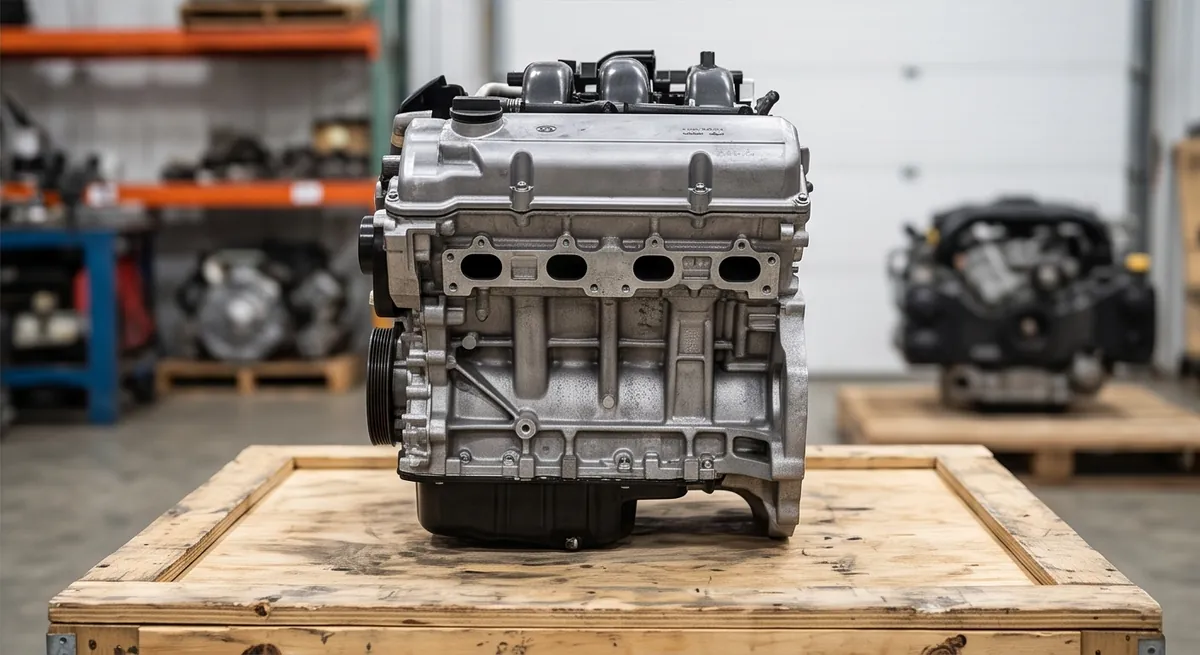
Subaru FB25 Engine for Sale | OEM Used Subaru FB25 2.5 Liter Modern FB-Family
$1,999.00
At a Glance
- Condition: OEM used, compression and leak-down tested all 4 cylinders
- Availability: In stock, Subaru FB25 boxer-4 engine available
- Shipping: Free shipping to all 50 states via heavy freight, 7 to 14 business days
- Engine verified as Subaru FB25 (the modern FB-family 2.5L boxer succeeding the EJ25 family)
- Year confirmed (FB25 production approximately 2011 plus across primary applications)
- Application confirmed (Legacy, Outback, Forester, Ascent 2.5T, Crosstrek 2018 plus, Impreza some markets)
- Horsepower rating documented (170-182 HP NA, 260 HP turbo Ascent FB25T)
- Compression and leak-down tested all 4 cylinders (horizontally-opposed boxer)
- Both cylinder heads condition documented (boxer-4 with two heads, DOHC architecture)
- Timing chain condition assessed (FB family uses chain, NOT belt like predecessor EJ25)
- Direct injection or port injection variant documented (PFI most variants, DI later Ascent)
- 15 day replacement warranty on internal defects
Description
About the Subaru FB25 Boxer-4 Engine
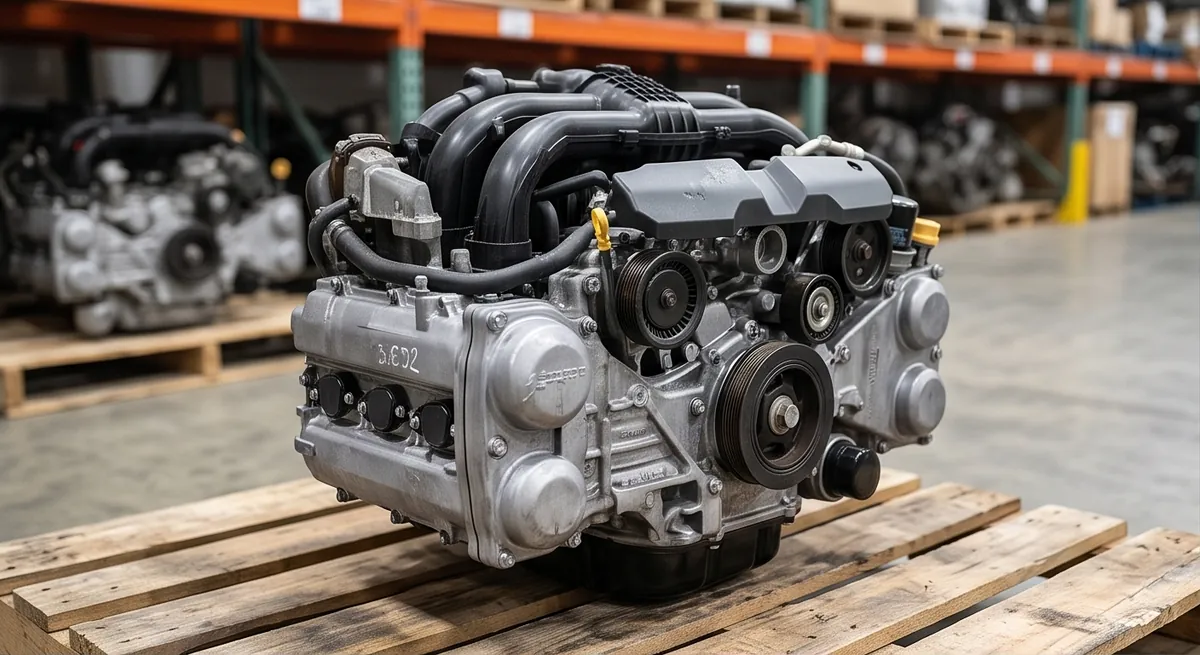
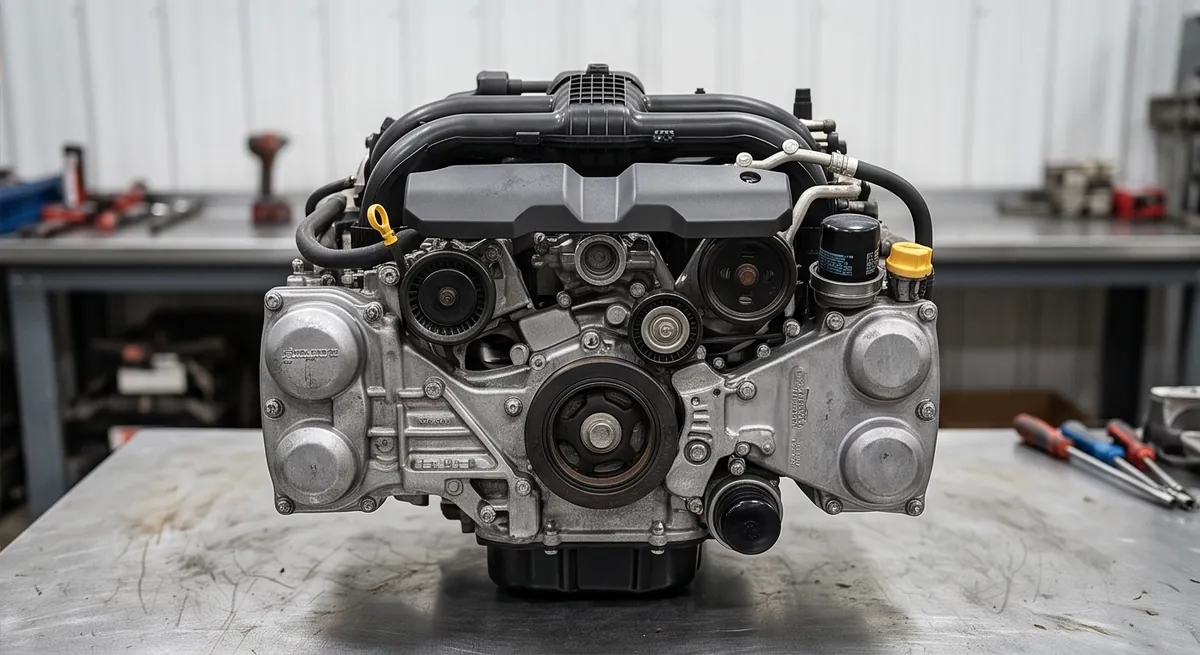
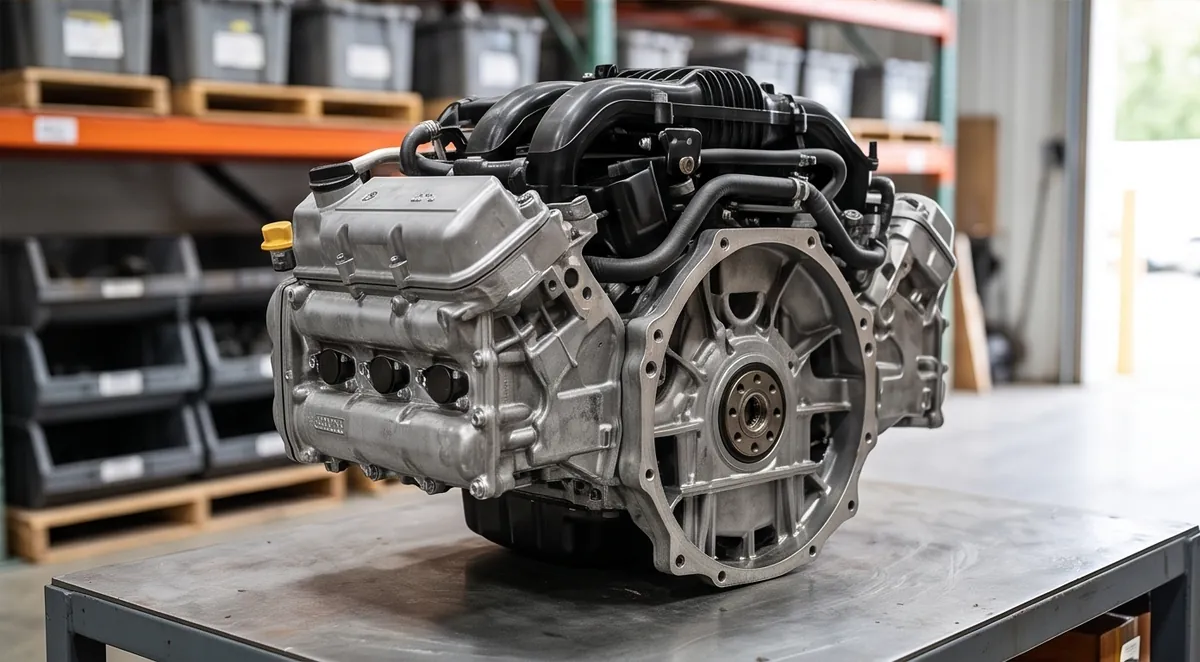
Looking for a replacement Subaru FB25 engine? Part Nests stocks OEM used Subaru FB25 2.5L horizontally-opposed boxer-4 engines. The FB25 is Subaru’s modern 2.5L boxer-4 engine from the FB engine family, succeeding the EJ25 family (per our broader Subaru 2.5L overview in and the EJ25 specific listing in from prior batch) as Subaru’s mainstream 2.5L displacement engine. Introduced in 2011, the FB25 represents Subaru’s modern boxer engineering with DOHC architecture, timing chain (NOT belt like the predecessor EJ25), and revised internal architecture for improved efficiency and reduced wear. The FB25 serves across Subaru’s modern Legacy, Outback, Forester, Ascent (2.4L turbo FB-family variant), and Crosstrek (2018 plus) applications.
Engine Overview: FB25 Architecture
- Displacement: 2.5 liters (2,498 cc)
- Configuration: Horizontally-opposed boxer-4 (180-degree opposed cylinders, Subaru signature design)
- Bore x Stroke: 94 mm x 90 mm (longer stroke than predecessor EJ25’s 99.5 mm x 79 mm, oversquare to square shift)
- Power Output: 170-182 HP at 5,800 RPM (NA variants)
- Peak Torque: 174-176 lb-ft at 4,100 RPM (NA variants)
- Cylinder Head: Aluminum, DOHC (Double Overhead Cam per bank, modernized from EJ25 SOHC NA), 4 valves per cylinder (16 valves total)
- Block: Aluminum (with cast iron cylinder liners)
- Variable Valve Timing: Dual AVCS (Active Valve Control System) on both intake and exhaust
- Fuel System: Port fuel injection (PFI) on most variants; later Ascent FB25T direct injection turbo
- Timing chain driven (FB family advantage over EJ25 timing belt; no scheduled belt replacement)
- Heritage: Subaru’s modern boxer family launched 2011, succeeding EJ25 in mainstream Subaru applications
FB25 vs Predecessor EJ25: Modern Architecture Advantages
The FB25 (this listing) represents substantial modernization vs the predecessor EJ25 family:
- Timing chain vs belt: FB25 uses timing chain (no scheduled replacement); EJ25 uses timing belt requiring replacement every 105,000 miles. This is a significant maintenance cost reduction with FB25.
- DOHC architecture: FB25 NA uses DOHC heads (modernized from EJ25 SOHC NA); EJ25 NA was mostly SOHC (EJ251 / EJ253 etc.)
- Bore x stroke ratio: FB25 is 94 mm x 90 mm (closer to square), EJ25 was 99.5 mm x 79 mm (more oversquare); FB25’s longer stroke favors low-end torque
- Head gasket reliability: FB25 has substantially improved head gasket reliability vs the documented EJ25 head gasket concern; FB25 head gasket failures are relatively rare
- Dual AVCS: FB25 has dual AVCS standard on both intake and exhaust; EJ25 variants had AVCS variability
- Production overlap: FB25 launched 2011 while EJ25 continued in some applications through approximately 2014; cross-application is NOT direct due to substantial architectural differences
FB25 Applications
- Subaru Legacy 2.5i (2011 plus): Mainstream Legacy NA application
- Subaru Outback 2.5i (2011 plus): Mainstream Outback NA application (predominant Outback engine option)
- Subaru Forester 2.5i (2011 plus): Mainstream Forester NA application
- Subaru Crosstrek 2.5 (2018 plus): Larger displacement option in second-generation Crosstrek
- Subaru Impreza 2.5 (some markets): NA Impreza variant in certain markets
- Subaru Ascent FB25T (2019 plus, 2.4L turbo variant): The Ascent uses a 2.4L FB-family turbo variant (FB24T technically, but commonly referenced alongside FB25 in the FB family)
Subaru Boxer Engine Family Context
The Subaru FB25 (this listing) is the modern 2.5L Subaru boxer engine representing the FB engine family era. For broader Subaru boxer engine context across our catalog and prior batches, the Subaru EJ25 engine (our listing, covering the broader EJ25 family with turbo and non-turbo variants 1996-2018) is the EJ family predecessor that the FB25 succeeded in mainstream applications. The Subaru 2.5 overview engine (our listing) covers the broader 2.5L Subaru boxer family. The Subaru EJ253 engine (our listing) covers the specific SOHC NA EJ253 variant. The Subaru FA20 engine (our listing) is the modern Subaru / Toyota co-developed 2.0L FA family with direct injection., several additional Subaru engine listings provide deeper variant coverage: EJ251 (specific Phase II SOHC NA), EJ205 (2.0L turbo EJ family), EJ255 (WRX turbo), EJ257 (STI turbo), FA20DIT (WRX turbo modern FA family), Subaru WRX engines overview, Subaru BRZ engines, EJ25 Turbo, Cosworth EJ257 (the famed Cosworth-built EJ257 crate engine). The Subaru FB25 (this listing) represents the modern mainstream Subaru 2.5L engine.
Common FB25 Failure Modes
- Oil consumption (early FB25 2011-2014): Some early FB25 examples exhibited elevated oil consumption; Subaru issued service campaigns and updated piston ring designs in later production
- Dual AVCS solenoid wear: Dual AVCS solenoids can fail causing variable valve timing codes; less common than EJ25 single AVCS issues
- Timing chain wear: Rare but possible at very high mileage; the FB25 timing chain is generally robust
- Spark plug access: Spark plug access on horizontally-opposed boxer is more difficult than inline engines; budget extra labor for plug service
- Carbon buildup (later Ascent FB25T direct injection only): Standard direct-injection pattern requiring carbon cleaning service
- Knock sensor failure: Common cause of check engine codes
- Head gasket reliability: Substantially improved over EJ25; head gasket failures are relatively rare
Vehicle Compatibility
| Feature | EJ25 NA SOHC (Older, 1995-2013) | FB25 (Current, 2011+) |
|---|---|---|
| Block Design | Open-deck aluminum (head gasket prone) | Semi-closed deck aluminum (improved) |
| Valvetrain | SOHC per bank | DOHC per bank |
| Variable Valve Timing | Limited (AVLS on some EJ253) | AVCS on intake AND exhaust (standard) |
| Bore x Stroke | 99.5 x 79 mm (oversquare) | 94 x 90 mm (more square) |
| HP | 165-173 HP | 170-185 HP |
| Head Gasket Service Items | Common at 100k-150k mi | Far less common |
| Fuel Injection | Multi-port only | Multi-port (early) or direct injection (2018+) |
FB25 Architecture Specifications
| Vehicle | Years with FB25 | Notes |
|---|---|---|
| Subaru Forester (4th gen) | 2014-2018 | First Forester with FB25 (Forester transitioned from EJ25 to FB25 in 2014) |
| Subaru Forester (5th gen) | 2019+ | Continued with refined FB25, direct injection on some trims |
| Subaru Outback (5th gen) | 2010-2019 | First Outback with FB25 (replaced EJ25 in 2010) |
| Subaru Outback (6th gen) | 2020+ | Refined FB25 with direct injection |
| Subaru Legacy (6th gen) | 2010-2019 | FB25 standard 4-cylinder option |
| Subaru Legacy (7th gen) | 2020+ | Refined FB25 |
| Subaru Crosstrek (2nd gen) | 2018+ | Replaced previous 2.0L FB20 with FB25 in some trims |
| Subaru Ascent | Some 2019+ variants | Primary engine is FA24F turbo, FB25 in some markets/trims |
Common Failure Modes and Maintenance Reference
| Vehicle | Compatibility |
|---|---|
| Subaru Forester (4th and 5th gen) | 2014 onward with FB25 (Forester transitioned from EJ25 in 2014) |
| Subaru Outback (5th and 6th gen) | 2010 onward with FB25 (Outback transitioned from EJ25 in 2010) |
| Subaru Legacy (6th and 7th gen) | 2010 onward with FB25 |
| Subaru Crosstrek (2nd gen) | 2018 onward with FB25 (replaced previous 2.0L FB20 in some trims) |
| Subaru Ascent | Some 2019+ variants with FB25 |
Why Buy From Part Nests
- Engine verified as Subaru FB25 (the modern FB-family 2.5L boxer succeeding the EJ25 family)
- Year confirmed (FB25 production approximately 2011 plus across primary applications)
- Application confirmed (Legacy, Outback, Forester, Ascent 2.5T, Crosstrek 2018 plus, Impreza some markets)
- Horsepower rating documented (170-182 HP NA, 260 HP turbo Ascent FB25T)
- Compression and leak-down tested all 4 cylinders
- Both cylinder heads condition documented (boxer-4 with two heads, DOHC architecture)
- Timing chain condition assessed (FB family uses chain NOT belt)
- Direct injection or port injection variant documented
- Free shipping to all 50 states via heavy freight
- 15 day replacement warranty on internal defects
- Subaru-experienced support team familiar with FB25 / EJ25 family distinctions and modernization advantages
- Call (855) 634-4447 to confirm your application before we ship.
15 Day Replacement Warranty
Every used Subaru FB25 engine purchased through Part Nests carries a 15 day replacement warranty starting on the delivery date.
What Is Covered
- Internal defects already present when the engine arrives
- Compression failures on any of the 4 cylinders beyond what was disclosed
- Cylinder head crack failures within 15 days from installation (both heads on the boxer-4)
- Block crack failures within 15 days from installation
- Connecting rod, bearing, or crankshaft failures within 15 days from installation
- Timing chain failures within 15 days from installation
- Dual AVCS solenoid failures within 15 days from installation
- Head gasket failures within 15 days from installation
- Direct injection HPDI fuel pump failures within 15 days from installation (Ascent FB25T direct injection variant)
- Incorrect variant shipped (FB25 NA vs FB25T turbo mismatch where variant was documented) due to an error on our end
What Is Not Covered
- Damage caused during installation
- Damage from incorrect engine oil (Subaru specifies 0W-20 synthetic for FB25; using incorrect viscosity causes wear)
- Damage from extended oil change intervals (3,750-6,000 mile intervals recommended; verify Subaru service campaign completion for early FB25 oil consumption affected VINs)
- Damage from contaminated fuel
- Damage from neglected carbon cleaning service (Ascent FB25T direct injection only)
- Damage from cross-application (FB25 installed where EJ25 was expected without ECU and accessory drive verification, or vice versa; FB and EJ families have substantial architectural differences)
- External components (intake manifold, exhaust manifolds, ECU and wiring harness, accessory drive, transmission, AC compressor, alternator, starter, fuel tank, fuel lines outside engine, turbocharger if applicable Ascent FB25T) unless itemized
- Labor expenses of any kind
To start a warranty claim, reach us within 15 days of delivery at (855) 634-4447.
- All 4 Cylinders Compression and Leak-Down Tested: Results documented before payment
- Engine Verified: Subaru FB25 modern FB-family 2.5L boxer (successor to EJ25)
- Year Confirmed: FB25 production approximately 2011 plus
- Application Confirmed: Legacy / Outback / Forester / Ascent / Crosstrek / Impreza
- Horsepower Rating Documented: 170-182 HP NA, 260 HP turbo Ascent
- Both Cylinder Heads Documented: Boxer-4 DOHC with two heads
- Timing Chain Condition Assessed: FB family advantage over EJ25 timing belt
- 15 Day Replacement Cover: Internal defects protected from delivery onward
Additional information
| Brand | Subaru |
|---|---|
| engine-type | Flat-4 (horizontally opposed boxer), naturally aspirated, DOHC |
| engine-family | Subaru FB-series (successor to EJ-series) |
| manufacturer | Subaru Corporation |
| configuration | Flat-4 horizontally opposed boxer |
| displacement | 2.5L (2, 498 cc) |
| bore-x-stroke | 94.0 mm x 90.0 mm |
| hp-range | 170 HP early to 185 HP later |
| torque-range | 174 to 178 lb-ft at 4, 100 RPM |
| compression | 10.0:1 (early) to 12.0:1 (direct-injected) |
| aspiration | Naturally aspirated |
| fuel-system | Multi-port injection (early) or direct injection (2018+) |
| fuel-type | Regular 87 octane |
| valvetrain | DOHC per bank, 16 valves, AVCS on intake AND exhaust |
| block-material | Semi-closed deck aluminum |
| head-material | Aluminum |
| cooling-system | Liquid cooled |
| production-years | 2011 to present |
| direct-fit | Forester 2014+, Outback 2010+, Legacy 2010+, Crosstrek 2018+, Ascent variants |
| predecessor | EJ25 NA SOHC (1995-2013) |
Subaru's modern 2.5L boxer-4 from the FB engine family, successor to EJ25. The Subaru FB25 is Subaru's modern 2.5L horizontally-opposed boxer-4 engine from the FB engine family, succeeding the EJ25 family (per our broader Subaru 2.5L overview in and the EJ25 specific listing in from prior batch) as Subaru's mainstream 2.5L displacement engine. Introduced in 2011, the FB25 represents Subaru's modern boxer engineering with DOHC architecture, timing chain (NOT belt like the predecessor EJ25), and revised internal architecture for improved efficiency and reduced wear. Specifications: 2.5 liters displacement (2,498 cc), horizontally-opposed boxer-4 (180-degree opposed cylinders), bore x stroke 94 mm x 90 mm, aluminum DOHC heads with 4 valves per cylinder, aluminum block, dual AVCS variable valve timing, port fuel injection (most variants) or direct injection (Ascent FB25T), timing chain driven, 170-182 HP NA / 260 HP turbo Ascent.
Modern architecture with substantial advantages over EJ25 predecessor. The FB25 (this listing) represents substantial modernization vs the predecessor EJ25 family. Timing chain vs belt: FB25 uses timing chain (no scheduled replacement) vs EJ25 timing belt requiring replacement every 105,000 miles - significant maintenance cost reduction. DOHC architecture: FB25 NA uses DOHC heads (modernized from EJ25 SOHC NA). Bore x stroke ratio: FB25 is 94 mm x 90 mm (closer to square) vs EJ25 99.5 mm x 79 mm (more oversquare); FB25 longer stroke favors low-end torque. Head gasket reliability: FB25 has substantially improved head gasket reliability vs documented EJ25 head gasket concern. Dual AVCS: FB25 has dual AVCS standard on both intake and exhaust. Production overlap: FB25 launched 2011 while EJ25 continued through approximately 2014; cross-application is NOT direct due to substantial architectural differences.
Multiple modern Subaru applications 2011 plus. Subaru Legacy 2.5i (2011 plus): mainstream Legacy NA application. Subaru Outback 2.5i (2011 plus): mainstream Outback NA application (predominant Outback engine option). Subaru Forester 2.5i (2011 plus): mainstream Forester NA application. Subaru Crosstrek 2.5 (2018 plus): larger displacement option in second-generation Crosstrek. Subaru Impreza 2.5 (some markets): NA Impreza variant in certain markets. Subaru Ascent FB25T (2019 plus, 2.4L turbo variant): the Ascent uses a 2.4L FB-family turbo variant (FB24T technically, but commonly referenced alongside FB25 in the FB family). Cross-application between these chassis requires careful ECU, accessory drive, and engine mount verification.
Multiple Subaru engines across batches 29-30 covering EJ and FB families. The Subaru FB25 (this listing) is the modern 2.5L FB family engine. references: EJ25 broader family (turbo and non-turbo), Subaru 2.5 broader overview, EJ253 SOHC NA specifically, FA20 modern Subaru / Toyota co-developed 2.0L FA family with direct injection. deeper variant coverage: EJ251 (Phase II SOHC NA), EJ205 (2.0L turbo EJ family), EJ255 (WRX turbo), EJ257 (STI turbo), FA20DIT (WRX turbo modern FA family), Subaru WRX engines overview, Subaru BRZ engines, EJ25 Turbo, Cosworth EJ257 (Cosworth-built EJ257 crate engine). The FB25 represents the modern mainstream Subaru 2.5L engine after the EJ25 family era ended.
Seven well-documented modes. Oil consumption (early FB25 2011-2014): some early examples exhibited elevated oil consumption; Subaru issued service campaigns and updated piston ring designs in later production. Dual AVCS solenoid wear: less common than EJ25 single AVCS issues. Timing chain wear: rare but possible at very high mileage; the FB25 timing chain is generally robust. Spark plug access: spark plug access on horizontally-opposed boxer is more difficult than inline engines. Carbon buildup (later Ascent FB25T direct injection only): standard direct-injection pattern. Knock sensor failure: common cause of check engine codes. Head gasket reliability: substantially improved over EJ25; head gasket failures are relatively rare.
Eliminates the 105,000-mile timing belt service cost. The FB25 uses a timing chain rather than the timing belt that the predecessor EJ25 family used. This is a significant maintenance cost reduction. EJ25 timing belt service: every 105,000 miles, $800-1,500 cost for complete belt + water pump + tensioner + idler service. FB25 timing chain: no scheduled replacement; chain typically lasts the life of the engine when properly maintained with oil changes. Over a 200,000-300,000 mile vehicle life, this represents $1,600-4,500 in maintenance savings vs the EJ25 timing belt schedule. The timing chain also reduces the risk of belt failure causing catastrophic interference engine damage (a real risk with the EJ25 timing belt). The FB25 timing chain is one of the key architectural improvements over the EJ25 family.
Oil consumption check (early FB25), dual AVCS inspection, spark plugs. After acquiring a used FB25 engine, budget for these items. Oil consumption check (early FB25 2011-2014): verify Subaru service campaign completion on affected VINs; inspect for elevated oil consumption pattern. Dual AVCS solenoid inspection: test AVCS operation, replace solenoids if codes present. Strict synthetic oil maintenance: 3,750-6,000 mile intervals with Subaru-approved 0W-20 synthetic oil; shorter intervals (3,750-5,000) for older / early FB25 examples with oil consumption history. Spark plug replacement: budget $200-400 (labor higher than inline engines due to boxer access). Knock sensor inspection: replace if codes present. Carbon cleaning (Ascent FB25T direct injection only): $600-1,200 walnut shell blasting every 60,000-100,000 miles. Head gasket inspection: rarely required given FB25 improved reliability but inspect at high mileage.
No. There is no core return required.
2 reviews for Subaru FB25 Engine for Sale | OEM Used Subaru FB25 2.5 Liter Modern FB-Family
Related products


Theodore P. –
Grabbed one for my Subaru FB25 Engine. Straight-shooter on the phone.
Persephone L. –
Went on the Subaru FB25 Engine straightforward. Would use them again.