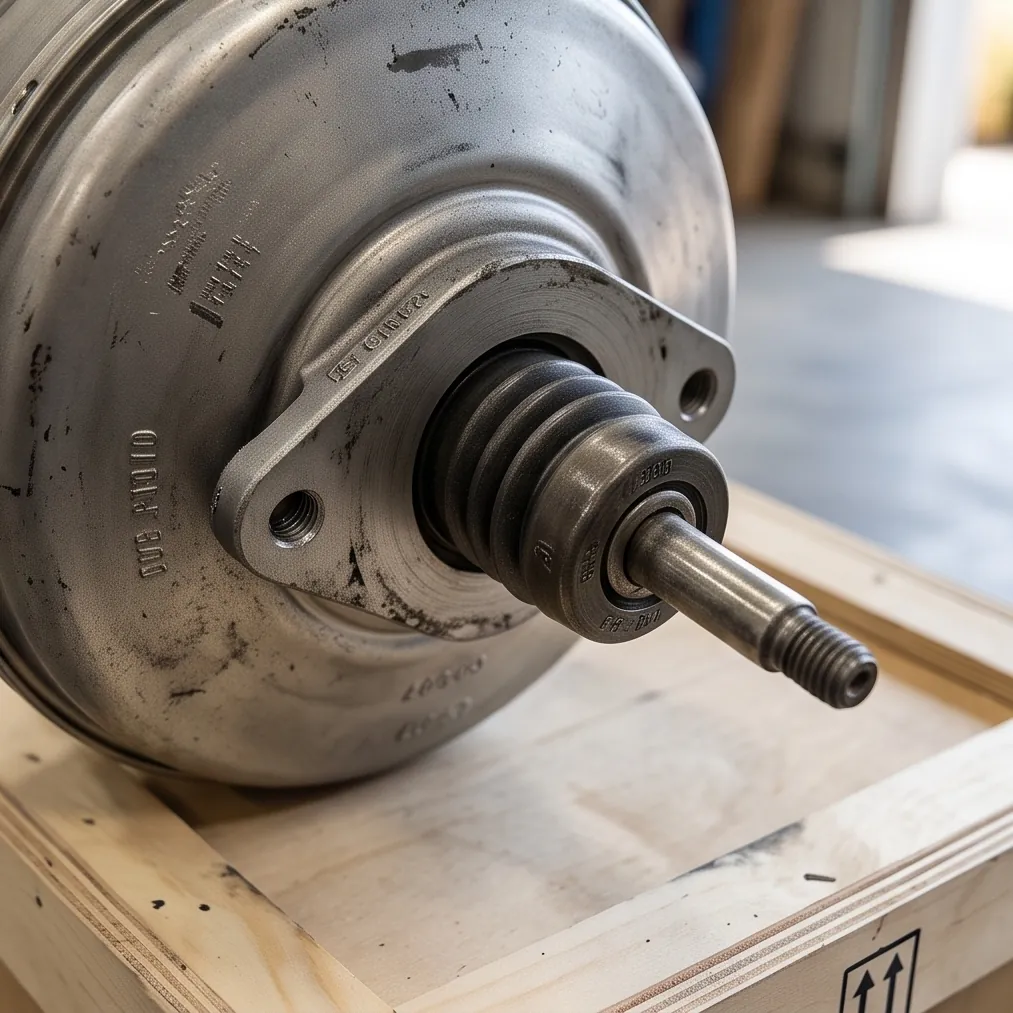
2013 Ford F150 Brake Power Booster | OEM Vacuum-Assist Booster Replacement
$250.00
At a Glance
- Condition: OEM used, tested before shipping
- Availability: Standard cab, SuperCab, and SuperCrew applications in stock
- Shipping: Free freight to all 50 states, 5 to 10 business days
- Diaphragm integrity tested before shipping
- Vacuum hold tested before shipping
- Mounting stud and pushrod integrity verified
- Compatible with 2009 to 2014 F-150 (P415/P417 chassis)
- 100% fitment verified before every order ships
- Backed by a 15 day replacement warranty against operational defects
Description
About the 2013 Ford F150 Brake Power Booster
The brake power booster on the 2013 Ford F-150 is a vacuum-assist component mounted on the firewall between the brake pedal and the brake master cylinder. Its job is simple but critical: when you press the brake pedal, the booster uses engine intake manifold vacuum to multiply your foot pressure into the much greater hydraulic pressure needed to clamp the brake calipers and stop the truck. Without a working booster, the brake pedal feels rock-hard, requires extreme force to press, and the truck stops far longer than it should: a serious safety issue that requires immediate replacement.
Why 2013 F-150 Owners Replace the Brake Booster
Common 2013 F-150 brake booster replacement triggers include:
- Hard brake pedal: The pedal requires far more force than normal to depress
- Loss of braking power: The truck takes longer to stop than it used to
- Vacuum leak: Hissing noise from the booster when the brake pedal is pressed
- Diaphragm failure: Internal rubber diaphragm tears and the booster loses ability to multiply force
- Failed vacuum hold test: Booster cannot hold vacuum reserve for multiple pedal presses with engine off
- Pedal sinking to floor: Combined with master cylinder failure, indicates booster or master cylinder problem
- Brake fluid leak from booster: Indicates internal failure between booster and master cylinder
- Engine-running brake pedal stiffening: Booster is failing to amplify force properly
Common F-150 Brake Booster Issues
| Detail | Description |
|---|---|
| Vacuum Leaks | Cracked vacuum check valve, deteriorated vacuum hose, or diaphragm failure |
| Diaphragm Damage | The internal rubber diaphragm fails after years of cycling, especially in high-mileage trucks |
| Internal Valve Failure | Internal control valves fail to direct vacuum properly, causing inconsistent assist |
| Mounting Stud Damage | Stripped or broken mounting studs from previous repairs |
Things to Confirm Before Ordering
- Engine in your specific 2013 F-150 (3.7 V6, 3.5 EcoBoost, 5.0 V8, 6.2 V8)
- Year (2009 to 2014 F-150 cross-fits in most cases)
- Standard cab, SuperCab, or SuperCrew configuration
- Whether you have ABS or Standard brake system
- Vacuum line condition (replace if degraded)
What Ships and What Does Not
| Item | Details |
|---|---|
| INCLUDED | Tested used OEM brake booster with diaphragm assembly, mounting studs, and pushrod intact. |
| NOT INCLUDED | Brake master cylinder (sold separately), vacuum hose (replace if degraded), brake fluid (refill required), tools. |
| Tools You Need | Standard hand tools, brake fluid, brake bleed kit, pliers for vacuum hose, possibly a master cylinder wrench. |
Direct-Fit Vehicle Applications
This 2013 Ford F-150 brake power booster is compatible with the following:
| Vehicle | Compatibility |
|---|---|
| 2013 Ford F-150 (all engines) | 3.7L V6, 3.5L EcoBoost V6, 5.0L V8 Coyote, 6.2L V8 |
| 2009 to 2014 Ford F-150 (P415/P417) | All trims and engines (some variation in mounting between standard and Raptor SVT) |
| 2010 to 2014 Ford Raptor SVT | 6.2L V8 (confirm specific Raptor application) |
| 2009 to 2014 Ford Expedition | Some variants share booster spec |
NOT compatible with: 2008 and earlier F-150 (different mounting and pushrod spec), F-250 / F-350 Super Duty (typically Hydroboost, not vacuum-assist), Ranger or other smaller Ford trucks.
Inspection Workflow
Every used 2013 F-150 brake power booster we ship goes through this process:
- Diaphragm integrity test (vacuum hold for multiple cycles with engine off)
- Vacuum check valve operation verified
- Internal control valve function checked
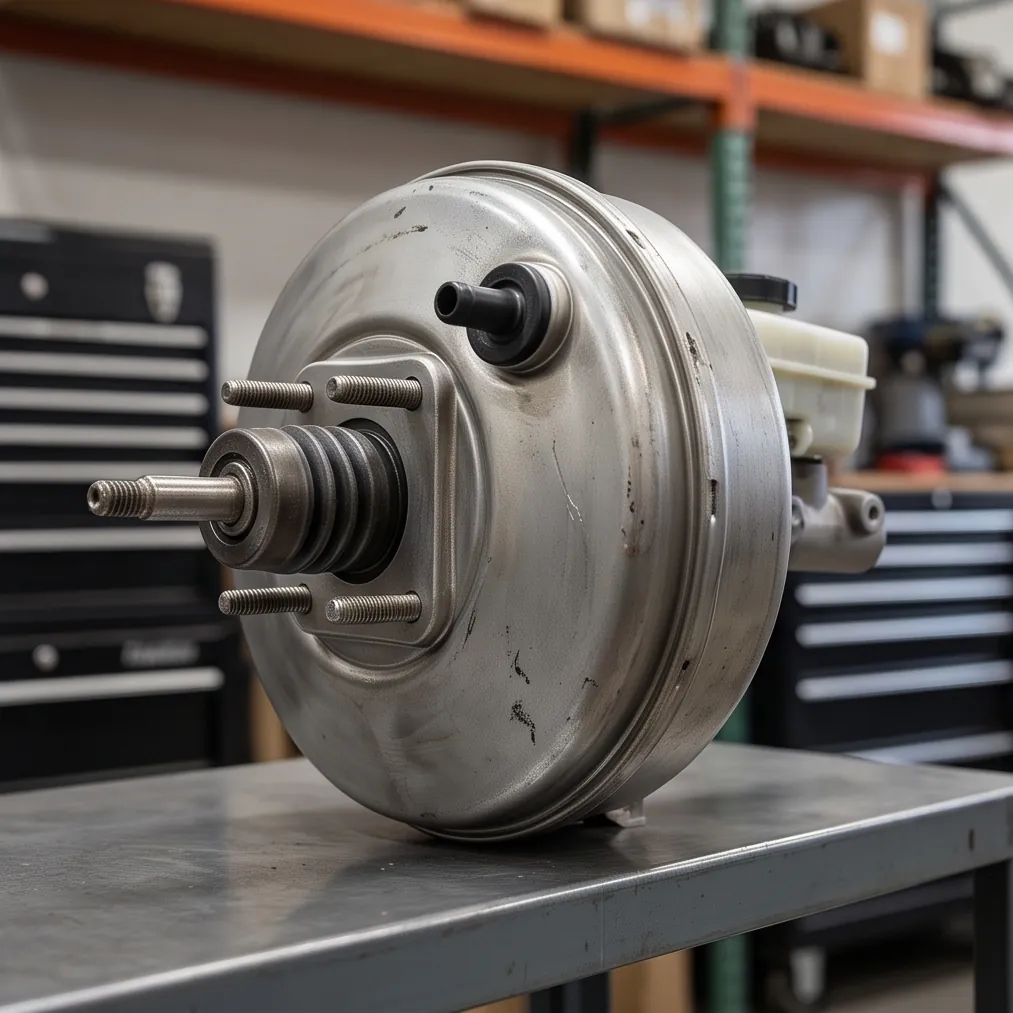
- Mounting stud and pushrod integrity verified (no stripped or bent studs)
- Visual inspection of housing for cracks or damage
- Pushrod adjustment verified to OEM spec
- Donor application documented when available
These are used OEM boosters, not new. We disclose any cosmetic wear before shipping. Internal function is verified through testing.
Why Buy From Part Nests
- Tested OEM-specification 2013 F-150 brake booster
- Diaphragm integrity verified through vacuum hold testing before shipping
- Engine and trim confirmed for your specific F-150
- Mounting stud and pushrod inspected for damage
- Vacuum check valve operation verified
- Compatible with 2009 to 2014 F-150 (P415/P417 chassis)
- Free shipping to all 50 states, no hidden surcharges
- 15 day replacement warranty on operational defects
- Call (855) 634-4447 to speak with someone who knows F-150 brake system diagnostics, vacuum versus Hydroboost identification, and brake booster versus master cylinder failure differentiation
15 Day Replacement Warranty
Every used 2013 F-150 brake power booster purchased through Part Nests carries a 15 day replacement warranty starting on the delivery date.
What Is Covered
- Operational defects in diaphragm, vacuum check valve, or internal control valves
- Mounting stud or pushrod damage beyond what was disclosed
- Housing cracks not disclosed at shipping
- Incorrect part shipped due to an error on our end
What Is Not Covered
- Damage caused during installation
- Damage from operating with a leaking or damaged vacuum line
- Damage from installing without bleeding the brake system properly
- External components unless specifically itemized
- Labor expenses of any kind
To start a warranty claim, reach us within 15 days of delivery at (855) 634-4447.
- Diaphragm Tested: Vacuum hold verified through multiple-cycle test
- Vacuum Check Valve Verified: Operation confirmed before payment
- Mounting Studs Inspected: No stripped or bent studs
- Pushrod Integrity Checked: Adjustment verified to OEM spec
- Engine and Cab Confirmed: Trim compatibility verified before shipping
- 15 Day Replacement Cover: Operational defects protected from delivery onward
Additional information
| application | 2013 Ford F-150 (P415/P417 chassis) |
|---|---|
| booster-type | Vacuum-assist (single-diaphragm) |
| function | Amplifies brake pedal force using engine intake manifold vacuum |
| vacuum-source | Engine intake manifold |
| compatible-engines | 3.7L V6, 3.5L EcoBoost V6, 5.0L V8 Coyote, 6.2L V8 |
| mounting | Firewall, behind brake master cylinder |
| approximate-weight | 8 to 12 lbs |
The brake booster uses engine intake manifold vacuum to multiply your foot pressure on the brake pedal into much greater hydraulic pressure for the brake master cylinder. Without a working booster, you would need to press the pedal with several times the force to achieve the same braking effect. The booster is a critical safety component; a failed booster requires immediate replacement.
Common signs of brake booster failure include a hard brake pedal requiring far more force than normal, hissing noise from the booster when the pedal is pressed, the truck taking noticeably longer to stop, brake pedal sinking under steady foot pressure, or failed vacuum hold (the pedal feels hard after the engine is off for a few seconds, indicating the booster cannot hold vacuum reserve).
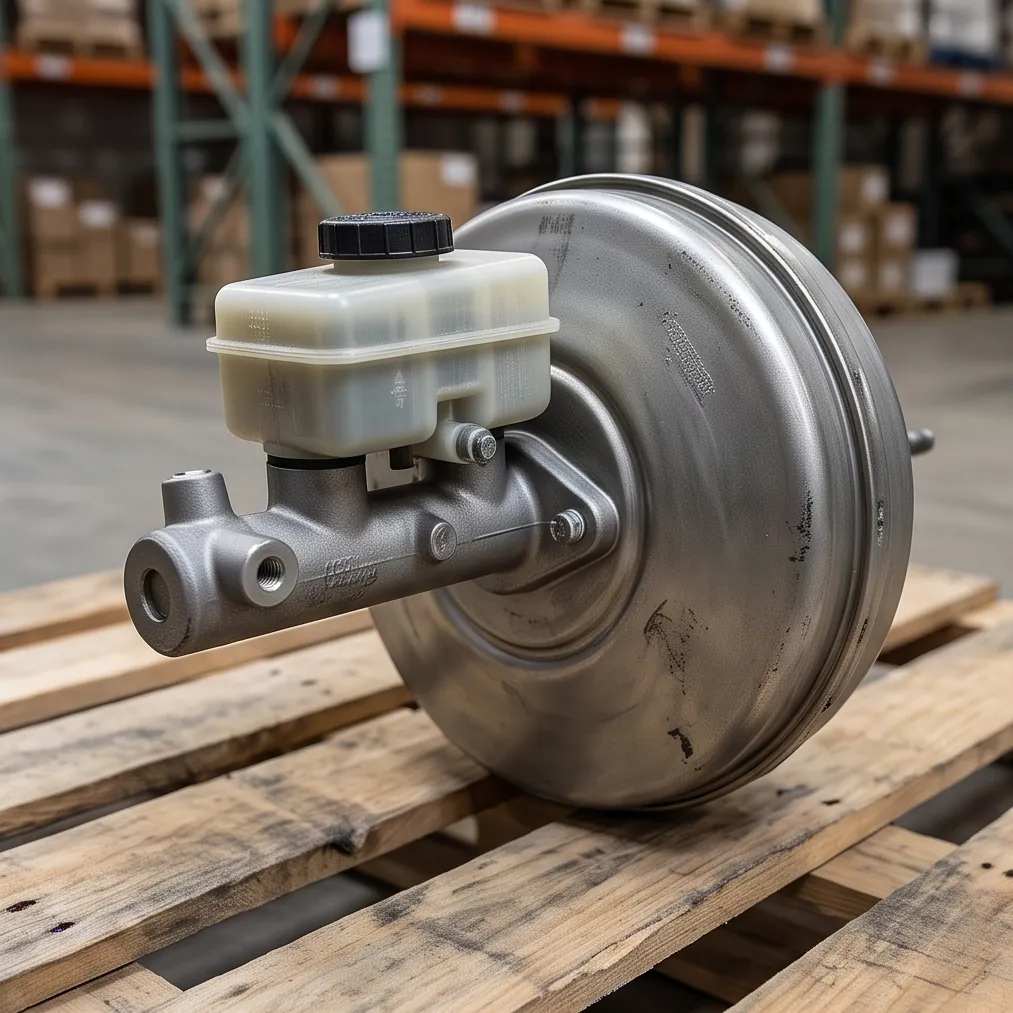
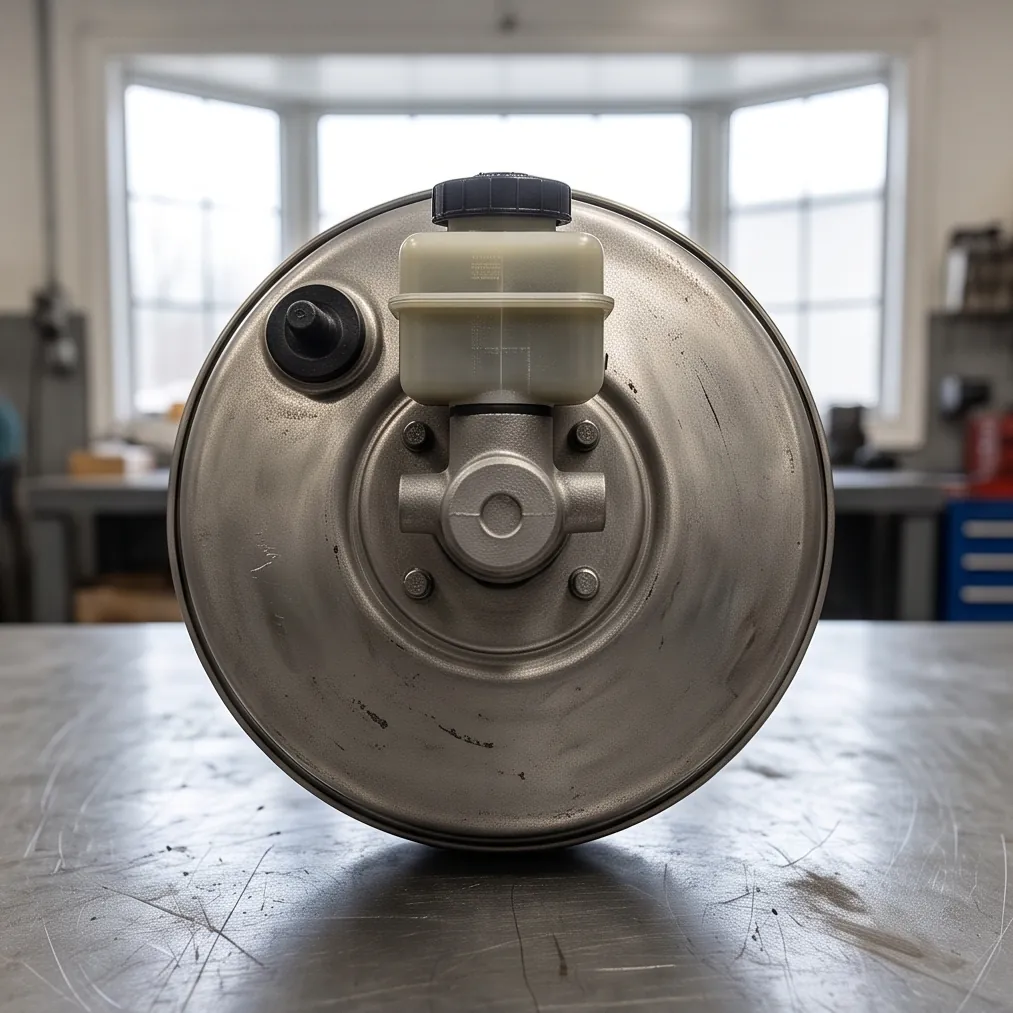
No. The brake booster is the round can mounted on the firewall, behind the master cylinder. The master cylinder is the smaller component mounted on the front of the booster, with the brake fluid reservoir on top. The booster amplifies your foot pressure; the master cylinder converts that amplified force into hydraulic pressure. They work together but are separate components that can fail independently.
Yes within the same generation. The 2009 to 2014 F-150 (P415/P417 chassis) uses the same brake booster mounting and pushrod specification across all years. A 2013-spec booster fits any 2009 to 2014 F-150 with the matching engine and cab configuration. Confirm cab type (standard, SuperCab, SuperCrew) when ordering.
No. The F-250 and F-350 Super Duty trucks typically use Hydroboost (hydraulic-assist) brake systems instead of vacuum-assist. Hydroboost uses pressure from the power steering pump rather than engine vacuum to amplify pedal force. The F-250 and F-350 boosters are not interchangeable with F-150 vacuum-assist boosters.
Some configurations yes. The 2010 to 2014 Ford Raptor SVT uses the 6.2L V8 with a similar vacuum-assist brake system. The booster mounting is shared with standard F-150 trucks, but the Raptor may use a slightly different pushrod adjustment for the off-road braking calibration. Confirm specific Raptor application when ordering.
Yes, in most cases. Removing the brake booster involves disconnecting the master cylinder, which introduces air into the brake hydraulic system. After reinstalling the booster and master cylinder, the brakes must be bled at all four corners to remove air. Many shops recommend bench-bleeding the master cylinder as well, before reinstalling, to speed up the on-vehicle bleed process.
The booster itself is not ABS-specific; ABS function lives in the ABS module and pump, separate from the booster. However, the brake system must be properly bled after booster replacement to maintain ABS function. If your truck has ABS, the ABS module may need to be cycled through its self-bleed mode after the manual bleed. Some shops use a scan tool to perform the ABS bleed cycle.
2 reviews for 2013 Ford F150 Brake Power Booster | OEM Vacuum-Assist Booster Replacement
Related products


Greg T. –
Got a brake booster for a 2012 F-150 with the 5.0 Coyote (cross-compatible with the 2013 spec). Vacuum hold test specifically performed and disclosed clean, mounting studs inspected for prior over-torque, pushrod adjustment verified. Truck stopping power restored after installation and proper bleed.
Marcus W. –
Sourced a booster for a 2010 F-150 SuperCrew. Cab configuration confirmed, engine compatibility verified (3.5 EcoBoost in this case). Diaphragm integrity tested through multiple-cycle vacuum hold before shipping. Honest about typical wear items at install (replace the vacuum line if degraded). Clean, working unit.