
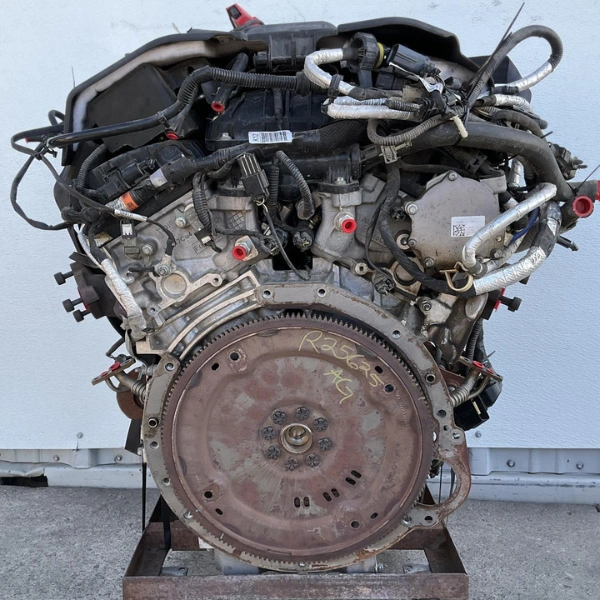
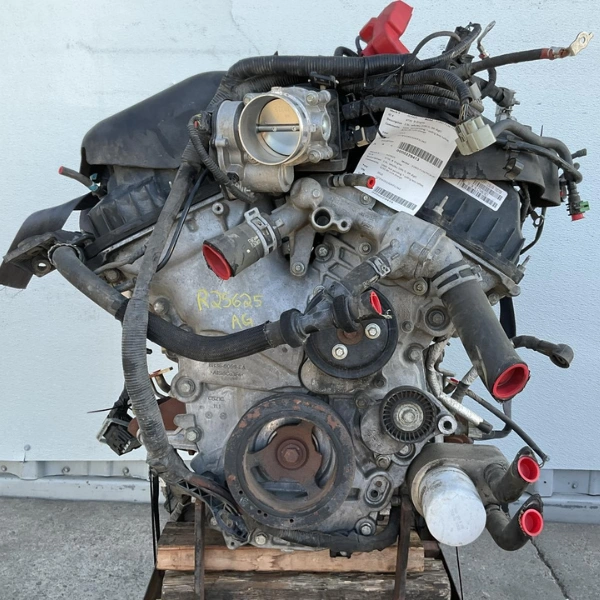
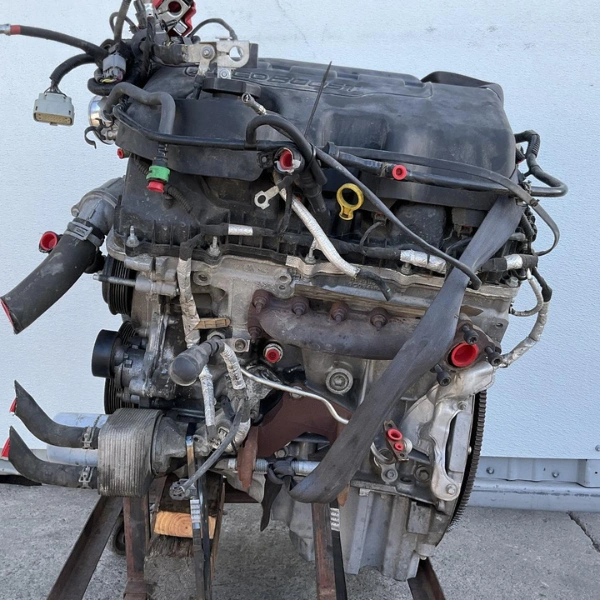
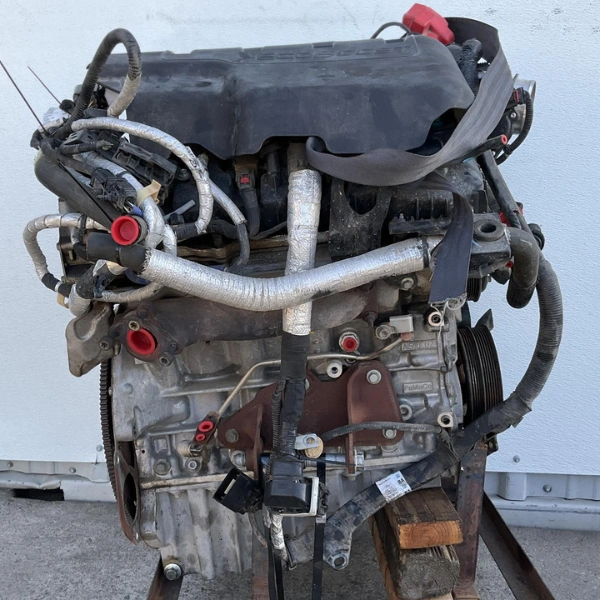
Ford 3.5L EcoBoost Engine for Sale | OEM Twin-Turbo V6 (1st and 2nd Gen)
$3,650.00
Product Overview
- Displacement: 3.5L (213 cu in, actual 3,496 cc)
- Engine Family: EcoBoost
- Configuration: 60-degree V6, DOHC, 24 valves
- Bore x Stroke: 92.5 mm x 86.7 mm
- Condition: OEM used, compression tested
- Availability: Multiple year ranges 2011 to present in stock
- Shipping: Free freight to all 50 states via crated freight, 5 to 10 business days
- All 6 cylinders pressure-tested with results shared before payment
- Generation confirmed (1st gen 2011 to 2016 or 2nd gen 2017 onward) on every order
- Timing chain and cam phaser status disclosed, critical service items
- Both turbochargers inspected and condition documented
- Fitment verified before every order ships
- Zero core charge required, your existing engine stays with you
- Backed by a 15 day replacement warranty against internal defects
Did you like this product? Add to favorites now and follow the product.
(+800) 1234 5678 90 Start Live Chat
Description
Engine Background
The Ford 3.5L EcoBoost is the twin-turbocharged V6 that has powered the F-150 since 2011, the Raptor since 2017, the Expedition since 2018, the Lincoln Navigator since 2018, the Transit van since 2015, and the Ford GT supercar in modified form. Built around an aluminum block with a forged crankshaft, forged steel rods, and Ti-VCT cam timing, the 3.5 EcoBoost combines twin parallel turbochargers (one per bank) with direct injection (1st gen) or dual fuel injection (2nd gen) to deliver V8 levels of power and torque from a 3.5-liter envelope.
The 1st generation (2011 to 2016) was Ford’s first volume production EcoBoost in a full-size truck, producing 365 horsepower and 420 lb-ft in stock F-150 trim. The Raptor (2017 onward) runs the high-output 3.5 EcoBoost producing 450 horsepower and 510 lb-ft. The 2nd generation (2017 onward) introduced dual fuel injection (port plus direct) to address the carbon buildup issue common to pure direct injection engines, along with revised cylinder heads, an updated intake, and improved cam timing.
The 3.5 EcoBoost is the workhorse of Ford’s modern truck and SUV lineup. A documented used OEM unit with verified generation, timing chain status, and turbocharger condition is the right path for high-mileage F-150, Raptor, Expedition, or Navigator owners replacing a tired or failed engine. We document generation, donor vehicle, and known service issues on every unit before shipment.
When Replacement Becomes Necessary
- Timing chain rattle at cold start, a well-documented 1st gen issue (Ford TSB 14-0194)
- Cam phaser tick or rattle, especially at idle
- Coolant loss without a visible external leak, indicating the internally-driven water pump on 1st gen units
- Turbocharger whine, hiss, or shaft play indicating bearing wear
- Carbon buildup misfire codes on 1st gen direct-injection units (P0301 through P0306)
- Loss of power and boost, generally a wastegate or BOV failure
- Oil consumption beyond one quart per 2,000 miles
- Spark plug fouling on cylinders 1, 3, or 5, indicating a passenger-bank issue
Known Weak Points
- Timing chain wear: 1st gen 3.5 EcoBoost has a well-documented chain wear issue. Ford issued TSB 14-0194 outlining a chain replacement procedure. By 100,000 to 150,000 miles many 1st gen units need a chain set, water pump, and tensioner refresh. We document chain condition and any rework history.
- Internal water pump: the water pump on 1st gen units is driven internally by the timing chain. When it fails, coolant enters the oil. This is a major service item requiring removal of the engine front cover. We inspect for coolant in oil on every unit.
- Carbon buildup on 1st gen direct injection: pure direct injection (1st gen) leads to carbon accumulation on intake valves. Symptoms appear around 80,000 to 120,000 miles. Walnut blasting or chemical induction service is the standard fix. 2nd gen units do not have this issue thanks to dual injection.
- Cam phaser tick: both generations can develop cam phaser noise, especially at idle. Updated phasers are available from Ford and aftermarket. We listen for cam phaser noise on running units.
- Turbocharger wastegate rattle: a common cold-start sound on aged turbos. Not always failure, but disclosed on inspection.
- Spark plug change interval: 60,000 miles, not 100,000. Worn plugs cause misfires that can damage catalytic converters.
- Generation matters: 1st gen and 2nd gen are NOT direct swaps. ECU, intake, and head differences make swaps complicated.
3.5 EcoBoost Variants by Year and Output
Verified output figures sourced from Ford technical data:
| Variant | Years | Application | HP | Notes |
|---|---|---|---|---|
| Standard 1st gen | 2011 to 2016 | F-150, Expedition | 365 hp | Original 3.5 EB. 420 lb-ft. |
| Standard 2nd gen | 2017 onward | F-150 | 375 hp | Dual injection. 470 lb-ft. |
| HO 2nd gen (Raptor) | 2017 onward | F-150 Raptor, Limited | 450 hp | Higher boost, forged pistons. 510 lb-ft. |
| Raptor R replacement | 2023 onward | F-150 Raptor | 450 hp | Continued HO 3.5 EB option. |
| Expedition / Navigator | 2018 onward | Expedition, Navigator | 400 hp | Tuned for SUV calibration. |
| Transit van | 2015 onward | Transit | 310 hp | Detuned for van duty. |
| Ford GT (modified) | 2017 to 2022 | Ford GT supercar | 660 hp | Heavily modified. Not interchangeable with truck units. |
| The Raptor HO 3.5 EcoBoost (450 hp, 510 lb-ft) is the highest output factory 3.5 EB in trucks. Standard F-150 and Expedition units are interchangeable within their generation but the HO unit has unique pistons and ECU calibration. We confirm HO status before shipping. |
|---|
What Ships and What Does Not
| INCLUDED, Long Block | Block, crankshaft, pistons, connecting rods, camshafts, cylinder heads, valve train, oil pan, valve covers, timing cover, water pump (internal, on 1st gen), turbocharger pair as configured. |
|---|---|
| NOT INCLUDED | Intake manifold (often donor specific), fuel rails and injectors, ignition coils, accessory drive components, ECU, harness, flywheel or flexplate, charge air cooler, exhaust manifolds (sometimes). |
| Short Block Option | Call (240) 306-7051 if you need a short block only. |
| Core Note | No core charge. You are not required to return your old engine. |
Direct-Fit Vehicle Applications
The Ford 3.5L EcoBoost was factory installed in the following vehicles:
| Ford F-150 | 2011 to present (XL, XLT, Lariat, King Ranch, Platinum, Limited) |
|---|---|
| Ford F-150 Raptor | 2017 to present (HO 3.5 EcoBoost) |
| Ford F-150 Tremor | 2021 to present |
| Ford F-150 Limited | 2018 to present (HO 3.5 EcoBoost) |
| Ford Expedition | 2018 to present |
| Ford Expedition Max | 2018 to present |
| Ford Transit | 2015 to present (heavy duty applications) |
| Ford Flex | 2013 to 2019 (1st gen only) |
| Lincoln Navigator | 2018 to present |
| Lincoln MKT | 2010 to 2019 |
| Lincoln MKS | 2010 to 2016 |
| Police Interceptor (Taurus / Explorer based) | 2013 to 2019 |
The Ford GT supercar (2017 to 2022) uses a heavily modified 3.5 EcoBoost producing 660 hp. That version is NOT interchangeable with truck or SUV units due to extensive internal and external differences. Call us to discuss specific application needs.
Not sure if this fits? Call us. We verify fitment before every order ships.
Search Terms Buyers Use
Ford 3.5 EcoBoost | 3.5 EcoBoost engine for sale | F-150 EcoBoost | Raptor 3.5 EcoBoost | EcoBoost twin turbo V6 | F-150 twin turbo engine | 3.5 EB | Expedition EcoBoost | Navigator EcoBoost | EcoBoost timing chain
Used OEM Versus Specialist Rebuild
For an F-150, Raptor, Expedition, or Navigator with a failed 3.5 EcoBoost, used OEM is the cost-effective replacement path. Our units ship with generation confirmed, timing chain status documented, and both turbochargers inspected. A specialist rebuild makes sense for high-mileage 1st gen units where the chain set, water pump, and carbon-buildup service together represent significant labor that justifies a full refresh. Rebuilt 3.5 EcoBoost units typically run $6,500 to $11,000 plus core deposit. Call to discuss the right route.
Inspection Workflow
- Compression test logged across all 6 cylinders with uniformity reported
- Generation confirmed: 1st gen (2011 to 2016) or 2nd gen (2017 onward)
- Timing chain condition assessed for rattle and stretch
- Cam phaser noise checked on running units
- Both turbochargers inspected for shaft play, oil seepage, and wastegate function
- Coolant inspected for oil contamination, the internal water pump failure indicator
- Carbon buildup assessment at accessible intake areas (1st gen units)
- Donor vehicle application documented (F-150, Raptor HO, Expedition, etc.)
Pre-Purchase Buyer Notes
- Match the generation to your truck: 1st gen and 2nd gen 3.5 EcoBoost are not direct swaps. ECU, intake, and head differences require matching generation for clean installation. Confirm your year on the call.
- Plan timing chain service on 1st gen units: even on a documented unit, refreshing the chain set, tensioners, and internal water pump at installation is the smart move on any 1st gen 3.5 EcoBoost approaching 100,000 miles. Labor is already invested while the engine is out.
- Walnut blast 1st gen direct injection: schedule intake valve carbon cleaning at installation or within the first service interval on any 1st gen unit with significant mileage.
- Service the cooling system fully: replace coolant, inspect hoses, verify the thermostat, and confirm the radiator condition. The internal water pump on 1st gen units makes cooling system maintenance especially important.
- Spark plugs at 60,000 miles, not 100,000: plan plug replacement on schedule. Worn plugs cause misfires that damage catalytic converters and lead to expensive cascading repairs.
Why Buy From Part Nests
- Generation confirmed: 1st gen (2011 to 2016) or 2nd gen (2017 onward) documented before payment
- Timing chain condition assessed, the 1st gen signature issue addressed up front
- Both turbochargers inspected for shaft play and wastegate function
- All 6 cylinders compression-tested with uniformity reported
- Coolant cross-contamination check for the internal water pump failure mode
- Carbon buildup assessment on 1st gen direct-injection units
- No core return required
- Free crated freight delivery to every state
- 15 day replacement warranty against internal defects
- Call us to speak with someone who knows 3.5 EcoBoost generation differences, timing chain service intervals, and 1st gen versus 2nd gen swap considerations
Additional Reference
| 3.5 EcoBoost | Most common technical search |
|---|---|
| 3.5L EcoBoost | Liter format |
| F-150 EcoBoost | Vehicle specific search |
| Ford twin turbo V6 | Architecture search |
| GTDI 3.5 | Direct injection format |
| Raptor 3.5 EB | Raptor specific |
| 1st gen EcoBoost | 2011 to 2016 search |
| 2nd gen EcoBoost | 2017 onward search |
| Expedition EcoBoost | Expedition specific |
| Navigator EcoBoost | Navigator specific |
Additional information
| displacement | 3.5L (213 cu in, 496 cc), actual 3 |
|---|---|
| configuration | 24 valves, 60 degree V6, DOHC |
| bore-x-stroke | 92.5 mm x 86.7 mm |
| compression-ratio | 10.0:1 (1st gen), 10.5:1 (2nd gen) |
| aspiration | Twin turbocharged (parallel) |
| fuel-system | Direct injection (1st gen), dual port + direct (2nd gen) |
| block-material | Aluminum |
| head-material | Aluminum |
| valve-train | DOHC Ti-VCT |
| crankshaft | Forged steel |
| connecting-rods | Forged steel |
| pistons | Cast (1st gen), forged on HO/Raptor |
| production-years | 2011 to present |
| manufacturer | Ford Motor Company |
| engine-family | EcoBoost |
| compatible-transmissions | Ford 10R80 (2nd gen), Ford 6R80 (1st gen) |
| horsepower-range | 310 hp (Transit) to 510 hp (Ford GT modified) |
| torque-range | 420 to 510 lb-ft |
| weight-long-block | Approximately 449 lbs |
1st gen (2011 to 2016) uses pure direct injection, an internal timing-chain-driven water pump, and 365 hp output in F-150 trim. 2nd gen (2017 onward) adds port injection alongside direct injection (eliminating the carbon buildup issue), uses revised cylinder heads and intake, and produces 375 hp in standard F-150 trim or 450 hp in Raptor HO trim. The two generations are not direct swaps because ECU, intake, and head differences require matched-generation installation.
The 1st gen 3.5 EcoBoost has a well-documented timing chain wear issue traced to chain stretch and tensioner wear on high-mileage units. Symptoms include cold-start rattle and eventually camshaft timing fault codes. Ford issued TSB 14-0194 outlining a chain replacement procedure. By 100,000 to 150,000 miles most 1st gen units need a chain set, water pump, and tensioner refresh.
On 1st gen 3.5 EcoBoost units, the water pump is driven internally by the timing chain. When the water pump fails (which it does on aged units), coolant enters the oil and can destroy the engine quickly. Replacing the internal water pump requires removing the engine front cover, so it is typically done at the same time as the timing chain service. 2nd gen units use an externally-mounted water pump that is easier to service.
On 1st gen pure direct injection units, oil vapor from the PCV system deposits carbon on the intake valves without the wash effect that port injection provides. Symptoms include rough idle, misfires, and reduced throttle response, typically appearing around 80,000 to 120,000 miles. Walnut blasting or chemical induction service is the standard fix. 2nd gen dual-injection units do not have this issue.
The high-output 3.5 EcoBoost used in the Ford F-150 Raptor (2017 onward) and Raptor R replacement. It produces 450 hp and 510 lb-ft, significantly higher than the standard F-150 calibration. The HO unit uses different pistons, ECU calibration, and turbocharger configuration. It is not directly interchangeable with the standard 3.5 EcoBoost.
Not without significant additional work. ECU, wiring harness, intake, and head differences make 1st gen to 2nd gen swaps complicated and rarely cost-effective. The cleaner path is to source a 1st gen unit for a 1st gen truck and a 2nd gen unit for a 2nd gen truck. We confirm generation match on every order.
Every 60,000 miles, not 100,000. The 3.5 EcoBoost is hard on spark plugs due to high cylinder pressures from turbocharging. Worn plugs cause misfires that can damage catalytic converters and lead to expensive cascading repairs. Plan the plug change on schedule regardless of the long-life claims on some plug packaging.
No. There is no core return required.
15 Day Replacement Warranty
Every used Ford 3.5 EcoBoost engine purchased through Part Nests carries a 15 day replacement warranty starting on the delivery date.
What Is Covered
- Internal defects already present when the engine arrives
- Performance materially different from how the engine was described
- Incorrect part shipped due to an error on our end
What Is Not Covered
- Damage caused during installation
- Damage from incompatible components
- External components unless specifically itemized
- Labor expenses of any kind
To start a warranty claim, reach us within 15 days of delivery.
- Generation Confirmed: 1st gen or 2nd gen documented before payment
- Timing Chain Status Disclosed: 1st gen signature issue addressed up front
- Both Turbos Inspected: Shaft play and wastegate function checked
- All 6 Cylinders Tested: Compression results shared before payment
- Free Crated Freight Nationwide: Specialist powertrain packaging
- 15 Day Replacement Cover: Internal defects protected from delivery onward
2 reviews for Ford 3.5L EcoBoost Engine for Sale | OEM Twin-Turbo V6 (1st and 2nd Gen)
Related products
About Us
At Part Nests, we specialize in high-quality used and OEM auto parts, with a wide selection of components ready to ship to customers.
© 2026 Part Nests. All rights reserved.

Tyler J. –
Replaced a 1st gen 3.5 EcoBoost in my 2014 F-150 that took a timing chain failure followed by water pump failure. Part Nests confirmed 1st gen, documented the chain status of the donor (recently serviced), and reported clean coolant. Pulled it apart at install to verify the chain set and water pump were as described. They were. Truck back in service.
Garrett P. –
Got a 2nd gen 3.5 EcoBoost for a 2019 F-150 build. Honest about it being a standard F-150 unit, not the Raptor HO version, which was what I needed. Both turbos were inspected for shaft play and reported solid. Compression results uniform across all six. Installed clean.