

VW Golf Sun Visor for Sale | OEM Used Driver Passenger All Generations
$100.00
At a Glance
- Condition: OEM used, pivot mechanism tested, mirror integrity verified, cosmetic condition assessed
- Availability: In stock across Golf model years and generations
- Shipping: Free shipping to all 50 states, 3 to 7 business days
- Application: Volkswagen Golf multiple generations (MK1 1974+ through modern MK8) – VW’s perennial compact hatchback
- One of the longest-running vehicle nameplates in automotive history – continuous production since 1974 across eight generations
- Iconic VW Golf GTI (1976+) established the hot hatch segment and is one of the most iconic performance hatchbacks in automotive history
- Golf platforms have shared architecture with multiple VW / Audi group vehicles including Jetta (Golf-based sedan), Audi A3, Audi TT, Skoda Octavia, SEAT Leon, and various other VW group models
- Body styles: Golf three-door hatchback and Golf five-door hatchback; Golf Wagon variants in some generations; Golf Cabriolet variants (see our related VW Cabriolet and Cabrio listings)
- Sun visor provides driver and passenger sun-blocking with integrated vanity mirror on many trims
- 15 day replacement warranty on component defects
Description
About the VW Golf Sun Visor
Need a replacement VW Golf sun visor (driver or passenger side)? Part Nests sources OEM used sun visors for Volkswagen Golf applications across multiple generations – one of the longest-running vehicle nameplates in automotive history with continuous production since 1974. The Golf has been Volkswagen’s perennial compact hatchback across eight generations (MK1 through MK8) and has established VW’s identity in the compact hatchback and hot-hatch segments through iconic variants including the Golf GTI. Each sun visor is inspected for pivot mechanism function, mirror integrity (if equipped), and cosmetic condition. Call (855) 634-4447 to verify Golf generation, year, and driver vs passenger side before ordering.
Volkswagen Golf Historical Context (1974+)
- Production era: 1974+ continuous production across eight generations (MK1 through MK8 and continuing). Approximately 50+ years of continuous Golf nameplate production – one of the longest-running vehicle nameplates in automotive history
- Beetle successor: The original Volkswagen Golf MK1 (1974+) was designed to replace the aging original Beetle in the VW lineup. FWD front-engine hatchback architecture replaced the RWD rear-engine air-cooled Beetle, moving VW into modern automotive engineering. Transformed Volkswagen from a Beetle-dependent manufacturer into a modern automotive company
- Multiple markets and names: Marketed as the VW Golf in most international markets. Marketed as the VW Rabbit in the US market during MK1 (1975-1984) and MK5 (2006-2009) generations. Later reverted to Golf naming for the US market. Same vehicle across the different regional names
- Global success: The Golf has sold over 35 million units globally across its production run, making it one of the best-selling vehicles in automotive history. Central to Volkswagen brand identity and one of the most successful automotive nameplates of the modern era
Volkswagen Golf Generation Overview
- Golf MK1 (1974-1984): Original Golf design by Giorgetto Giugiaro. Three-door and five-door hatchback body styles. GTI performance variant introduced 1976, establishing the hot-hatch segment. Related to the VW Cabriolet convertible (see our related Cabriolet engine wiring harness listing) built by Karmann on the MK1 platform
- Golf MK2 (1984-1991): Refined MK1 concept with updated styling and modernized engineering. Continued the GTI performance heritage
- Golf MK3 (1991-1997): Rounded modernization of the Golf design. Related to the VW Cabrio convertible (see our related Cabrio engine fuse box listing) built on the MK3 platform
- Golf MK4 (1997-2003): Sophisticated interior and premium materials elevated Golf positioning. Related to VW New Beetle (see our related New Beetle ECM listing) on the same MK4 platform
- Golf MK5 (2003-2008): Modern electronic architecture and expanded engine options. Related to VW EOS convertible (see our related EOS glove box listing) on the MK5 platform
- Golf MK6 (2008-2013): Refined MK5 architecture with updated styling
- Golf MK7 (2012-2020): First MK7 Golf on the modern VW MQB modular platform (shared with VW Arteon – see our related Arteon airbag clock spring listing)
- Golf MK8 (2019+): Modern digital Golf with advanced technology and continued MQB platform
Volkswagen Golf GTI – The Hot Hatch Icon
- 1976 GTI introduction: The Volkswagen Golf GTI (MK1) launched in 1976 as a performance variant of the mainstream Golf hatchback. Featured a fuel-injected engine (initially 1.6L, later 1.8L) with sport-tuned suspension, distinctive red-accented styling (red-line grille surround, tartan seat inserts), and enthusiast-focused positioning
- Hot hatch segment creation: The Golf GTI is widely credited with creating the hot hatch segment – the combination of practical hatchback body with genuine performance credentials. This concept revolutionized affordable enthusiast performance in the late 1970s and 1980s
- Continuous GTI heritage: The Golf GTI has continued across every Golf generation from 1976 through the current MK8 GTI. Continuous 45+ year GTI heritage is one of the longest continuous performance nameplates in automotive history
- Cultural significance: The Golf GTI holds strong cultural significance in enthusiast automotive communities, particularly in Europe where it defined the hot hatch category for multiple generations of buyers
Sun Visor Specifications
- Type: OEM sun visor (driver or passenger side) for VW Golf
- Function: Pivoting sun-blocking panel that lowers from the ceiling / headliner area to block direct sunlight from the driver’s or passenger’s field of view. Provides sun-blocking during sunset / sunrise driving and reduces glare from side sunlight
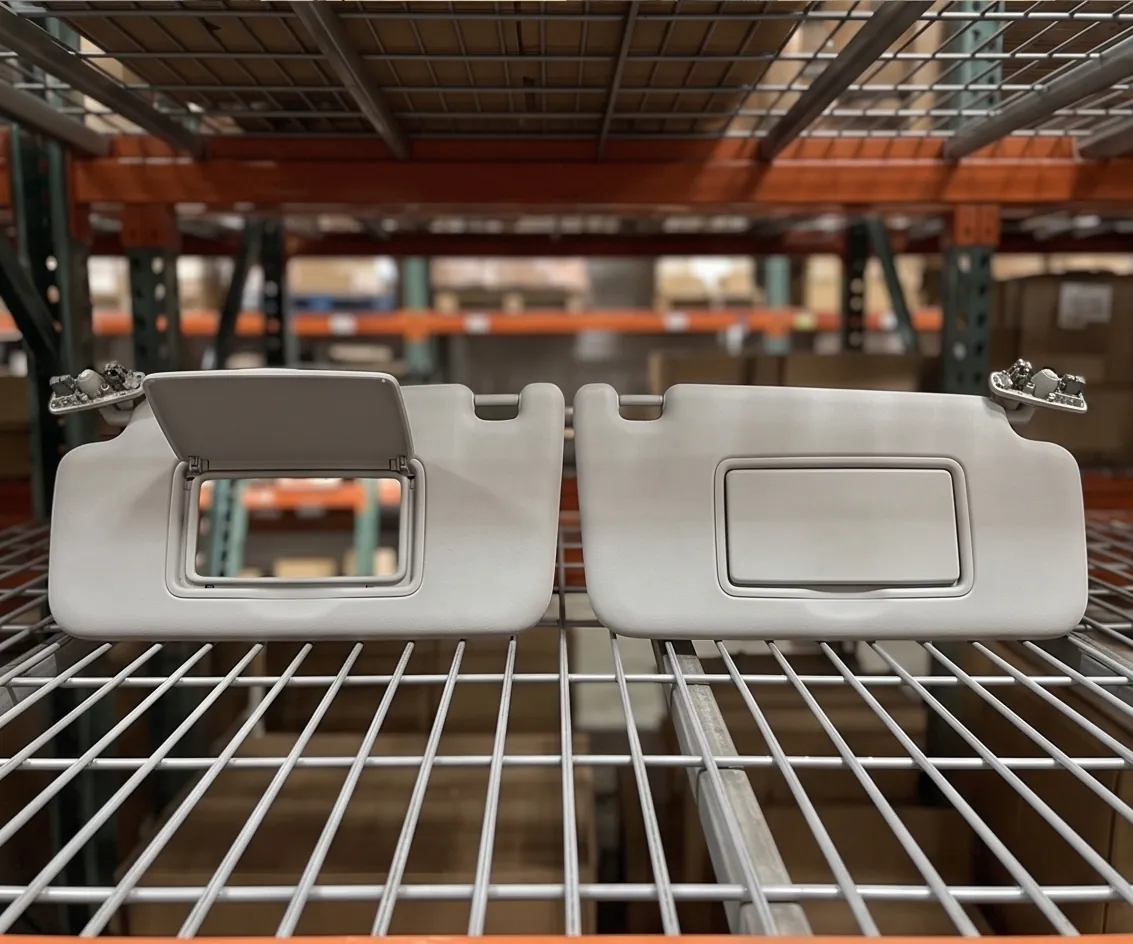
- Construction: Molded plastic or foam-core visor covered with interior fabric or vinyl matching the vehicle interior color. Pivot mechanism at the ceiling mounting point allows the visor to swing down (blocking front sun) and to swing sideways (blocking side sun). Many trims include integrated vanity mirror on the passenger visor (or both visors on higher-trim configurations)
- Interior color: Sun visor surfaces typically match the vehicle interior color. Specify interior color when ordering to ensure appropriate visual match
- Common failure modes: Pivot mechanism failure (visor does not stay in position, sags down while driving), mirror crack or cover failure (vanity mirror), cosmetic wear (fading, surface scuffing, staining), broken mounting clip. Symptoms include visor drooping while driving, mirror cover failing to open / close, or visor failing to mount securely
Related Volkswagen Listings
- VW Atlas: Modern three-row SUV – see our Atlas ignition coil listing
- VW Cabriolet: MK1 Karmann classic (based on Golf MK1) – see our Cabriolet engine wiring harness listing
- VW New Beetle: Retro Beetle (Golf MK4 platform) – see our New Beetle ECM listing
- VW Arteon: Modern sport sedan (MQB platform shared with modern Golf) – see our Arteon airbag clock spring listing
- VW Cabrio: MK3 convertible (Golf MK3 platform) – see our Cabrio engine fuse box listing
- VW EOS: Hardtop convertible (Golf MK5 platform) – see our EOS glove box listing
VW Golf Generation Reference
| Detail | Description |
|---|---|
| MK1 / MK2 / MK3 (1974 to 1998) | Classic boxy Golf eras. Simpler sun visor designs, mostly mechanical with passenger-side vanity mirror as optional equipment. MK1 and MK2 share some design heritage, MK3 brought more rounded styling. Colors typically beige, gray, or burgundy interior options. |
| MK4 / MK5 / MK6 (1998 to 2013) | Modern Golf era. Sun visors include more variants with optional lighted vanity mirrors on premium trims (GLS, GLX, GTI, R32). Black and titan gray most common interior colors. Improved pivot mechanisms and mounting systems. |
| MK7 / MK8 (2012 to current) | Current Golf generations. Refined sun visor design with optional lighted mirror on most trims, redesigned mounting for cleaner headliner integration. R and GTI trims share base visor design with possible badge differences. Black interior most common in US. |
VW Golf Body Style Reference
| Detail | Description |
|---|---|
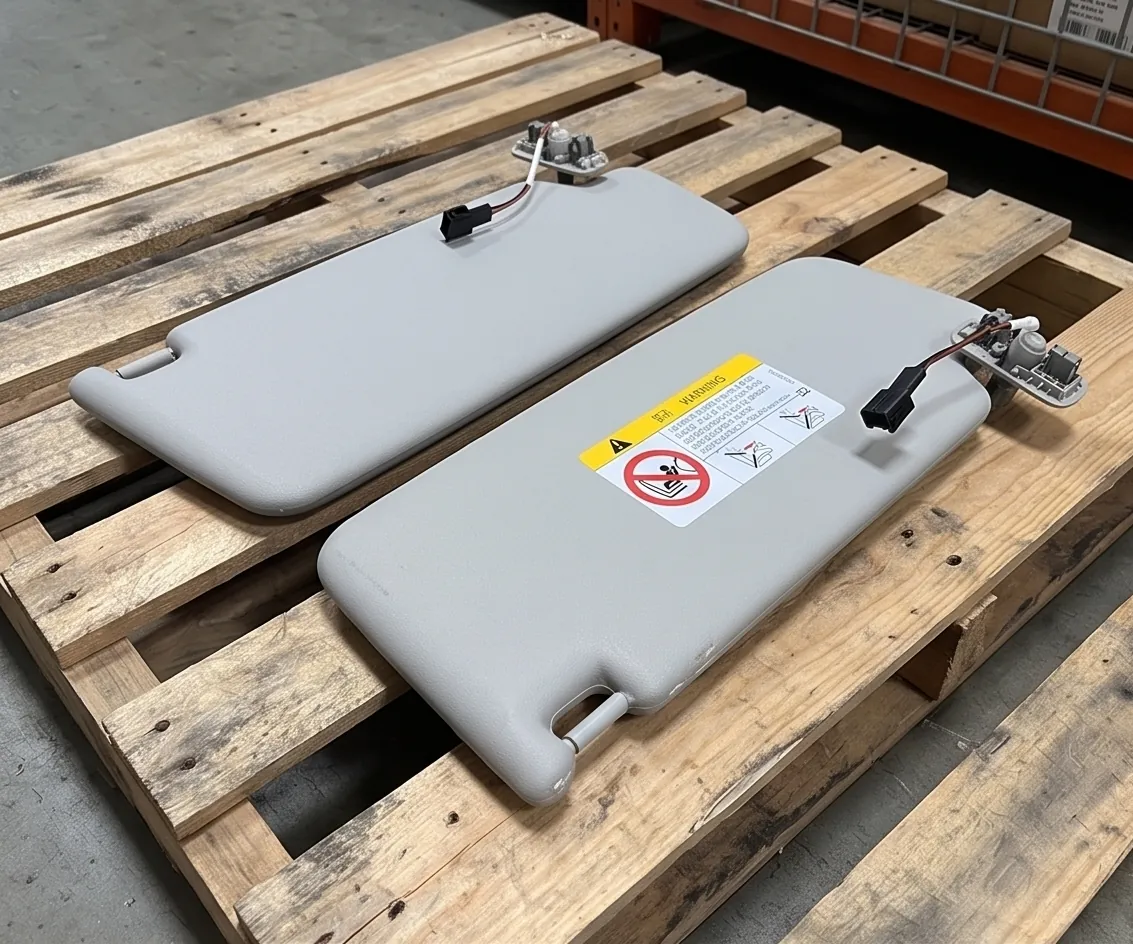
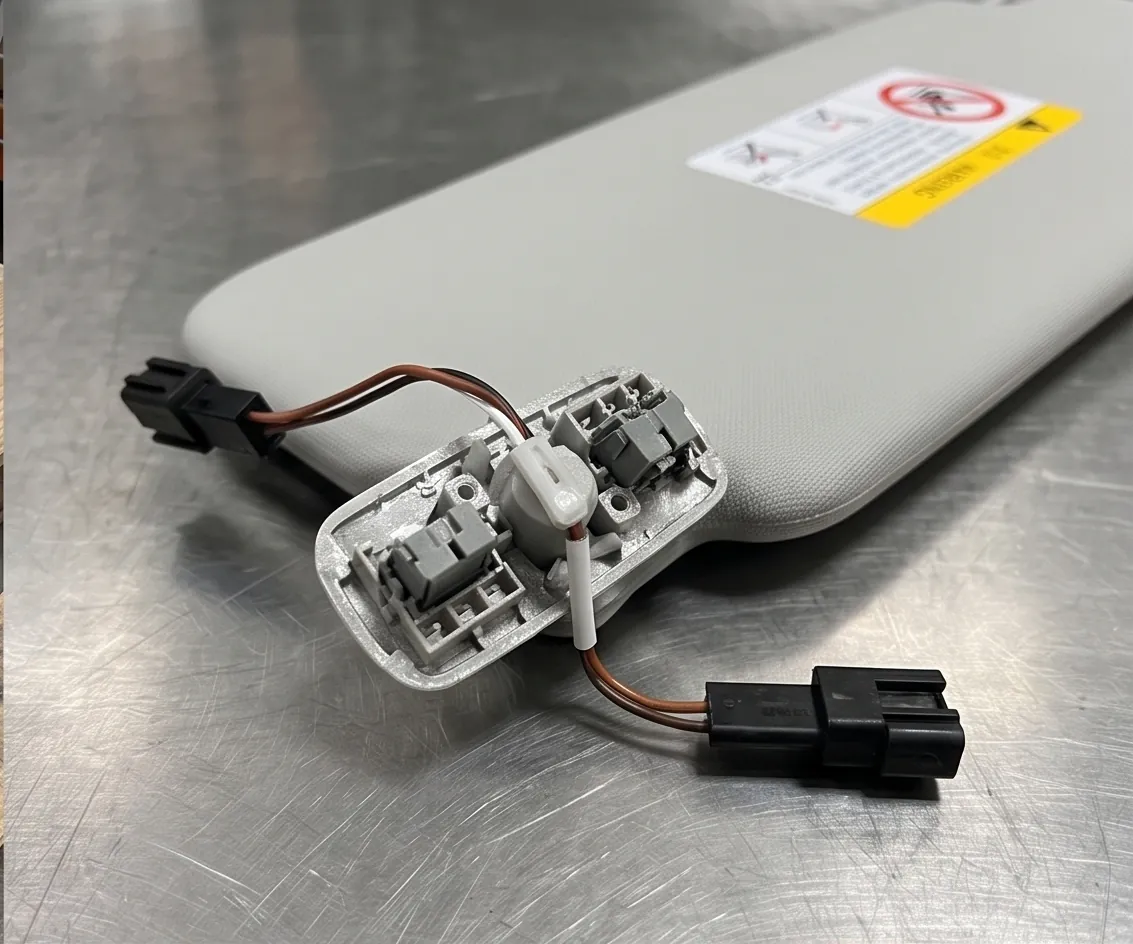
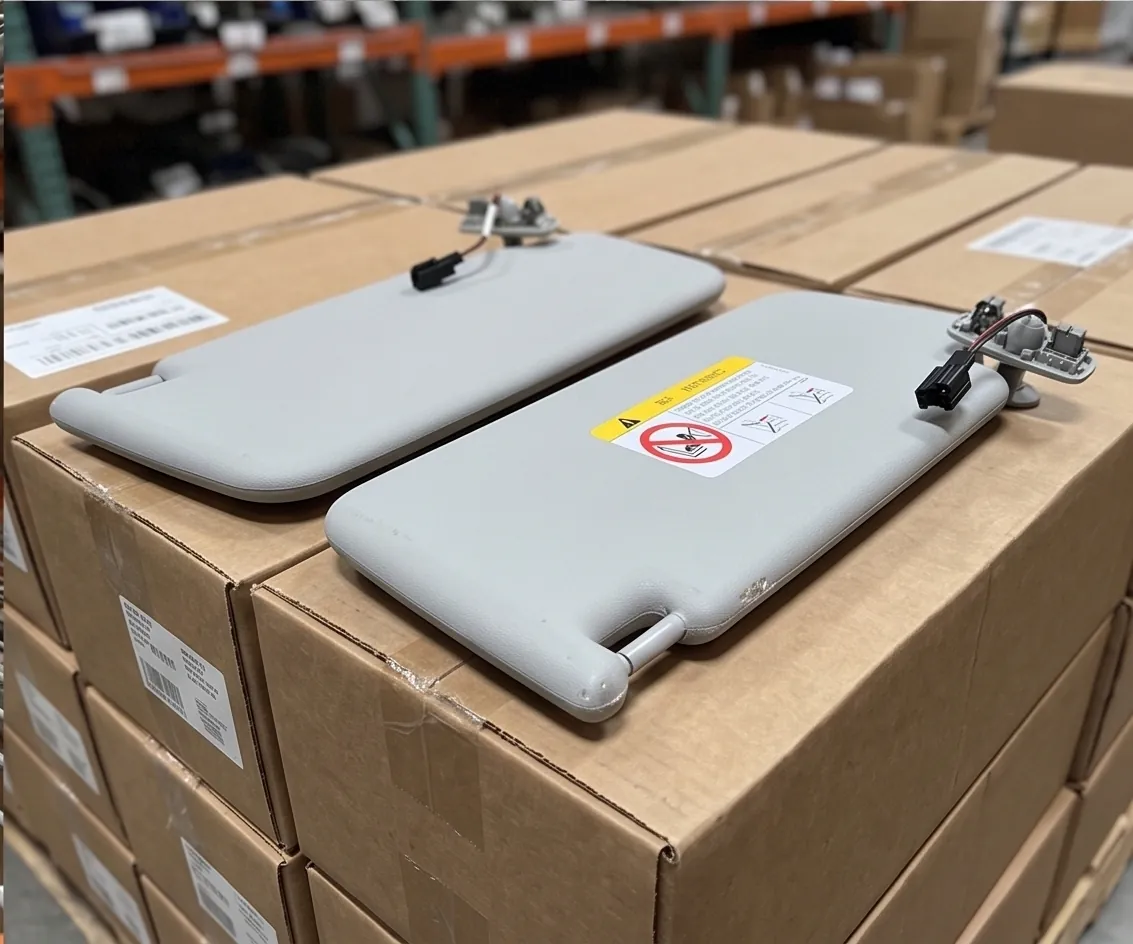
| INCLUDED | The complete sun visor assembly with plastic core, fabric or vinyl covering in the donor vehicle color, pivot mount, side support hook, vanity mirror (if equipped), lighted mirror with electrical connector (if equipped), and any sliding mirror cover. Side-specific (driver or passenger as ordered). |
| NOT INCLUDED | Mounting hardware to headliner (reuse originals or source from VW dealer), bulb replacement for lighted mirror if original is dim or burned (small interior bulbs from auto parts store), headliner panels around the visor mounting points, dome light or interior light assemblies, ambient lighting. |
| Tools You Need | Small Phillips and flathead screwdrivers, panel pry tool (recommended to avoid scratching the Golf headliner), Torx bits for some VW interior fasteners (T20 or T25 common), basic hand tools, masking tape for protecting paint and trim during install. Most replacements take 15 to 30 minutes per visor. |
Vehicle Compatibility
| Detail | Description |
|---|---|
| Volkswagen Rabbit MK1 (1974 to 1984 US) | Original US name for MK1 Golf, includes Rabbit GTI and diesel variants |
| Volkswagen Golf MK2 (1985 to 1992 US) | Square headlight Golf era, GTI 16V and Wolfsburg trims |
| Volkswagen Golf MK3 (1993 to 1998) | Rounded MK3 design including GL, GTI VR6, and Cabrio convertible |
| Volkswagen Golf MK4 (1999 to 2004) | Including GLS, GL, GTI 1.8T, GTI 337, R32 high-performance |
| Volkswagen Rabbit / Golf MK5 (2005 to 2009) | Named Rabbit in US 2006 to 2009, including GTI MkV and R32 MkV |
| Volkswagen Golf MK6 (2010 to 2014) | Including base Golf, GTI MkVI, Golf R 2012 to 2013, TDI |
| Volkswagen Golf MK7 (2015 to 2019) | Including base Golf, GTI MkVII, Golf R, e-Golf electric, SportWagen |
| Volkswagen Golf MK8 (2022 to current US) | Current generation, US arrived 2022 as GTI and Golf R only (no base Golf for US) |
Why Buy From Part Nests
- OEM verified sun visor for VW Golf across multiple generations
- Pivot mechanism tested, mirror integrity verified, cosmetic condition assessed
- Support for VW’s perennial compact hatchback across MK1 through MK8 Golf generations
- Free shipping to all 50 states
- 15 day replacement warranty on component defects
- Support team familiar with VW Golf multi-generation architecture and platform sharing with other VW / Audi group vehicles
- Call (855) 634-4447 to confirm your Golf generation, year, side (driver/passenger), and interior color before ordering.
15 Day Replacement Warranty
Every used VW Golf Sun Visor carries a 15 day replacement warranty starting on the delivery date. Call (855) 634-4447 to start a warranty claim within 15 days of delivery.
What Is Covered
- Component defects present on arrival beyond what was disclosed
- Pivot mechanism failures within 15 days from installation
- Mirror integrity failures not disclosed at sale
- Incorrect part shipped (wrong generation, side, or color) due to an error on our end
What Is Not Covered
- Damage caused during installation
- Cosmetic wear consistent with used part disclosure
- Cross-generation installation without verification
- Labor expenses of any kind
- Part: OEM sun visor (driver or passenger side)
- Application: VW Golf multiple generations (MK1 through MK8)
- Longevity: Continuous production since 1974 - 50+ years
- Historical Significance: Successor to the original Beetle
- Sales Success: 35+ million units sold globally
- Golf GTI Icon: Created the hot hatch segment in 1976
- US Rabbit Naming: Sold as Rabbit during MK1 (1975-1984) and MK5 (2006-2009)
- Related Listings: VW Atlas, Cabriolet, New Beetle, Arteon, Cabrio, EOS
Additional information
| Brand | Volkswagen |
|---|---|
| Application | Volkswagen Golf hatchback (Rabbit in early US years and MK5) |
| Production Coverage | 1974 to current (MK1 through MK8) |
| Generations | MK1, MK2, MK3, MK4, MK5, MK6, MK7, MK8 |
| Year Ranges | MK1 1974 to 1983, MK2 1983 to 1992, MK3 1992 to 1998, MK4 1998 to 2004, MK5 2003 to 2008, MK6 2008 to 2013, MK7 2012 to 2020, MK8 2019+ |
| US Naming Note | Sold as Rabbit 1974 to 1984 and 2006 to 2009, Golf otherwise |
| Position | Driver or passenger side (specify when ordering) |
| Construction | Plastic core with fabric, vinyl, or leatherette covering |
| Mounting | Pivot mount to headliner with side support hook |
| Mirror Options | With or without mirror, with or without lighted mirror |
| Interior Colors | Black, gray, beige, burgundy (varies by year) |
| GTI Compatibility | Performance trim shares base sun visors |
| R Trim Compatibility | High-performance trim shares base sun visors |
| Common Failures | Pivot break, fabric tear, mirror cover damage, lighted mirror bulb |
| Side Specific | Driver and passenger not interchangeable |
| Generation Specific | No cross-generation interchangeability |
| Warranty | 15 day replacement on bench test failure |
| Shipping | Free UPS or FedEx Ground to all 50 states |
An OEM used sun visor (driver or passenger side) for Volkswagen Golf applications across multiple generations. Molded plastic or foam-core visor covered with interior fabric or vinyl matching the vehicle interior color. Pivot mechanism at the ceiling mounting point allows the visor to swing down (blocking front sun) and to swing sideways (blocking side sun). Many trims include integrated vanity mirror. Function is pivoting sun-blocking panel that lowers from the ceiling / headliner area to block direct sunlight.
One of the longest-running vehicle nameplates in automotive history - continuous production since 1974 across eight generations (MK1 through MK8 and continuing). VW's perennial compact hatchback and central to Volkswagen brand identity. Designed as the modern successor to the aging original Beetle in the VW lineup. Approximately 35+ million units sold globally across its production run, making it one of the best-selling vehicles in automotive history.
The original Volkswagen Golf MK1 (1974+) was designed to replace the aging original Beetle in the VW lineup. FWD front-engine hatchback architecture replaced the RWD rear-engine air-cooled Beetle, moving VW into modern automotive engineering. Transformed Volkswagen from a Beetle-dependent manufacturer into a modern automotive company. This transition was critical to VW's continued relevance in the modern automotive era.
The Volkswagen Golf GTI (MK1) launched in 1976 as a performance variant of the mainstream Golf hatchback. Fuel-injected engine (initially 1.6L, later 1.8L) with sport-tuned suspension, distinctive red-accented styling (red-line grille surround, tartan seat inserts), and enthusiast-focused positioning. Widely credited with creating the hot hatch segment - the combination of practical hatchback body with genuine performance credentials. Continuous 45+ year GTI heritage across every Golf generation.
MK1 (1974-1984, original Giugiaro design, GTI introduced 1976). MK2 (1984-1991, refined MK1 concept). MK3 (1991-1997, rounded modernization). MK4 (1997-2003, sophisticated interior). MK5 (2003-2008, modern electronic architecture). MK6 (2008-2013, refined MK5). MK7 (2012-2020, first Golf on the MQB modular platform). MK8 (2019+, modern digital Golf with advanced technology). Each generation shares platform elements with other VW / Audi group vehicles.
Golf platforms have shared architecture with multiple VW / Audi group vehicles across generations. VW Cabriolet (MK1 platform - see our related Cabriolet engine wiring harness listing). VW Cabrio (MK3 platform - see our related Cabrio engine fuse box listing). VW New Beetle (MK4 platform - see our related New Beetle ECM listing). VW EOS (MK5 platform - see our related EOS glove box listing). VW Jetta (Golf-based sedan). Audi A3, Audi TT, Skoda Octavia, SEAT Leon, and various other VW group vehicles.
Yes. Marketed as the VW Rabbit in the US market during MK1 (1975-1984) and briefly during MK5 (2006-2009) generations. Later reverted to Golf naming for the US market. Same vehicle across the different regional names - VW's US marketing strategy varied between Golf and Rabbit naming across different eras. Currently sold as the Golf in the US market.
Pivot mechanism failure (visor does not stay in position, sags down while driving from worn pivot friction). Mirror crack or cover failure on the vanity mirror. Cosmetic wear (fading, surface scuffing, staining from long exposure). Broken mounting clip at the ceiling attachment point. Symptoms include visor drooping while driving, mirror cover failing to open / close, or visor failing to mount securely to the ceiling attachment point.


Reviews
There are no reviews yet.