
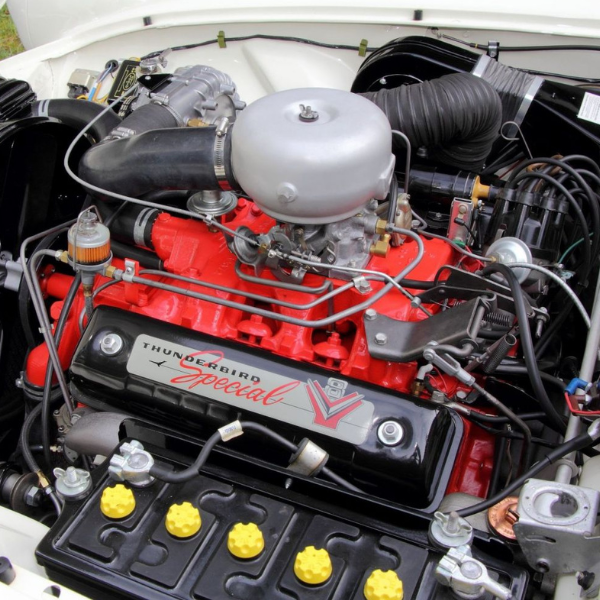
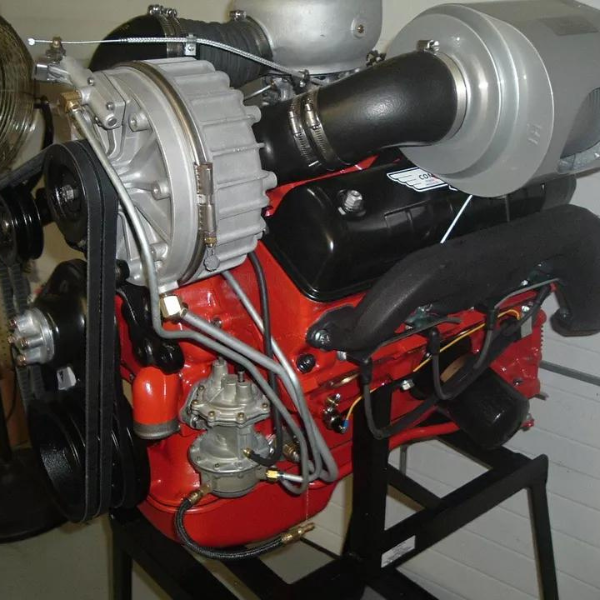
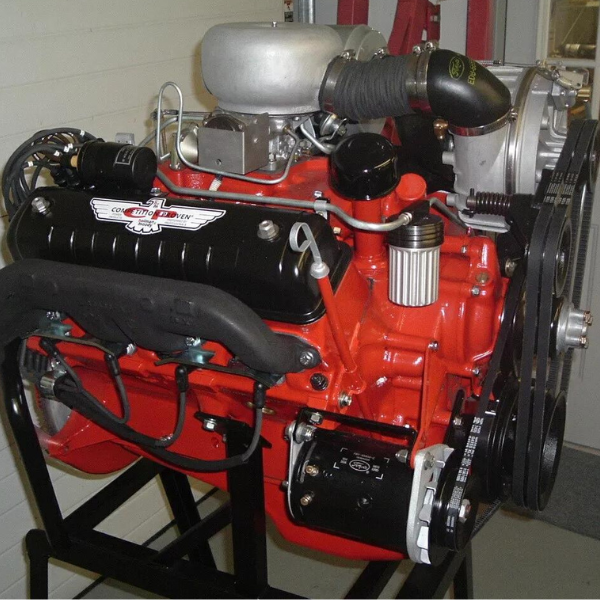
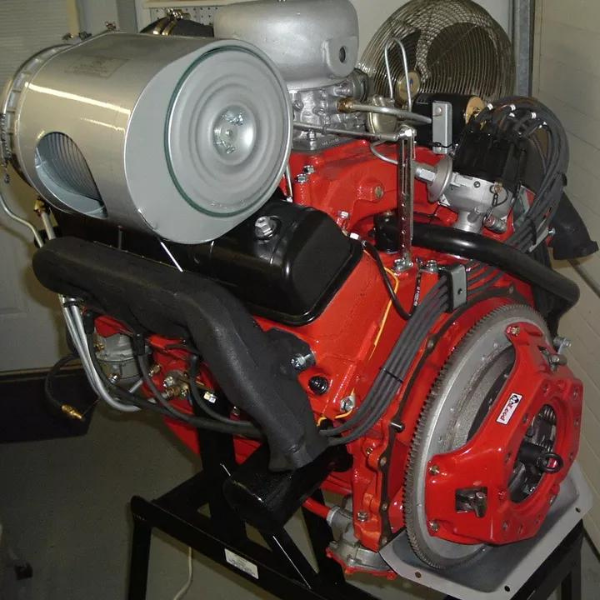
Ford 312 Y-Block Engine for Sale | OEM Used V8 (1956 to 1960)
$3,999.00
Product Overview
- Displacement: 312 cu in (5.1L)
- Engine Family: Ford Y-Block
- Configuration: V8, OHV, 16 valves
- Horsepower: 210 to 300 hp, variant-dependent, confirmed at order
- Condition: OEM used, compression tested and inspected
- Availability: Call to confirm current availability
- Shipping: Free freight to all 50 states, 5 to 10 business days
- All 8 cylinders pressure-tested with results shared before payment
- Oiling system and valvetrain condition specifically inspected
- Variant confirmed (standard or supercharged application) documented
- Zero core charge required, your existing engine stays with you
- Backed by a 15 day replacement warranty against internal defects
Did you like this product? Add to favorites now and follow the product.
(+800) 1234 5678 90 Start Live Chat
Description
Engine Background
The Ford 312 Y-Block is the largest-displacement member of the Ford Y-Block V8 family, produced from 1956 through 1960. The Y-Block name comes from the engine’s distinctive deep-skirted block casting that extends well below the crankshaft centerline, forming a Y cross-section. This design makes the bottom end exceptionally rigid and strong but also creates the Y-Block’s most well-known service characteristic: the oil pan cannot be removed in most applications without pulling the engine.
The 312 used a unique top-oiling valvetrain system where engine oil is fed through hollow pushrods to the rocker arms, then flows down the valve stems to lubricate the guides. This system requires specific attention to oil viscosity and valve stem-to-guide clearances, issues that are frequently neglected on aged Y-Block engines. A properly maintained 312 is a strong, smooth engine. One that has been run with incorrect oil or worn valve guides will show its age quickly.
In 1957, Ford offered the 312 in the Thunderbird with a factory-installed McCulloch centrifugal supercharger, making it one of the first factory-supercharged American production V8s. The supercharged 312 produced approximately 300 hp and made the 1957 T-Bird one of the fastest American production cars of its era. Standard naturally aspirated 312 versions were used across the Thunderbird, Fairlane, Crown Victoria, F-100 truck, and Edsel lineups.
When Replacement Becomes Necessary
- Valve clatter that does not quiet after warm-up, oil not reaching the rocker arms through the pushrods, indicating clogged hollow pushrods or incorrect oil viscosity
- Blue smoke on startup, valve guide wear from improper oiling (the most common Y-Block failure mode)
- Knock or rattle under load, bearing wear on high-mileage units
- Oil consumption beyond one quart per 1,000 miles, valve guide or ring failure
- Overheating, the Y-Block cooling system can become restricted on aged engines
- Loss of compression on one or more cylinders, ring or valve seat failure
Known Issues We Document Before Shipping
- Top-oiling system neglect: the 312 Y-Block oils the valvetrain through hollow pushrods. If run with oil that is too thin, or if the hollow pushrods have become partially clogged over decades of service, the rocker arms and valve stems receive insufficient lubrication. This is the primary cause of premature valve guide wear on high-mileage Y-Blocks. We inspect the oiling system specifically on every unit.
- Oil pan removal requires engine removal: in most Y-Block applications, the deep-skirted block prevents oil pan removal without pulling the engine. This makes routine bottom-end inspection difficult and means many Y-Blocks have never had their oil pan off since leaving the factory.
- Limited parts availability: the 312 Y-Block has been out of production since 1960. Parts availability depends on aftermarket support from specialty Y-Block suppliers (Mummert Machine, John Mummert, John’s Engine Parts). Plan to source parts from specialty suppliers, not generic parts catalogs.
- Supercharged version is uncommon: the 1957 McCulloch-supercharged 312 (F-code) is rare and commands premium pricing. Most 312s available today are naturally aspirated versions from Fairlane, Crown Victoria, F-100, or Edsel applications.
- Oil viscosity matters: use 10W-40 or 20W-50 conventional oil with ZDDP additive. Modern low-zinc synthetic oils will not lubricate the top-oiling valvetrain correctly.
312 Y-Block Variants by Application
Verified configurations across the 1956 to 1960 production run:
| Variant | Years | HP | Compression | Notes |
|---|---|---|---|---|
| 312 2V Standard | 1956 to 1960 | 210 to 215 hp | 8.4:1 | Base 312 with 2-barrel carb. Most common variant. Truck and full-size applications. |
| 312 4V Performance | 1956 to 1960 | 225 to 245 hp | 9.7:1 | 4-barrel carb, higher compression. Thunderbird and Fairlane performance option. |
| 312 Dual 4V | 1957 | 270 to 285 hp | 9.7:1 | Dual Holley 4-barrel setup. Very rare. Thunderbird performance package. |
| 312 Supercharged (McCulloch) | 1957 only | 300 hp | 8.5:1 | Factory McCulloch centrifugal supercharger. 1957 Thunderbird only. One of first factory-supercharged US V8s. |
| INCLUDED- Long Block | Block, crankshaft, pistons, connecting rods, camshaft, cylinder heads, hollow-pushrod valve train, oil pan, front timing cover, and water pump where present. |
|---|---|
| NOT INCLUDED | Intake manifold, carburetor, exhaust manifolds, distributor, ignition system, alternator, starter, flywheel or flexplate, accessory brackets. Supercharger unit not included on supercharged variants. |
| Core Note | No core charge. You are not required to return your old engine. |
What Ships and What Does Not
| Ford Thunderbird | 1956 to 1957 (standard and supercharged variants) |
|---|---|
| Ford Fairlane and Mainline | 1956 to 1959 |
| Ford Crown Victoria | 1956 to 1959 |
| Ford F-100 and F-250 Truck | 1956 to 1960 |
| Edsel (all models) | 1958 to 1960 |
| Mercury Montclair and Monterey | 1956 to 1957 (some applications) |
Direct-Fit Vehicle Applications
| Ford 312 Y-Block | Most common buyer search |
|---|---|
| Ford Y-Block | Family designation search |
| 312 Y-Block engine | Full designation |
| Ford 312 V8 | Simple V8 designation |
| Y-Block Ford engine | Architecture name search |
| 1957 Ford 312 | Year-specific buyer |
| Ford 312 Thunderbird engine | T-Bird application buyer |
| 312 supercharged engine | Supercharged variant buyer |
| Ford 312 truck engine | F-100 truck buyer |
| 312 cubic inch Ford | Displacement-format search |
Not sure if this fits? Call us. We verify variant (standard or supercharged) and donor application before every order ships.
Used OEM Versus Specialist Rebuild
For a 1956 to 1960 Thunderbird, Fairlane, Crown Victoria, F-100, or Edsel restoration on a reasonable budget, a documented used 312 with oiling system inspected and valvetrain condition assessed is the cost-effective path. For a high-value Thunderbird restoration or a supercharged F-code build, a specialist Y-Block rebuild with fresh top-oiling components, refreshed valve guides, and bearings sized correctly is the better investment. Specialist Y-Block rebuilds typically run $6,500 to $12,000 plus core, depending on variant and target output, from established Y-Block specialist builders.
Inspection Workflow
- Compression test logged across all 8 cylinders with uniformity reported
- Oiling system inspected for top-oiling pushrod function
- Valvetrain condition assessed at accessible areas
- Variant confirmed: standard naturally aspirated or McCulloch supercharged (F-code)
- Donor vehicle documented where identifiable
- External oil leak survey at valve covers, front and rear seals, oil pan (cannot remove without engine removal in most applications)
- Cooling system passage inspection where accessible
Pre-Purchase Buyer Notes
- Use the correct oil: 10W-40 or 20W-50 conventional oil with ZDDP additive. Modern low-zinc synthetic oils will not lubricate the top-oiling valvetrain correctly and accelerate valve guide wear.
- Plan a complete top-end refresh: hollow pushrods, valve guides, and rocker arm shafts on any aged 312 benefit from inspection and replacement at installation. Cheaper to address while the engine is being installed than after a no-start no-oil-flow event.
- Source parts from specialty suppliers: Mummert Machine, John’s Engine Parts, and other Y-Block specialists are the right source for hollow pushrods, valve guides, gaskets, and supporting hardware. Generic parts catalogs typically lack Y-Block-specific components.
- Match variant to your application: the supercharged F-code 312 is rare and commands premium pricing. Standard naturally aspirated 312s are far more available and sufficient for most restoration projects.
- Cooling system service is mandatory: aged Y-Block cooling passages can become restricted with mineral deposits over 60-plus years. Flush the cooling system thoroughly at installation, inspect the water pump, and consider an aftermarket aluminum radiator for daily-driver use.
Why Buy From Part Nests
- Variant confirmed: standard or McCulloch supercharged (F-code) documented before payment
- Oiling system inspected, the Y-Block signature service issue addressed
- Valvetrain condition assessed at accessible areas
- All 8 cylinders compression-tested with uniformity reported
- Donor application documented where identifiable
- No core return required
- Free freight delivery to every state
- 15 day replacement warranty against internal defects
- Call us to speak with someone who knows Y-Block top-oiling service requirements, McCulloch supercharger variants, and classic Ford application matching
Additional information
| displacement | 312 cu in (5.1L) |
|---|---|
| engine-family | Ford Y-Block |
| configuration | 16 valves, OHV, V8 |
| bore-x-stroke | 3.800 in x 3.440 in |
| aspiration | Naturally Aspirated (standard) | Supercharged 1957 Thunderbird only |
| valve-train | OHV, top-oiling through hollow pushrods |
| block-material | Cast iron (deep-skirted Y cross-section) |
| head-material | Cast iron |
| production-years | 1956 to 1960 |
| manufacturer | Ford Motor Company |
| horsepower | 210 to 300 hp- variant dependent, confirmed at order |
| torque | Approximately 317 to 332 lb-ft naturally aspirated |
| compression-ratio | 8.4:1 to 9.7:1 depending on variant |
| special-note | Oil pan removal requires engine removal in most applications- unique Y-Block service characteristic |
| condition | compression tested and inspected, Used OEM |
The block casting extends well below the crankshaft centerline, forming a Y cross-section when viewed from the front. This deep-skirted design makes the bottom end exceptionally rigid and strong but also creates the Y-Block's most well-known service characteristic: in most applications, the oil pan cannot be removed without pulling the engine.
The 312 Y-Block lubricates the valvetrain through hollow pushrods. Engine oil flows up through the pushrods to the rocker arms, then down the valve stems to lubricate the valve guides. This system requires specific oil viscosity and clean hollow pushrods to function correctly. Neglect of either causes premature valve guide wear, the most common Y-Block failure mode.
In 1957, Ford offered the 312 in the Thunderbird (and a few other applications) with a factory-installed McCulloch centrifugal supercharger. The F-code engine produced approximately 300 hp, making the 1957 T-Bird one of the fastest American production cars of its era. F-code 312s are rare and command significant collector premium.
A range of 1956 to 1960 Ford and Mercury vehicles including the Thunderbird, Fairlane, Crown Victoria, F-100 truck, Mercury Monterey, Mercury Montclair, and the Edsel Pacer and Citation. The supercharged F-code 312 was primarily a 1957 Thunderbird offering with a few other applications.
10W-40 or 20W-50 conventional oil with ZDDP additive (Brad Penn, Driven Racing, or a ZDDP supplement). Modern low-zinc synthetic oils will not lubricate the top-oiling valvetrain correctly. Wrong oil viscosity is the primary cause of premature valve guide wear on Y-Block engines.
The deep-skirted Y-Block design positions the block casting below the oil pan flange in most chassis applications. The oil pan cannot be removed without pulling the engine from the vehicle. This makes routine bottom-end inspection difficult and means many Y-Blocks have never had their oil pan off since leaving the factory.
Specialty Y-Block suppliers including Mummert Machine, John's Engine Parts, and other Ford classic specialists. The 312 has been out of production since 1960, so generic parts catalogs typically lack Y-Block-specific components like hollow pushrods, valve guides, and gaskets. Plan to source from specialists.
No. There is no core return required.
15 Day Replacement Warranty
Every used Ford 312 Y-Block engine purchased through Part Nests carries a 15 day replacement warranty starting on the delivery date.
What Is Covered
- Internal defects already present when the engine arrives
- Performance materially different from how the engine was described
- Incorrect part shipped due to an error on our end
What Is Not Covered
- Damage caused during installation
- Damage from incompatible components or wrong oil type (modern low-zinc oils that fail to lubricate the top-oiling valvetrain)
- External components unless specifically itemized
- Labor expenses of any kind
To start a warranty claim, reach us within 15 days of delivery.
- Variant Confirmed: Standard or McCulloch supercharged (F-code) documented before payment
- Oiling System Inspected: Y-Block top-oiling signature issue specifically addressed
- Valvetrain Condition Assessed: Top-oiling wear indicators checked
- All 8 Cylinders Tested: Compression results shared before payment
- Donor Application Documented: Source vehicle disclosed where identifiable
- 15 Day Replacement Cover: Internal defects protected from delivery onward
6 reviews for Ford 312 Y-Block Engine for Sale | OEM Used V8 (1956 to 1960)
Related products
Recently Viewed Products
About Us
At Part Nests, we specialize in high-quality used and OEM auto parts, with a wide selection of components ready to ship to customers.
© 2026 Part Nests. All rights reserved.

Harvey K. –
Got a standard naturally aspirated 312 for a 1957 Fairlane restoration. Variant confirmed as base 312 (not the supercharged F-code), oiling system inspected, valvetrain condition disclosed as needing top-end refresh. Sourced hollow pushrods and valve guides from Mummert per their recommendation. Engine running smooth.
Dale W. –
Sourced a 312 for a 1959 Edsel Citation. Honest about it being a high-mileage donor, with disclosed top-oiling pushrod neglect. Plan a complete top-end refresh at install. All eight cylinders tested uniform on compression. Solid foundation for an Edsel project that deserves it.
Harvey K. –
Got a standard naturally aspirated 312 for a 1957 Fairlane restoration. Variant confirmed as base 312 (not the supercharged F-code), oiling system inspected, valvetrain condition disclosed as needing top-end refresh. Sourced hollow pushrods and valve guides from Mummert per their recommendation. Engine running smooth.
Dale W. –
Sourced a 312 for a 1959 Edsel Citation. Honest about it being a high-mileage donor, with disclosed top-oiling pushrod neglect. Plan a complete top-end refresh at install. All eight cylinders tested uniform on compression. Solid foundation for an Edsel project that deserves it.
Harvey K. –
Got a standard naturally aspirated 312 for a 1957 Fairlane restoration. Variant confirmed as base 312 (not the supercharged F-code), oiling system inspected, valvetrain condition disclosed as needing top-end refresh. Sourced hollow pushrods and valve guides from Mummert per their recommendation. Engine running smooth.
Dale W. –
Sourced a 312 for a 1959 Edsel Citation. Honest about it being a high-mileage donor, with disclosed top-oiling pushrod neglect. Plan a complete top-end refresh at install. All eight cylinders tested uniform on compression. Solid foundation for an Edsel project that deserves it.