


Audi 100 AC Compressor for Sale | Used Belt-Driven Classic AC Compressor
$185.00
At a Glance
- Condition: OEM used belt-driven AC compressor with integrated clutch, clutch operation verified, shaft integrity assessed, mounting features inspected
- Availability: In stock for scarce classic Audi 100 applications (donor 1976 per the source data)
- Shipping: Free shipping to all 50 states, 3 to 7 business days
- Application: Audi 100 (donor 1976 per the source data) – Audi’s classic executive sedan (pre-A6 nameplate era)
- Belt-driven with integrated clutch: Classic mechanical belt-driven AC compressor architecture with integrated electromagnetic clutch for engagement control
- Refrigerant compatibility note: Page lists PAG-compatible oil (R-134a); 1976 originally R-12 per the source data – confirm your system before service
- Scarce classic-car application per the source data – Audi 100 heritage predates modern A6 nameplate
- Classic vehicle disclosure applies (~50 year old classic vehicle)
- 25-year classic vehicle import context: 1976 vehicles well past US 25-year threshold
- 15 day replacement warranty on component defects
Description
About the Audi 100 AC Compressor
Need a replacement Audi 100 belt-driven AC compressor (with integrated clutch)? Part Nests sources OEM used belt-driven AC compressors with integrated clutches for scarce classic Audi 100 applications (donor 1976 per the source data). The Audi 100 is Audi’s classic executive sedan – Audi’s pre-A6 nameplate flagship / executive-class sedan positioning. Classic mechanical belt-driven AC compressor architecture with integrated electromagnetic clutch for engagement control. Critical – page lists PAG-compatible oil (R-134a) but 1976 originally R-12 per the source data. Confirm your system before service. Scarce classic-car application – Audi 100 heritage predates the modern Audi A6 nameplate. Classic vehicle disclosure applies. Each compressor is inspected for clutch operation, shaft integrity, and mounting features. Call (855) 634-4447 to verify Audi 100 year, refrigerant system status (R-12 original vs R-134a retrofit), and configuration before ordering.
What Is Included and Not Included
| Detail | Description |
|---|---|
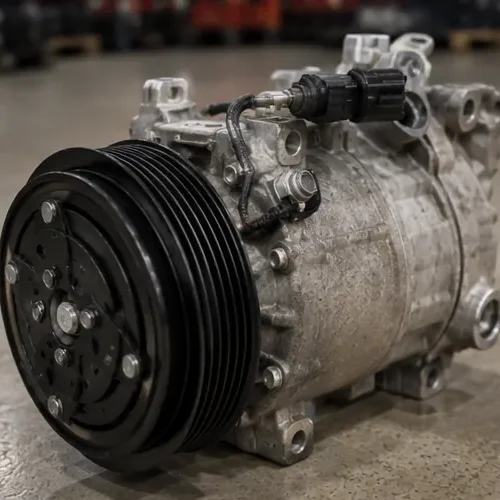
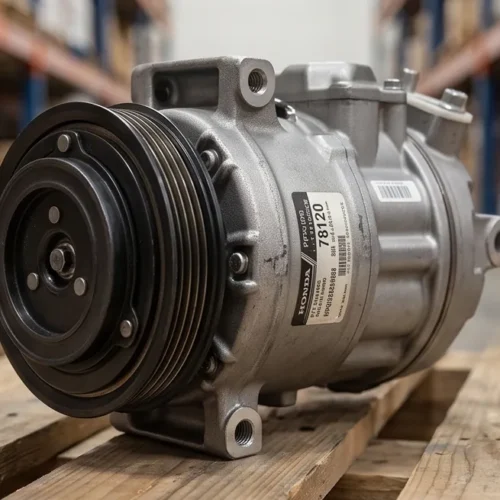
| INCLUDED | The AC compressor as photographed. |
| NOT INCLUDED | Receiver-drier/accumulator, expansion device, condenser, refrigerant, oil charge, and drive belt. |
| Tools You Need | AC service equipment for evacuation and charging; per the live FAQ, rotate the compressor by hand after oiling, evacuate to deep vacuum, and charge to the specified weight only. |
Audi 100 Vehicle Context (Classic Audi Executive Sedan Heritage)
- Audi 100 nameplate heritage: The Audi 100 is Audi’s classic executive sedan – Audi’s pre-A6 nameplate flagship / executive-class sedan positioning. Long-running Audi nameplate with multiple generations across an approximately 26-year production run (1968-1994 approximately) before the Audi 100 was rebranded to the current Audi A6 nameplate in 1994. Represents an important era of Audi’s executive sedan heritage predating the modern A6 nameplate
- Audi 100 to A6 transition: Audi transitioned the Audi 100 nameplate to the Audi A6 nameplate in 1994 as part of Audi’s broader nomenclature restructuring to the letter-number nomenclature system (A3, A4, A6, A8) that continues to define Audi’s model nomenclature today. The classic Audi 100 nameplate represents pre-1994 Audi executive sedan positioning while the modern Audi A6 nameplate represents post-1994 Audi executive sedan positioning – continuous vehicle lineage across the nameplate transition
- 1976 donor era classic context: The 1976 donor era represents an approximately 50-year old classic vehicle. Well past the US 25-year classic vehicle import rule threshold, common classic vehicle status. Scarce classic vehicle parts availability – the Audi 100 AC compressor is a scarce classic-car application per the source data. Various classic vehicle sourcing considerations apply
- Related modern Audi executive sedan lineage: Modern successor Audi executive sedan lineage includes the Audi A6 (see our related Audi A6 Tie Rod listing for the modern A6 executive sedan platform context) and various successor Audi A6 platform generations (C4, C5, C6, C7, C8 platform generations across the modern A6 production run). Continuous Audi executive sedan heritage from the classic Audi 100 to the modern Audi A6
Refrigerant System Compatibility Critical Note
- R-12 original vs R-134a retrofit: Per the source data, page lists PAG-compatible oil (R-134a) but 1976 originally R-12. Confirm your system before service. Critical compatibility consideration for classic vehicle AC system service
- R-12 refrigerant historical context: R-12 (Freon-12, dichlorodifluoromethane) was the standard automotive AC refrigerant during the 1970s-1980s era. R-12 was phased out beginning in the 1990s due to environmental ozone-depletion concerns per international refrigerant regulations. New R-12 production has been prohibited in the United States since the mid-1990s under the Clean Air Act, with limited legacy R-12 stock available under strict environmental / refrigerant handling regulations
- R-134a retrofit conversion: Many classic vehicles originally equipped with R-12 have been converted to R-134a refrigerant during service history (R-134a is the more modern refrigerant that succeeded R-12 for classic vehicle applications, subsequently succeeded by newer refrigerants for modern vehicles). R-134a conversion requires various system service considerations including refrigerant oil compatibility (PAG oil for R-134a vs mineral oil for R-12), system compatibility considerations, and appropriate service procedures
- Confirm system status before service: Verify your specific Audi 100’s current refrigerant system status (original R-12 or R-134a conversion) before finalizing this AC compressor installation. Different oil compatibility considerations depending on current refrigerant system status. Consult with an experienced classic vehicle AC service technician for appropriate service procedure guidance
Related Modern Audi Listings
- Audi A6 Tie Rod: Related modern Audi executive sedan (A6 = successor to Audi 100 nameplate) – see our Audi A6 tie rod listing
- Audi A4 Brake Caliper: Related Audi compact executive sedan – see our Audi A4 brake caliper listing
- Audi A8 Power Steering Pump: Related Audi flagship full-size sedan – see our Audi A8 power steering pump listing
AC Compressor Specifications
- Type: OEM used belt-driven AC compressor with integrated clutch for classic Audi 100 (donor 1976)
- Function: AC compressor provides refrigerant compression for the vehicle air conditioning system operation. Belt-driven pump architecture (driven by the engine accessory belt system) with integrated electromagnetic clutch that engages / disengages the compressor drive based on AC system demand. Standard classic-era mechanical AC compressor architecture
- What is not included: Receiver-drier / accumulator, expansion device, condenser, refrigerant, oil charge, and drive belt per the source data. Standard practice for AC compressor replacement scope – refresh service parts per the live FAQ. Refresh receiver-drier / accumulator (which absorbs system moisture) is standard practice with any AC compressor replacement
- Tools required: AC service equipment for evacuation and charging per the source data. Rotate the compressor by hand after oiling per the live FAQ. Evacuate to deep vacuum. Charge to the specified weight only. Standard AC service procedure – proper vacuum-based evacuation removes moisture and non-condensable gases before refrigerant charging
- Common failure modes: Clutch coil failure, clutch bearing failure, shaft seal failure (refrigerant / oil leak), internal compression component failure, various age-related component wear on approximately 50-year old classic vehicle. Symptoms include AC function failure, refrigerant leak, compressor clutch engagement issues, compressor noise, various AC system integration issues
- Testing: Clutch operation verified, shaft integrity assessed, mounting features inspected before shipment
Vehicle Compatibility
| Detail | Description |
|---|---|
| Audi 100 (donor 1976) | VIN confirmed at order; a scarce classic-car application |
| Refrigerant | Page lists PAG-compatible oil (R-134a); 1976 originally R-12. Confirm your system before service |
| Service parts | Receiver-drier, expansion device, and condenser are separate; refresh per the live FAQ |
| Reference Application | 1976 Audi 100 |
Why Buy From Part Nests
- OEM verified belt-driven AC compressor for scarce classic Audi 100 (donor 1976)
- Clutch operation verified, shaft integrity assessed, mounting features inspected
- Support for classic Audi 100 lineage (pre-1994 Audi A6 nameplate transition)
- Refrigerant compatibility guidance available (R-12 original vs R-134a retrofit)
- Free shipping to all 50 states
- 15 day replacement warranty on component defects
- Support team familiar with classic Audi 100 heritage and modern Audi A6 successor nameplate transition
- Call (855) 634-4447 to confirm your Audi 100 year, refrigerant system status, and configuration before ordering.
15 Day Replacement Warranty
Every used Audi 100 AC Compressor carries a 15 day replacement warranty starting on the delivery date. Refrigerant system status (R-12 vs R-134a) verification is critical before ordering. Classic vehicle disclosure applies. Call (855) 634-4447 to start a warranty claim within 15 days of delivery.
What Is Covered
- Component defects present on arrival beyond what was disclosed
- Clutch or shaft failures within 15 days from installation
- Compressor failures not disclosed at sale
- Incorrect part shipped due to an error on our end
What Is Not Covered
- Damage caused during installation
- Receiver-drier, expansion device, condenser, refrigerant, oil charge, or drive belt costs
- Cosmetic wear consistent with approximately 50-year old classic vehicle used part disclosure
- Labor expenses of any kind, including AC service labor and evacuation / charging
- Part: OEM used belt-driven AC compressor with integrated clutch
- Application: Classic Audi 100 (donor 1976)
- Segment: Audi classic executive sedan (pre-A6 nameplate era)
- Nameplate Transition: Audi 100 rebranded to Audi A6 in 1994
- Refrigerant Note: R-12 original vs R-134a retrofit - confirm system before service
- Classic Import Context: 1976 vehicles well past US 25-year threshold
- Related Modern: Audi A6 (successor nameplate)
Additional information
| Brand | Audi |
|---|---|
| Type | Belt-driven, clutch-integrated |
| Housing | Cast aluminum, compact body |
| Control | OE electrical connector |
| Oil | PAG-compatible, spec volume |
| Pulley | Multi-groove, low NVH |
| Seals | High-integrity shaft and case |
| Application | 1976 Audi 100 |
| SKU | vaz693 |
| Price | $185.00 |
An OEM used belt-driven AC compressor with integrated clutch for classic Audi 100 applications (donor 1976 per the source data). Classic mechanical belt-driven AC compressor architecture with integrated electromagnetic clutch for engagement control. Function is providing refrigerant compression for the vehicle air conditioning system operation. Standard classic-era mechanical AC compressor architecture.
Audi's classic executive sedan - Audi's pre-A6 nameplate flagship / executive-class sedan positioning. Long-running Audi nameplate with multiple generations across an approximately 26-year production run (1968-1994 approximately) before the Audi 100 was rebranded to the current Audi A6 nameplate in 1994. Represents an important era of Audi's executive sedan heritage predating the modern A6 nameplate.
Audi transitioned the Audi 100 nameplate to the Audi A6 nameplate in 1994 as part of Audi's broader nomenclature restructuring to the letter-number nomenclature system (A3, A4, A6, A8). The classic Audi 100 nameplate represents pre-1994 Audi executive sedan positioning while the modern Audi A6 nameplate represents post-1994 Audi executive sedan positioning - continuous vehicle lineage across the nameplate transition. See our related Audi A6 Tie Rod listing.
Per the source data, page lists PAG-compatible oil (R-134a) but 1976 originally R-12. Confirm your system before service. Many classic vehicles originally equipped with R-12 have been converted to R-134a refrigerant during service history. Different oil compatibility considerations depending on current refrigerant system status. Consult with an experienced classic vehicle AC service technician for appropriate service procedure guidance.
R-12 (Freon-12, dichlorodifluoromethane) was the standard automotive AC refrigerant during the 1970s-1980s era. R-12 was phased out beginning in the 1990s due to environmental ozone-depletion concerns per international refrigerant regulations. New R-12 production has been prohibited in the United States since the mid-1990s under the Clean Air Act, with limited legacy R-12 stock available under strict environmental / refrigerant handling regulations.
Receiver-drier / accumulator, expansion device, condenser, refrigerant, oil charge, and drive belt per the source data. Standard practice for AC compressor replacement scope - refresh service parts per the live FAQ. Refresh receiver-drier / accumulator (which absorbs system moisture) is standard practice with any AC compressor replacement to prevent moisture contamination of the newly-installed compressor.
AC service equipment for evacuation and charging per the source data. Rotate the compressor by hand after oiling per the live FAQ. Evacuate to deep vacuum. Charge to the specified weight only. Standard AC service procedure - proper vacuum-based evacuation removes moisture and non-condensable gases before refrigerant charging. Classic vehicle AC service typically requires experienced technician expertise.
Clutch coil failure. Clutch bearing failure. Shaft seal failure (refrigerant / oil leak). Internal compression component failure. Various age-related component wear on approximately 50-year old classic vehicle. Symptoms include AC function failure, refrigerant leak, compressor clutch engagement issues, compressor noise, various AC system integration issues. Classic vehicle compressor service requires experienced technician expertise.
Related products



Reviews
There are no reviews yet.