Volvo 760 Tie Rod for Sale | OEM Inner Outer Tie Rod GLE Turbo
$40.00
At a Glance
- Condition: OEM used, tie rod end joint integrity verified, threaded adjustment inspected, boot condition assessed
- Availability: In stock across Volvo 760 model years
- Shipping: Free shipping to all 50 states, 3 to 7 business days
- Application: Volvo 760 Series 1982-1990 – Volvo’s angular late-classic luxury flagship
- Body styles: Volvo 760 GLE sedan (mainstream luxury), Volvo 760 Turbo (turbocharged high-performance variant), Volvo 760 Wagon (five-door estate)
- Volvo 700 Series flagship – angular boxy styling that departed from the classic rounded 240 / 260 aesthetic
- Engines: 2.3L I4 turbo (760 Turbo), PRV 2.8L V6 (760 GLE early), 2.4L I6 (later 760 GLE), 2.4L D24 turbo diesel (limited)
- Sister vehicles: Volvo 740 (positioned below 760 in the 700 Series lineup) and Volvo 780 (Bertone-designed 2-door coupe on the 760 platform)
- Tie rod set includes inner and outer tie rod ends for complete steering linkage service
- 15 day replacement warranty on component defects
Description
About the Volvo 760 Tie Rod
Need a replacement Volvo 760 tie rod (inner and outer tie rod assembly)? Part Nests sources OEM used tie rod assemblies for Volvo 760 Series applications from 1982 through 1990. The Volvo 760 was Volvo’s late-classic luxury flagship – the top of the Volvo 700 Series that introduced angular boxy styling and modern luxury features while retaining classic RWD Volvo architecture. Includes the 760 GLE luxury sedan, high-performance 760 Turbo, and 760 Wagon variants. Each tie rod is inspected for joint integrity, threaded adjustment condition, and boot condition. Call (855) 634-4447 to verify year, model variant, and inner vs outer tie rod position before ordering.
Volvo 760 Series Vehicle Context (1982-1990)
- Production era: 1982-1990 international markets, eight-year production run as Volvo’s late-classic luxury flagship. Replaced the Volvo 260 Series in the flagship role
- Angular late-classic styling: The Volvo 760 introduced Volvo’s angular boxy styling that departed from the rounded 240 / 260 aesthetic. Straight body lines, upright greenhouse, and rectangular proportions defined the Volvo late-classic style through the 1980s and 1990s. This angular styling continued in the Volvo 940 and 960 (see our related 940 headlight listing)
- Volvo 700 Series positioning: The 700 Series was Volvo’s luxury range including 740 (positioned below 760) and 760 (flagship). Later the range expanded to include the Volvo 780 (Bertone-designed 2-door coupe, see our related 780 radio listing) and evolved into the Volvo 900 Series (940, 960)
- RWD classic Volvo architecture: The 760 retained classic RWD architecture with front engine, longitudinal drivetrain, and live axle rear suspension – continuing the classic Volvo mechanical layout inherited from the 240 / 260 era
- Discontinued 1990: Ended in 1990 as Volvo transitioned to the Volvo 960 (later renamed Volvo S90 / V90 first generation) as the flagship. The 940 continued as the mainstream Volvo through 1998
Volvo 760 Model Variants
- Volvo 760 GLE sedan: Mainstream luxury four-door sedan variant. Positioned as Volvo’s late-classic executive sedan competing with Mercedes-Benz mid-size sedans, BMW 5 Series, and other European luxury sedans of the era
- Volvo 760 Turbo: High-performance turbocharged variant with the 2.3L B23FT I4 turbo engine (later B230FT with intercooler in similar 700 Series configurations). Provided sport sedan performance in the boxy Volvo silhouette. Notable Volvo enthusiast variant of the era
- Volvo 760 Wagon: Five-door wagon / estate variant. Continued the Volvo late-classic wagon lineage from the 240 245 wagon, offering superior cargo capacity for family and utility use
- Volvo 780 Bertone coupe: Two-door luxury grand tourer variant with Bertone body styling, sharing the 760 platform. Rare collector variant (see our related 780 radio listing)
Volvo 760 Engine Options
- 2.3L I4 turbo (760 Turbo): Volvo’s B23FT and later B230FT turbocharged inline-4. Producing about 155-165 HP with intercooler. Notable performance engine that established Volvo turbo credentials continuing through the 240 Turbo, 850 T-5R, and modern T5 / T6 turbo Volvo lineage
- PRV 2.8L V6 (760 GLE early): Peugeot-Renault-Volvo joint venture V6 engine – the same PRV V6 used in the Volvo 260 Series (see our related 260 wheel hub listing) and in the Delorean DMC-12 sports car. 2.8L 60-degree V6 producing about 145-155 HP
- 2.4L I6 (later 760 GLE): Volvo’s B6304 inline-6 introduced in later 760 GLE production. Naturally aspirated six-cylinder replacing the PRV V6 in the flagship role
- 2.4L D24 turbo diesel (limited): Volkswagen-sourced 2.4L turbo diesel available in limited European market configurations
- Transmissions: Four-speed automatic (Aisin-Warner), five-speed manual on select variants
Volvo 700 / 900 Series Family Relationships
- Volvo 740: Positioned below the 760 in the 700 Series lineup. Similar body style but with lower-spec trim and typically 4-cylinder engines. Mass-market Volvo of the late 1980s
- Volvo 760 (this listing): Flagship 700 Series variant with premium interior appointments and 6-cylinder or turbo engines
- Volvo 780 Bertone: Two-door luxury grand tourer on the 760 platform with Bertone body styling. Rare collector variant (see our related 780 radio listing)
- Volvo 940: Mid-1990s evolution of the 700 Series positioning below the 960. Angular styling continued from the 700 Series (see our related 940 headlight listing)
- Volvo 960: Volvo’s late-classic flagship replacing the 760. Later renamed Volvo S90 / V90 first generation
- Suspension commonality: Tie rod assemblies typically cross-reference between 700 and 900 Series (740 / 760 / 940 / 960) due to shared front suspension architecture – verify when ordering
Tie Rod Specifications
- Type: OEM tie rod (inner or outer, or complete tie rod assembly) for Volvo 760 Series
- Function: Steering linkage component that transmits steering rack movement to the wheel hub, causing the wheel to turn for steering input. Inner tie rod connects to the steering rack; outer tie rod connects to the steering knuckle at the wheel hub
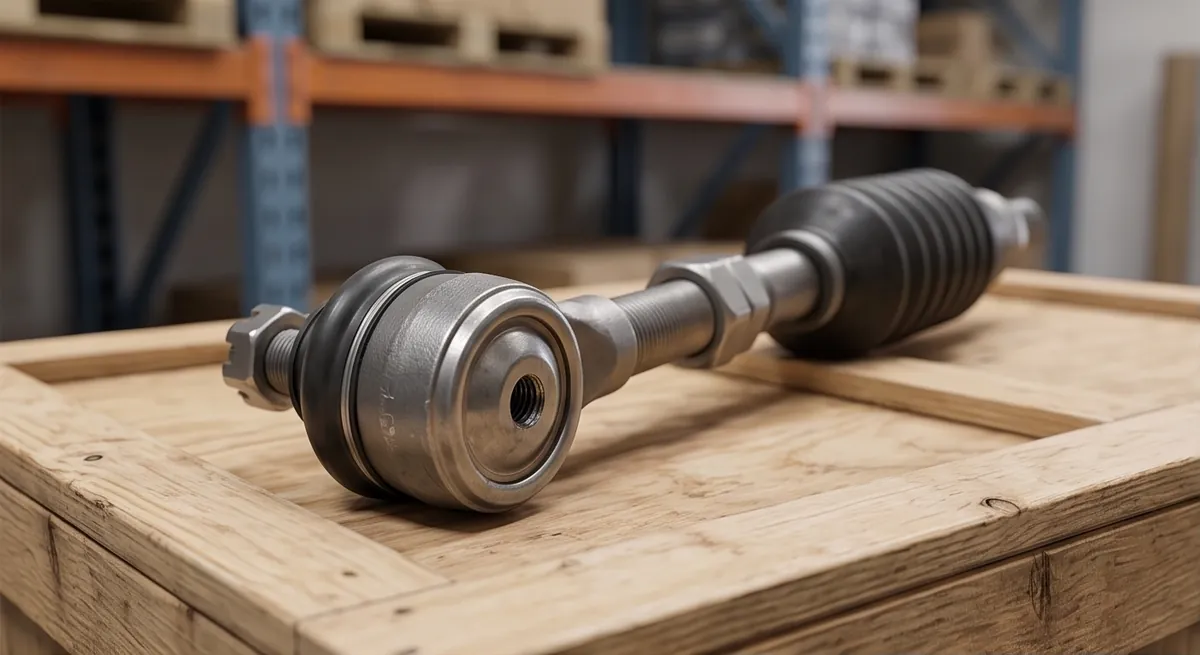
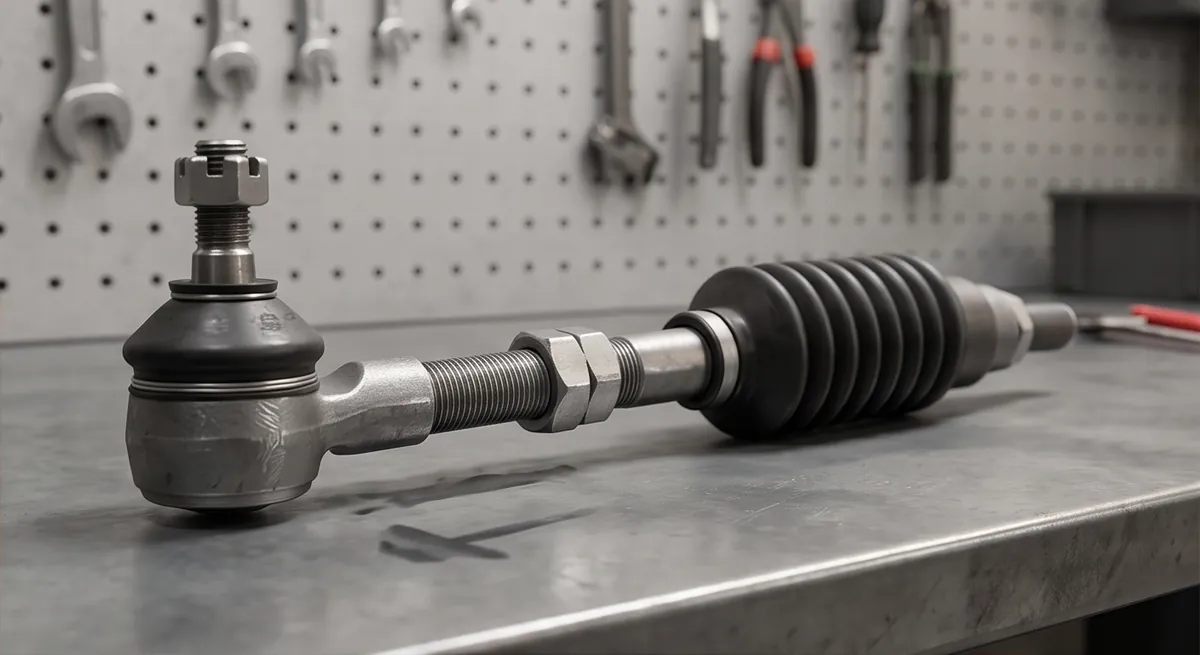
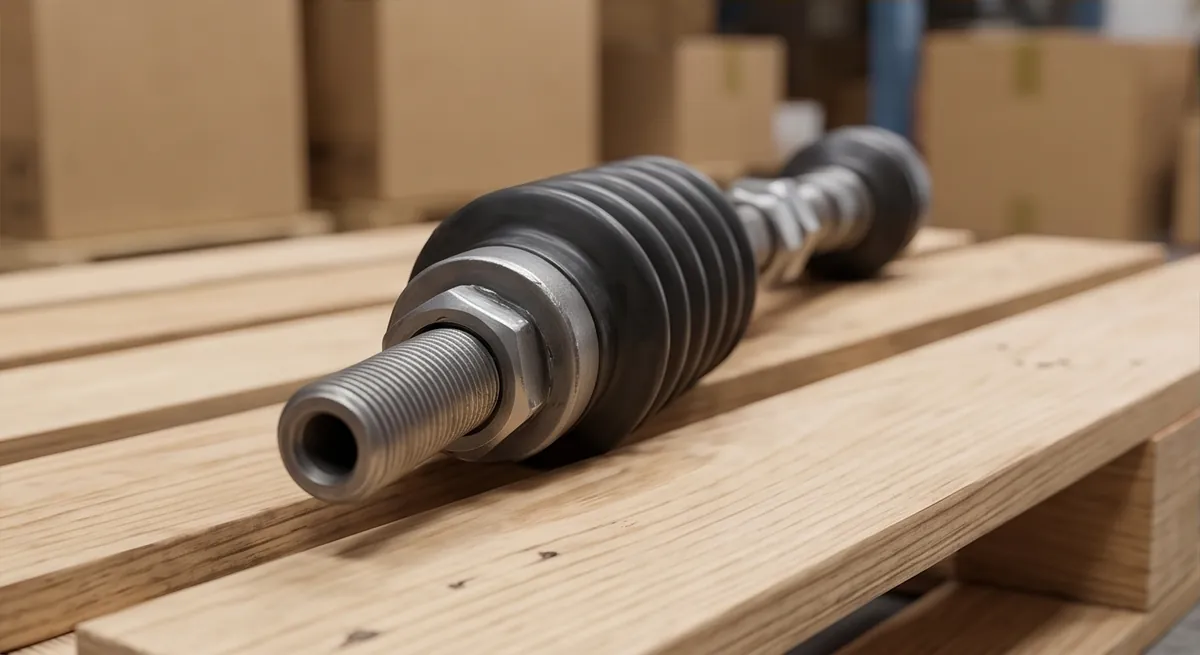
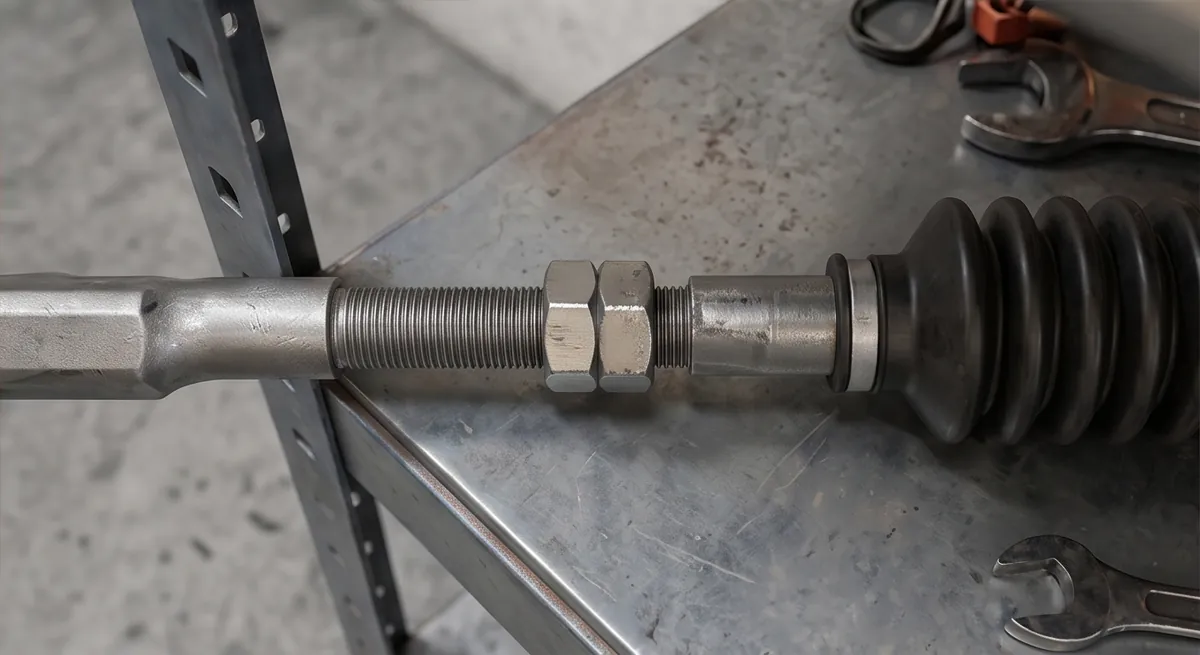
- Construction: Steel tie rod shaft with threaded adjustment section (allows toe-in adjustment during alignment), ball joint end fittings (inner and outer), rubber protective boots covering the ball joints, and mounting hardware for steering rack and knuckle attachment
- Common failure modes: Ball joint wear (audible clunk over bumps, steering play, and steering wheel vibration at speed), rubber boot deterioration (dirt and moisture accelerate joint wear), threaded adjustment corrosion (interferes with toe adjustment). Symptoms include steering wheel play, uneven tire wear from misalignment, audible clunk over bumps, and steering vibration
- Testing: Tie rod end joint integrity verified, threaded adjustment inspected, boot condition assessed before shipment
Related Volvo Classic, Late-Classic, and Modern Listings
- Volvo 544 (PV544): Classic 1950s-60s Volvo predecessor to the modern lineage – see our PV544 brake calipers listing
- Volvo 120 Series (Amazon): Classic Volvo Amazon – see our Amazon shock absorber listing
- Volvo 160 Series (Volvo 164): Classic luxury 6-cylinder Volvo – see our 160 Series struts listing
- Volvo 240 Series: Iconic 1974-1993 – see our 240 brake booster listing
- Volvo 260 Series: PRV V6 variant of the 240 chassis (same PRV V6 in early 760 GLE) – see our 260 wheel hub listing
- Volvo 780: Bertone-designed 2-door coupe on the 760 platform – see our 780 radio listing
- Volvo 850: Volvo’s first modern FWD car – see our 850 power steering pump listing
- Volvo 940: 700 Series evolution – see our 940 headlight listing
Volvo 760 Model Variant Reference
| Detail | Description |
|---|---|
| Inner Tie Rod | Connects to the steering rack at the inboard end. Threaded outer end accepts the outer tie rod for toe adjustment. Typically wears less than outer because of less articulation. Requires removing the steering rack boot or sliding it back to access the inner tie rod connection. |
| Outer Tie Rod | Connects inner tie rod to the steering knuckle. Ball joint allows steering travel through the suspension stroke. Typically wears first due to constant articulation and exposed position. Easier to replace than inner because access is direct at the wheel. |
| Replace as Pair Per Side | Many 760 owners replace both inner and outer per side at once since the labor effort is similar for both, and matched new components provide consistent steering response across the steering range. |
Volvo 760 Engine Reference
| Detail | Description |
|---|---|
| INCLUDED | The tie rod assembly with ball joint, hardened ball stud, rubber dust boot, retaining clip, and threaded end for adjustment. Sold as individual inner or outer tie rod, side-specific (left or right where applicable). Some shipments include castle nut and cotter pin. |
| NOT INCLUDED | Wheel alignment service (required after tie rod replacement, costs $50 to $100 at most shops), tie rod end boot clamp if previous one was damaged (often reusable), grease for the ball joint (factory pre-greased and sealed in most modern replacements), brake hose retaining bracket, sway bar links. |
| Tools You Need | Metric socket and wrench sets (760 uses metric throughout), tie rod separator tool (pickle fork or screw-type puller, recommended for outer tie rod), torque wrench, jack and stands, alignment gauge or carpentry method for setting toe before professional alignment, penetrating oil for seized 30+ year-old fasteners. |
Vehicle Compatibility
| Detail | Description |
|---|---|
| Volvo 760 GLE Sedan (1982 to 1990) | Premium 4-door sedan, all engine variants |
| Volvo 760 GLE Wagon (1985 to 1990) | Premium 5-door wagon (760 wagon introduced 1985) |
| Volvo 760 Turbo Sedan (1984 to 1990) | B230FT turbocharged I4 performance variant |
| Volvo 760 Turbo Wagon (1985 to 1990) | Turbo wagon, the practical performance Volvo |
| Volvo 760 GLE AWD (1989 to 1990) | Late production all-wheel drive variant |
| Volvo 740 Series (1985 to 1992) | Sister vehicle, shares many tie rod components, confirm specifics |
| Year Cross-Compatibility | Tie rod design generally consistent across 1982 to 1990 production |
Why Buy From Part Nests
- OEM verified tie rod for Volvo 760 Series 1982-1990
- Tie rod end joint integrity verified, threaded adjustment inspected, boot condition assessed
- Cross-references with Volvo 740, 940, 960 same-year applications when compatible
- Free shipping to all 50 states
- 15 day replacement warranty on component defects
- Support team familiar with Volvo late-classic 700 / 900 Series lineage and Bertone 780 coupe variant
- Call (855) 634-4447 to confirm year, model variant, and tie rod position before ordering.
15 Day Replacement Warranty
Every used Volvo 760 Tie Rod carries a 15 day replacement warranty starting on the delivery date. Call (855) 634-4447 to start a warranty claim within 15 days of delivery.
What Is Covered
- Component defects present on arrival beyond what was disclosed
- Ball joint failures within 15 days from installation
- Threaded adjustment failures not disclosed at sale
- Incorrect part shipped (inner vs outer, wrong side) due to an error on our end
What Is Not Covered
- Damage caused during installation
- Cross-model installation without verification
- Boot deterioration consistent with used part disclosure
- Labor expenses of any kind, including alignment after installation
- Part: OEM inner and outer tie rod assembly
- Application: Volvo 760 Series 1982-1990
- 700 Series Flagship: Angular late-classic Volvo luxury sedan
- Variants: 760 GLE, 760 Turbo, 760 Wagon
- Engines: 2.3L B23FT/B230FT turbo, PRV 2.8L V6, 2.4L I6, D24 diesel
- PRV V6 Heritage: Same V6 as Volvo 260 and Delorean DMC-12
- Family: 740 (below), 780 Bertone coupe (sister), 940 / 960 (successors)
- Related Listings: Volvo 544, 120, 160, 240, 260, 780, 850, 940
Additional information
| Brand | Volvo |
|---|---|
| Application | Volvo 760 Series classic 700 series premium |
| Year Range | 1982 to 1990 |
| Body Styles | 760 GLE sedan, 760 GLE wagon, 760 Turbo sedan, 760 Turbo wagon |
| Engine Compatibility | PRV V6 (B28E, B280F), I4 NA (B23E, B230E), I4 Turbo (B230FT), Diesel (D24, D24T) |
| Drivetrain | RWD all variants, AWD on 1989 to 1990 760 GLE |
| Part Type | Inner or outer tie rod assembly |
| Material | Forged steel |
| Ball Joint | Hardened ball stud with grease seal |
| Dust Boot | Rubber, factory-installed |
| Thread | Metric, adjustable for toe alignment |
| Position Specific | Left and right (where applicable) |
| Sister Series | Volvo 740 (1985 to 1992, similar tie rod design) |
| Successor | Volvo 940/960 (1991 to 1998) |
| Predecessor in Premium Line | Volvo 260 (1974 to 1985) |
| Recommended Service | Wheel alignment after installation |
| Warranty | 15 day replacement on manufacturing defects |
| Shipping | Free UPS or FedEx Ground to all 50 states |
An OEM used tie rod assembly (inner or outer, or complete set) for Volvo 760 Series applications from 1982 through 1990. Steel tie rod shaft with threaded adjustment section, ball joint end fittings, rubber protective boots covering the ball joints, and mounting hardware. Function is steering linkage that transmits steering rack movement to the wheel hub. Inner tie rod connects to the steering rack; outer tie rod connects to the steering knuckle at the wheel hub.
Volvo's late-classic luxury flagship, produced from 1982 through 1990 across an eight-year run. The top of the Volvo 700 Series that introduced angular boxy styling departing from the rounded 240 / 260 aesthetic. Straight body lines, upright greenhouse, and rectangular proportions defined Volvo late-classic style through the 1980s and 1990s. Replaced the Volvo 260 in the flagship role. Later replaced by the Volvo 960 (subsequently renamed S90 / V90 first generation).
Volvo 760 GLE (mainstream luxury four-door sedan). Volvo 760 Turbo (high-performance turbocharged variant with 2.3L B23FT / B230FT turbo engine, providing sport sedan performance in the boxy Volvo silhouette). Volvo 760 Wagon (five-door wagon / estate variant continuing the Volvo late-classic wagon lineage). Volvo 780 Bertone coupe was the two-door luxury grand tourer variant on the 760 platform (see our related 780 radio listing).
The 2.3L I4 turbo (B23FT and later B230FT with intercooler, 155-165 HP for 760 Turbo). The PRV 2.8L V6 (Peugeot-Renault-Volvo joint venture V6, same as used in the Volvo 260 and Delorean DMC-12, about 145-155 HP for 760 GLE early production). The 2.4L I6 (Volvo B6304 introduced in later 760 GLE production, naturally aspirated six-cylinder replacing the PRV V6). The 2.4L D24 turbo diesel (Volkswagen-sourced, limited European market).
Volvo 740 (positioned below the 760, similar body but lower-spec trim and typically 4-cylinder engines, mass-market Volvo of the late 1980s). Volvo 760 (flagship 700 Series with premium interior and 6-cylinder or turbo engines - this listing). Volvo 780 Bertone (two-door luxury coupe on the 760 platform). Volvo 940 (mid-1990s evolution). Volvo 960 (late-classic flagship replacing the 760, later renamed S90 / V90 first generation). Suspension often cross-references across the family.
The PRV V6 was the product of a joint venture between Peugeot, Renault, and Volvo formed in the 1970s to develop a shared V6 engine architecture. 2.7L or 2.8L 60-degree V6. Used in Volvo 260 Series (see our 260 wheel hub listing), Volvo 760 GLE early production (this listing's application), Peugeot 604 luxury sedan, Renault 30 luxury sedan, Renault Alpine A310 sports car, Renault Alpine GTA / A610, and famously the Delorean DMC-12 (Back to the Future films).
Front engine, longitudinal drivetrain, and live axle rear suspension - continuing the classic Volvo mechanical layout inherited from the 240 / 260 era. Angular boxy styling with straight body lines and upright greenhouse defined the late-classic Volvo look. Volvo transitioned away from this architecture with the Volvo 850 (1993+) which introduced modern FWD transverse-engine architecture (see our 850 power steering pump listing).
Ball joint wear (audible clunk over bumps, steering play, steering wheel vibration at speed). Rubber boot deterioration (dirt and moisture accelerate joint wear). Threaded adjustment corrosion (interferes with toe adjustment). Symptoms include steering wheel play, uneven tire wear from misalignment, audible clunk over bumps, and steering vibration. Tie rod replacement always requires wheel alignment afterward to restore proper toe-in setting.
Related products


Reviews
There are no reviews yet.